
Sindarov vs. Gukesh: The 2026 Chess Championship as a Test of Human Resilience Against AI
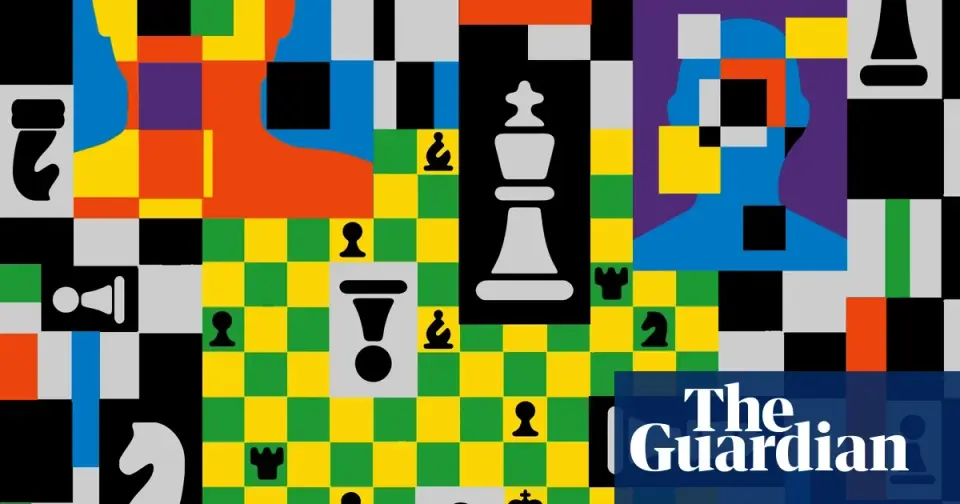
The 2026 World Chess Championship in Geneva pits Uzbekistan’s Javokhir Sindarov against India’s Gukesh Dommaraju, both aged 20. Sindarov, an aggressive attacker who won the Candidates Tournament, faces the resilient reigning champion Dommaraju. The match highlights how AI has transformed chess into a popular sport rather than ending it, emphasizing that human play remains distinct from machine logic despite AI’s dominance in calculation.
Key points
- Javokhir Sindarov, 20, secured his title shot by winning the Candidates Tournament with a dynamic attacking style, overcoming expectations as an underdog.
- Gukesh Dommaraju, 20, is the reigning world champion known for his resilience and composure under pressure, contrasting with Sindarov’s aggressive approach.
- The match in Geneva is viewed as a 'status report' on human intelligence in an era where AI has solved many chess problems, yet the game has never been more popular.
- AI has eliminated traditional opening debates and positional uncertainties, providing 'right answers' to positions, but it has not replaced the human element of competition.
- Chess remains a human-centric sport where the focus is on psychological endurance and the ability to withstand pressure, distinct from the incomprehensible logic of engine-versus-engine matches.
- The rise of chess celebrity culture, driven by online platforms and influencers like GothamChess, has expanded the game’s reach beyond traditional elite circles.
Background
Chess has long served as a barometer for intellectual trends, from the 1886 Zukertort-Steinitz match reflecting industrialization to the 1972 Fischer-Spassky match mirroring the Cold War. The 1996 defeat of Garry Kasparov by Deep Blue marked the first major AI triumph in chess. Since then, AI has integrated into preparation, but the game has thrived as a popular sport, with millions of fans and new celebrities emerging, demonstrating that human engagement with chess persists despite machine superiority.
Why it matters
The Sindarov-Gukesh match illustrates the broader implications of AI on human intellectual pursuits. It shows that while AI can outperform humans in calculation, it does not diminish the value of human competition or the appeal of the game. Instead, it redefines chess as a sport of psychological endurance and human connection, offering a model for how other fields might adapt to AI dominance by focusing on uniquely human traits like resilience and creativity.
What to watch
The world chess championship will take place in Geneva, where Sindarov and Dommaraju will compete for the title. The outcome will not only determine the next world champion but also serve as a cultural touchstone for the ongoing dialogue about the role of human intelligence in an AI-dominated world. The match is expected to attract global attention, further cementing chess’s status as a major sport and a platform for exploring the limits of human and machine cognition.
Want the full story? Read the original reporting
Read on The Guardian