
Velo Riders Test Six Gravel Bikes on 100km British Columbia Route
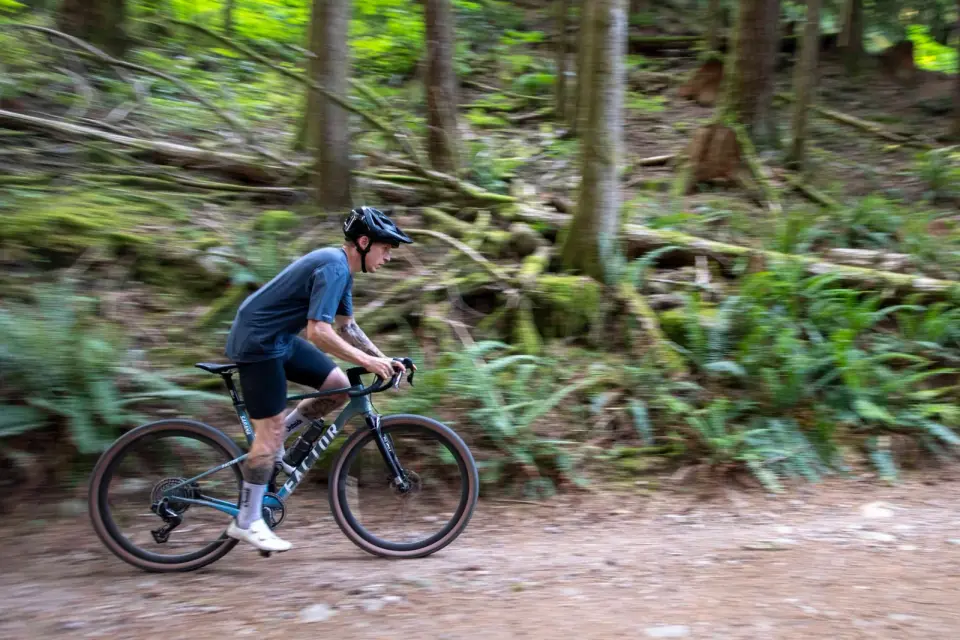
Velo concludes its multi-part gravel bike field test by riding 100 kilometers through British Columbia's Sea to Sky corridor. Three testers evaluate six distinct models, ranging from aerodynamic race bikes to drop-bar mountain bikes, to determine the future direction of the category. The final assessment focuses on whether larger wheels, suspension, or specific geometries offer the best balance of speed and technical capability.
Key points
- The final test involves a 100-kilometer ride from Squamish to Whistler, covering diverse terrain including steep climbs, technical single track, and washboard roads.
- Six bikes were evaluated: Giant Revolt Advanced SL, Factor Sarana, Argon 18 Anti Matter, Obed GVR, Pivot Les SL Drop Bar, and Salsa Fargo 32 Ti.
- Testers Mike Levy, Josh Ross, and Logan Jones-Wilkins each rode different bikes, with bike assignments determined by a go-kart race to ensure fairness.
- The series aims to resolve debates on whether gravel bikes should prioritize speed, endurance, or off-road technical performance.
- Control tires (Schwalbe G-One RX) and wheels (Easton EC90 ALX) were used to isolate frame performance differences.
Background
This final episode follows earlier Velo coverage from October 2026, which introduced the multi-part field test in Squamish, British Columbia. Previous reports highlighted the industry's shift toward specialized designs, including aerodynamic race bikes and 32-inch wheel platforms, as well as the convergence of gravel and road cycling through dual-wheelset strategies. The current test synthesizes these trends by pitting six radically different bike architectures against each other in real-world conditions.
Why it matters
The gravel cycling market is rapidly evolving, with manufacturers diverging into specialized niches such as ultra-lightweight endurance, aerodynamic racing, and technical off-road capability. This test provides concrete data on how these different design philosophies perform in varied terrain, helping consumers and manufacturers understand which features are essential for future gravel bikes. It also highlights the ongoing debate over whether larger wheels or suspension offer tangible benefits for mixed-surface riding.
What to watch
Velo plans to release a podcast roundtable discussion where the three testers debate the findings in depth. Additionally, individual reviews for each of the six bikes will be published, providing detailed analysis of their performance, specifications, and suitability for different riding styles.
Want the full story? Read the original reporting
Read on Outside Magazine