
Google DeepMind Introduces SynthID Bio to Watermark AI-Designed Proteins for Biosecurity
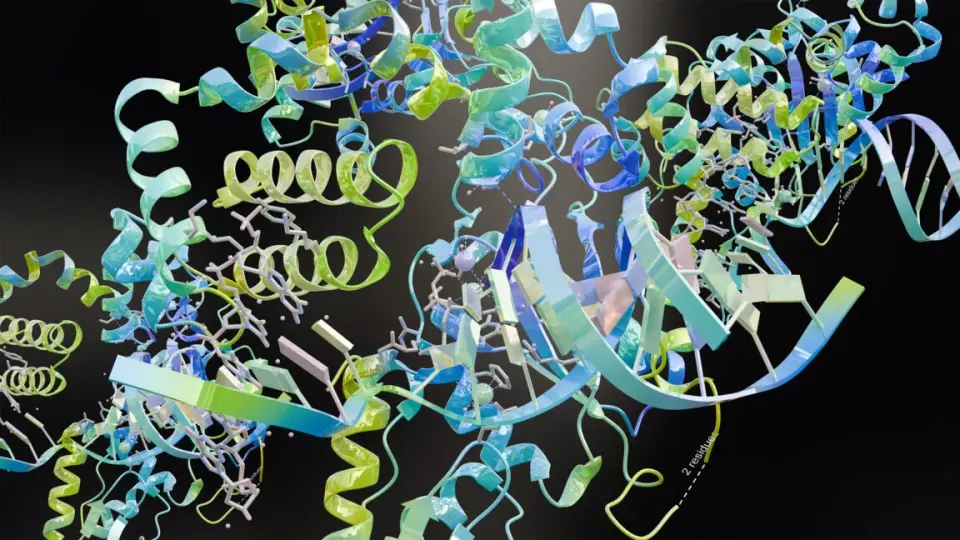
Google DeepMind has released SynthID Bio, a new system that embeds imperceptible watermarks into AI-generated protein sequences and 3D structures. Published in Nature on September 30, 2026, the technology aims to enhance biosecurity by allowing DNA synthesis providers to verify the provenance of novel biological designs. By integrating with popular tools like ProteinMPNN and AlphaFold 3, the system ensures that watermarked proteins retain their biological function, enabling trusted researchers to distinguish their work from potentially hazardous unverified sequences.
Key points
- SynthID Bio embeds watermarks into protein sequences and structures without compromising biological function or structural accuracy.
- The system integrates with ProteinMPNN for sequence design and fine-tunes AlphaFold 3 for structure prediction to ensure detectability.
- Wet-lab tests confirmed that watermarked binders for targets like VEGF-A and SARS-CoV-2 RBD maintained binding affinity comparable to non-watermarked versions.
- The technology helps DNA synthesis providers screen orders by verifying if sequences originate from trusted AI models, reducing manual review burdens.
- Google DeepMind is open-sourcing the code and data, with ongoing efforts to extend watermarking to bacteriophage genomes in collaboration with Stanford and Arc Institute.
Background
This development follows Google’s earlier expansion of SynthID watermarking to digital media, including text, images, and video avatars, as noted in our September 2026 coverage of Gemini 3.8 Live. While previous applications focused on preventing misinformation in digital content, SynthID Bio addresses physical biosecurity risks associated with AI-designed biological materials. It builds on the growing concern that AI tools like AlphaFold and ProteinMPNN could be misused to create toxins or alter viral proteins, a risk flagged nearly a year prior to this release.
How outlets are covering it
Ars Technica highlights the technical challenge of embedding watermarks in proteins, noting that unlike images with millions of pixels, proteins have limited amino acid sequences where even slight changes can inactivate the molecule. The outlet questions the practical utility of the system, pointing out vulnerabilities such as key distribution security and the potential for diluting watermarks by fusing proteins with natural ones. In contrast, Google DeepMind and the Nature publication emphasize the success of the proof-of-concept, stressing that watermarked proteins performed identically to non-watermarked ones in binding affinity tests. Google frames the technology as a critical layer in a 'Swiss cheese' biosecurity model, while external experts like Sarah Carter and James Diggans from Twist Bioscience view it as a promising addition to screening tools that can streamline the identification of trusted AI designs.
Why it matters
SynthID Bio addresses a critical gap in biosecurity where AI-designed proteins bypass traditional DNA screening because they do not resemble known threats. By providing a verifiable provenance signal, the technology allows synthesis providers to focus resources on untrusted or unknown sequences, potentially preventing the accidental or malicious creation of hazardous biological agents. It also helps maintain the integrity of public scientific databases by ensuring AI-generated entries are properly flagged, supporting responsible innovation in synthetic biology.
What to watch
Google DeepMind plans to collaborate with the broader scientific community to standardize watermarking practices and improve robustness against deliberate tampering. The company is currently researching the application of SynthID Bio to more complex biological objects, including the genomes of bacteriophages designed by the Evo 2 model. Early laboratory tests have confirmed that these watermarked bacteriophages remain functional, with a technical manuscript expected soon. Additionally, Google is open-sourcing the code and in vitro data to encourage further development and integration by other AI developers and DNA synthesis providers.
- Google figures out how to watermark AI-designed proteins Ars Technica
- Function-preserving watermarking of AI-generated proteins Nature
- SynthID Bio: Watermarking methods for synthetic biology deepmind.google
- We’re introducing SynthID Bio, bringing our watermarking technology to synthetic biology. blog.google
- ‘An important piece of the puzzle’: DeepMind watermarks AI proteins The Next Web
Want the full story? Read the original reporting
Read on Ars Technica