DeepMind CEO Demis Hassabis told Axios that AGI could arrive within the 2029–2030 window, framing the current era as a 'practice run' for a future of agentic AI and urging governments and industry to accelerate safety testing and governance as researchers pursue recursive self-improvement and more capable AI agents.
Google’s Magic Pointer, first shown with Googlebook, is rolling out to Chrome on desktop as Gemini in Chrome, letting you point at on-page elements and have AI infer context and act without lengthy prompts. DeepMind has published live AI Studio demos for image editing and map tasks to showcase the frictionless point-and-ask workflow, a stepping stone toward the OS-wide AI integration across desktop files and Android apps with Googlebook this fall.
London-based Google DeepMind employees have voted to form a union (with CWU and Unite) to represent staff and press Google to block or limit the use of its AI in military settings, including resisting deals with the US and Israeli militaries. The move follows Alphabet removing a pledge against weaponization from its ethics guidelines and comes amid broader concern about DoD use of AI. If recognized, the unions would push for more transparency and related protections (such as layoffs tied to automation) and, if Google does not engage, could pursue arbitration; the effort is part of a wider wave of labor action in frontier AI labs that could spur similar moves elsewhere.
UK-based DeepMind workers voted to unionize and seek recognition by the Communications Workers Union and Unite the Union, citing concerns over Google’s Pentagon AI deals and how the technology could be used—including potential involvement with the IDF—while urging independent ethics oversight and a right to refuse participation in morally objectionable projects.
UK workers at Google DeepMind have voted to recognize the Communication Workers Union and Unite the Union as joint representatives, citing concerns about Google’s Pentagon AI deal and the use of AI in military and surveillance contexts; they demand ethics oversight and the right to refuse projects on moral grounds and warn of protests if management resists. If recognized, about 1,000 UK employees could be represented.
Former Google engineer Steve Yegge publicly claimed Google’s internal AI adoption lags, alleging a two-tier system with DeepMind’s Claude usage while others rely on in-house tools; Demis Hassabis publicly dismissed the claim as false and clickbait, prompting further pushback from Google staff and fueling a heated debate over how broadly Google is actually using AI internally.
Fortune notes Nvidia CEO Jensen Huang’s claim that AGI has been achieved, a statement that collides with a growing push to define and quantify general intelligence. Recent work from Google DeepMind and Hendrycks–Bengio proposes a scientific framework (a 10-facet cognitive taxonomy) to evaluate AI across domains and compare to well-educated adults, highlighting a current “jagged” profile where models excel in some areas but lag in others. Other benchmarks like ARC-AGI and debates dating back to Turing illustrate how hard it is to define intelligence, while tech giants push AGI branding for marketing and financial aims (OpenAI/Microsoft contracts referencing profit thresholds) even as leaders like Altman caution that AGI is a sloppy term. Overall, experts agree there is no universal consensus on what AGI means or how to measure it, despite ongoing progress and hype in the field.
Google DeepMind unveils AlphaGenome, an AI that predicts how genetic mutations affect gene regulation across tissues, helping scientists pinpoint disease-driving variants and potentially guide new therapies; trained on public human and mouse data, it analyzes large DNA segments to map essential regulatory elements and their cell-type effects, with early praise from researchers but noting that real-world validation remains ongoing.
DeepMind's AlphaGenome is a sequence-to-function AI that can scan up to one million DNA letters at once to map the dark genome, predict how mutations affect gene expression and splicing, and flag disease-linked variants and potential drug targets, offering a major advance for obesity, diabetes, cancer, and other conditions—though it's still imperfect and will require refinement.
DeepMind chief Demis Hassabis warned that AI investment looks bubble-like, urging realistic expectations about near-term returns while acknowledging the technology's long-term potential.
At Davos, the leaders of OpenAI, Anthropic and Google DeepMind trade sharp barbs over monetization, capacity, and governance as the AI race heats up, with OpenAI’s policy chief pushing back; the exchange signals a broader, more nuanced battle for influence and revenue in the race to AGI.
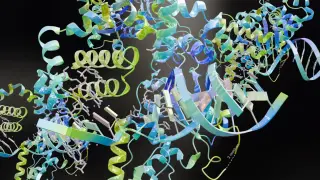
AlphaFold, developed by DeepMind, has revolutionized biology by accurately predicting protein structures, earning a Nobel Prize and expanding into DNA, RNA, and drug interactions, with ongoing advancements aimed at understanding cellular systems and improving medicine.
Google DeepMind is partnering with Commonwealth Fusion Systems to use AI for accelerating fusion energy development, including simulating plasma physics and optimizing fusion reactors, as part of broader efforts to bring fusion power closer to commercial reality in the next few years.
Google DeepMind has developed advanced AI models, Gemini Robotics 1.5, that enable robots to perform complex tasks, reason, and adapt in physical environments, significantly boosting robotic intelligence and versatility.
The article predicts that by 2035, Alphabet could become the Nvidia of quantum computing, leveraging its DeepMind research, custom hardware (TPUs), and quantum programming framework (Cirq) to build a dominant AI and quantum ecosystem, potentially transforming its market valuation and industry role.