
Nikon Disqualifies Microscopy Winner After AI Fabrication Scandal
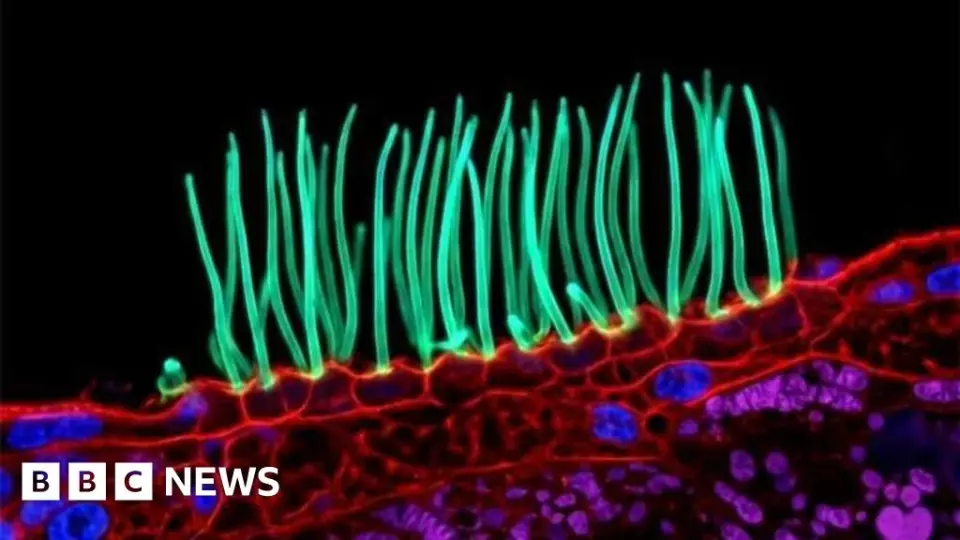
Nikon has disqualified the winner of its 16th annual Small World in Motion microscopy competition, ruling that the winning video violated rules prohibiting generative AI. The decision follows a public backlash from scientists who identified biological impossibilities and AI watermarks in the footage. The new winner is Nguyen Nam Nhat, and Nikon is reviewing its competition guidelines.
Key points
- Nikon disqualified Dr. Ning Xu’s winning video for the 2026 Small World in Motion contest, stating it did not comply with rules against generative AI.
- The video, depicting cilia in a child with primary ciliary dyskinesia, was criticized by experts for showing biologically impossible structures and containing a SynthID watermark.
- Dr. Xu acknowledged using AI for post-processing but maintained he followed the rules; Nikon stated the disqualification is not a judgment on his professional reputation.
- Nguyen Nam Nhat has been named the new winner for his video of a roundworm and a single-celled organism.
- Nikon is revisiting its rules and evaluation procedures for future entries due to rapid advances in AI and imaging technology.
Background
This incident follows a week of intense scrutiny after Nikon announced it was re-evaluating the winning entry. Earlier reports highlighted concerns from the scientific community, including former judges and researchers, who flagged anomalies in the footage. The controversy underscores growing tensions between artistic visualization and scientific integrity in microscopy, as AI tools become more capable of generating realistic but fabricated data.
How outlets are covering it
BBC and PetaPixel report that Nikon’s decision was based on a thorough re-evaluation and consultation with judges, emphasizing that the ruling is strictly about rule compliance. Gizmodo highlights the technical evidence, such as the SynthID watermark and biological errors, that fueled the initial backlash. While BBC notes Dr. Xu’s cooperation, PetaPixel and Gizmodo detail his defense that AI was only used for colorization, not generation. All sources agree that the incident has prompted Nikon to review its competition rules.
Why it matters
The disqualification highlights the challenges of integrating AI into scientific and artistic fields, where the line between enhancement and fabrication is increasingly blurred. It raises questions about the integrity of scientific data and the need for clear guidelines on AI use in research and competitions. The incident also underscores the importance of transparency and accountability in the use of AI tools.
What to watch
Nikon is expected to update its rules and evaluation procedures for future competitions to address the challenges posed by AI. The scientific community may continue to debate the appropriate use of AI in microscopy and other fields. Dr. Xu’s case may serve as a precedent for how AI-generated content is handled in scientific and artistic competitions.
- Prize-winning image which sparked backlash was AI-generated, Nikon rules BBC
- Nikon Disqualifies Winner of Small World in Motion Competition for Using AI PetaPixel
- Contest-Winning Microscope Video Is Full of AI Confabulations, Scientists Say Gizmodo
- Nikon Disqualifies Winning Video Over AI Use Following Weeks of Controversy The Scientist
Want the full story? Read the original reporting
Read on BBC