
NYC Tenant Builds Bedroom with Plastic Building Blocks After Flex Wall Restrictions
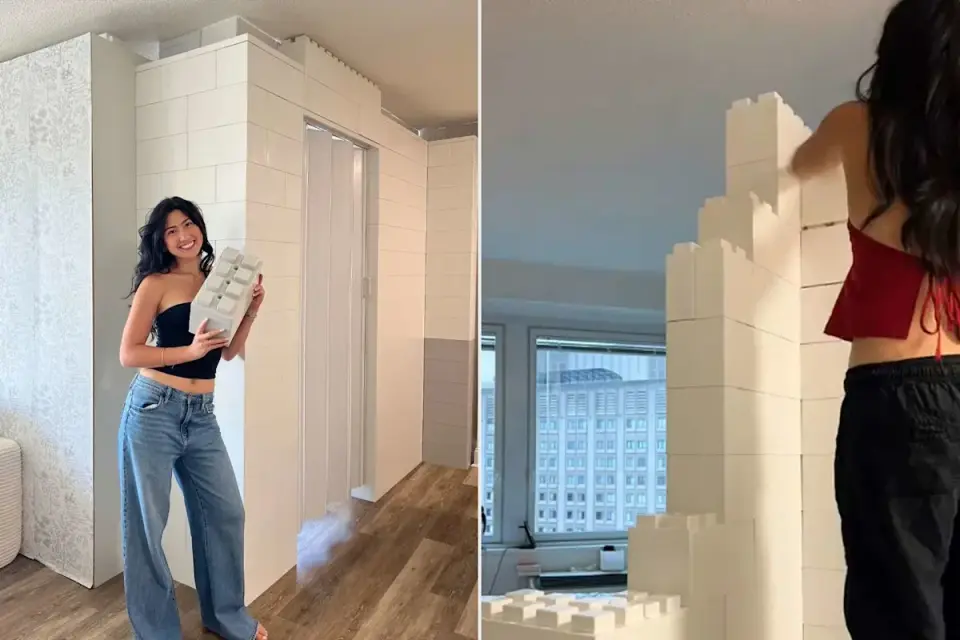
Alliyah Barre, a 24-year-old resident in New York City, constructed a private bedroom in her apartment using secondhand oversized plastic building blocks after traditional flex wall options proved too expensive and restrictive. The project, which cost approximately $1,600, provided a defined living space with a door, a feature denied by her building management. Barre maintained the structure for one year before dismantling it in August 2026 to return to Toronto, Canada.
Key points
- Barre was quoted $1,975 for a traditional flex wall, but building restrictions prohibited doors and ceiling-height walls, negating the privacy she sought.
- She purchased secondhand EverBlocks for about $700 from a family on the Upper West Side via Facebook Marketplace.
- The total cost for the room, including two IKEA wardrobes, was roughly $1,600, saving her money compared to the flex wall quote and its removal fees.
- The structure used 125 full blocks and various half-blocks, requiring two days of assembly and trial-and-error problem-solving for stability.
- The plastic blocks offered minimal soundproofing, necessitating the purchase of additional soundproofing panels and the use of wardrobes as barriers.
- Barre dismantled the room in August 2026 upon moving back to Toronto and donated the blocks to another resident.
Background
This story highlights the ongoing challenges of space and privacy in New York City apartments, where residents often resort to creative, non-traditional solutions due to strict building regulations and high costs. While previous archive entries discuss privacy in different contexts, such as smart home technology or public figures' personal lives, this incident focuses on the physical constraints of urban housing. The lack of new developments in the archive regarding similar DIY housing solutions means this remains a unique case study in tenant adaptation.
Why it matters
The incident underscores the financial and regulatory barriers tenants face in customizing their living spaces in major cities. It illustrates how high costs for standard solutions can drive residents toward unconventional, cost-effective alternatives, even if those alternatives have limitations like poor soundproofing. The story also reflects the transient nature of urban housing, where residents may invest time and money in temporary modifications that must be dismantled upon relocation.
What to watch
The EverBlocks have been donated to another resident in New York City, continuing their use for creating private spaces. No further developments are expected regarding Barre, as she has relocated to Toronto. The story serves as a reference for other tenants facing similar restrictions and budget constraints in urban housing markets.
Want the full story? Read the original reporting
Read on Yahoo News New Zealand