
Svalbard Polar Bear Uses Seal Pup as Bait to Lure Mother
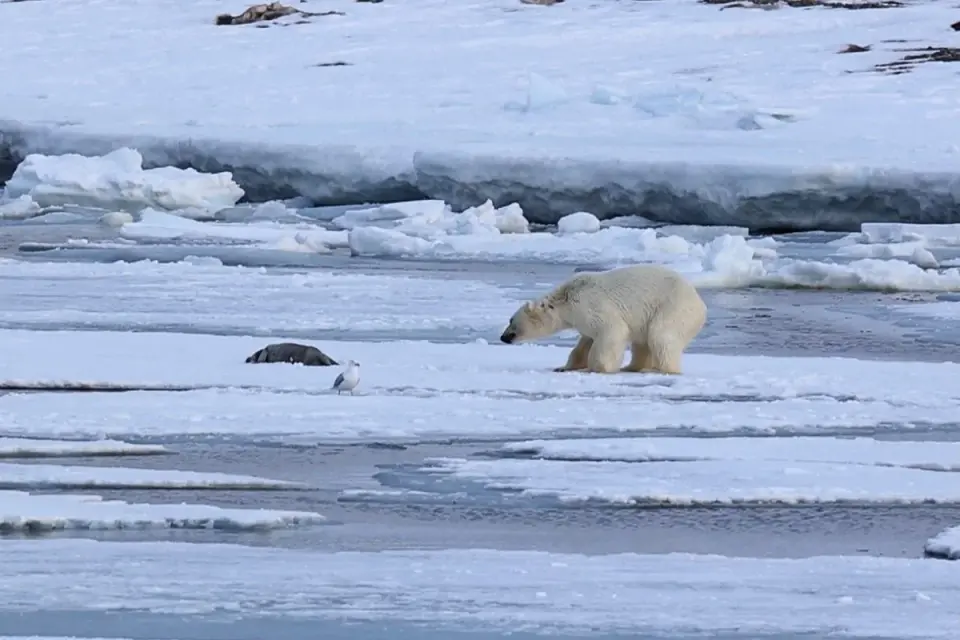
In spring 2026, a polar bear in Billefjorden, Svalbard, employed a sophisticated hunting tactic by striking a juvenile bearded seal and then retreating. The bear appeared to use the injured pup as bait to lure the mother seal onto the ice. When the mother did not emerge, the predator returned to the pup to feed. Experts describe this as learned behavior rather than simple instinct.
Key points
- Footage captured in spring 2026 shows a polar bear in Billefjorden, Svalbard, attacking a juvenile bearded seal.
- After the initial strike, the bear backed away from the pup, a move interpreted as an attempt to lure the mother seal onto the ice.
- The mother seal did not emerge to rescue her offspring, prompting the bear to return to the juvenile and begin feeding.
- Michele D'Agostino of Secret Atlas notes the bear spent time reading the ice before committing to the strategy.
- The incident was observed by tourists who had been on the ice for several hours, allowing them to witness the full sequence.
Background
Recent archival coverage highlights the vulnerability of seal populations to disease, such as the H5N1 outbreak that killed thousands of sub-Antarctic seal pups in 2025. While that event involved viral mortality, the current incident illustrates the predatory pressures faced by Arctic marine mammals. The polar bear’s behavior contrasts with typical instinctual hunting, suggesting a level of cognitive adaptation to local prey dynamics.
Why it matters
This event provides rare insight into the cognitive capabilities of polar bears, suggesting they possess learned hunting strategies that account for the behavior of prey species. It highlights the complex predator-prey dynamics in the Arctic and offers new data on how apex predators adapt their tactics to maximize catch rates.
What to watch
Researchers may analyze the footage to determine if this baiting strategy is common among polar bears in Svalbard. Conservationists will continue to monitor seal populations in the region to assess the impact of such hunting behaviors on juvenile survival rates.
Want the full story? Read the original reporting
Read on BBC Wildlife Magazine