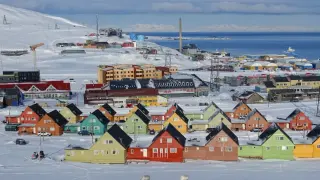
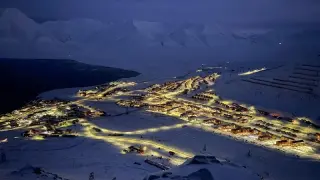
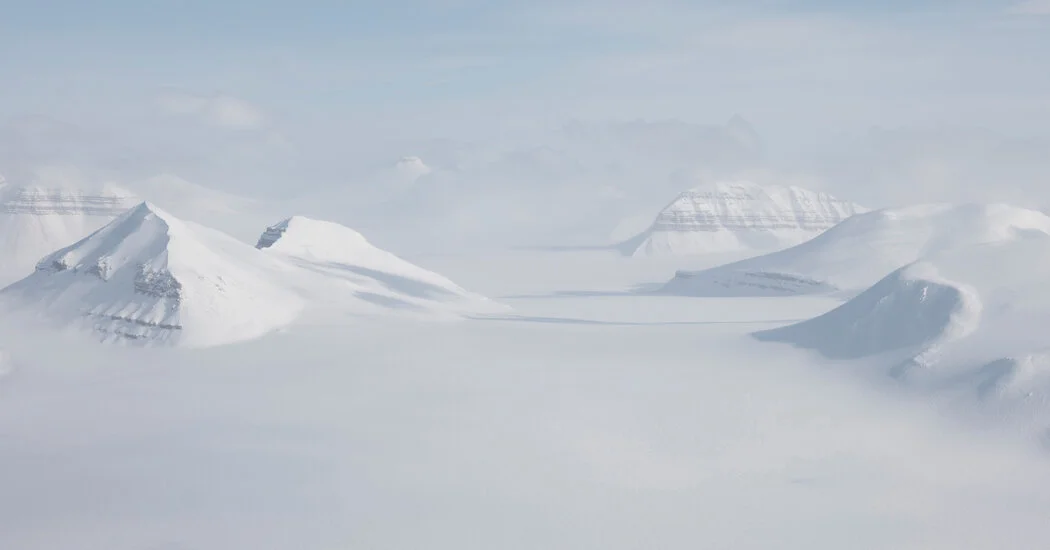
Longyearbyen, Norway, faces a drinking water crisis as rapid Arctic warming thaws permafrost, leaching toxic heavy metals into its sole water source. Residents are advised to avoid tap water while authorities investigate solutions.
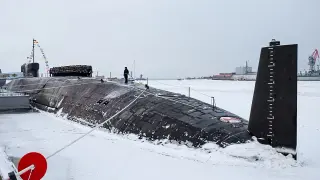
NATO allies successfully intercepted and deterred a covert Russian operation in Arctic waters near Svalbard, where submarines from the GUGI directorate were testing a secret weapon designed to sabotage critical undersea infrastructure. The joint effort by the UK, Norway, and the US prevented the exercise from being completed, though no physical damage occurred.
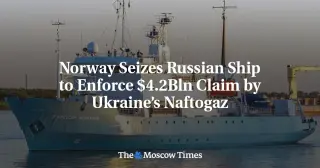
Norwegian authorities seized the Russian-owned vessel Professor Molchanov in the Arctic archipelago of Svalbard to enforce a $4.22 billion arbitration award owed by Russia to Ukraine’s state energy company, Naftogaz. The ship, used for commercial cruises and scientific expeditions, was detained at Barentsburg following a court order issued on August 31. While Moscow condemned the action as 'piracy' and demanded the vessel’s release, Norway stated it was fulfilling international obligations by assisting stranded Russian citizens and ensuring supplies reach local settlements. The seizure marks a significant step in Kyiv’s broader strategy to recover assets abroad following Russia’s 2014 annexation of Crimea.
Norwegian authorities seized the Russian vessel Professor Molchanov in Svalbard to enforce a $4.22 billion arbitration award for Ukraine’s Naftogaz. Russia demanded immediate release, calling the move piracy, while Norway stated it was legally obligated to execute a court order. The ship remains detained in Barentsburg, with passengers and crew handled separately by Norwegian officials.
Norwegian authorities seized the Russian-owned vessel Professor Molchanov in the Arctic archipelago of Svalbard to enforce a $4.22 billion compensation award won by Ukrainian energy firm Naftogaz. The ship was impounded at the port of Barentsburg following a court order, while Russia condemned the action as piracy and Naftogaz vowed to pursue assets globally.
Norwegian authorities seized the Russian-owned cruise ship Professor Molchanov in Svalbard to enforce a $4.22 billion arbitration award in favor of Ukraine’s Naftogaz. The vessel was impounded at Barentsburg following a 24-hour standoff with the Norwegian Coast Guard, marking a significant step in Naftogaz’s global effort to recover assets related to Russia’s 2014 annexation of Crimea.
Norwegian authorities seized the Russian vessel Professor Molchanov in the Arctic archipelago of Svalbard to enforce a $4.22 billion arbitration award owed to Ukrainian energy firm Naftogaz. The seizure followed a 24-hour standoff with the Norwegian Coast Guard and a court order from the Nord-Troms and Senja District Court. Naftogaz is pursuing compensation for assets expropriated by Russia after the 2014 annexation of Crimea, with the seized ship now held for compulsory sale.
Norwegian authorities seized the Russian cruise ship Professor Molchanov in the Arctic archipelago of Svalbard on September 3, 2026, at the request of Ukrainian state energy company Naftogaz. The seizure enforces a 2023 international arbitration ruling ordering Russia to pay $4.22 billion for assets illegally expropriated during the 2014 annexation of Crimea. Naftogaz’s acting CEO, Sergiy Fedorenko, described the move as a step toward justice, while Russia’s Foreign Ministry condemned the action as 'piracy' and vowed to challenge the legal process. The vessel was detained after a 24-hour standoff with the Norwegian Coast Guard, with Naftogaz’s legal team having tracked the ship for months to intercept it near the Russian mining settlement of Barentsburg.
A person aboard a vessel in Norway's Svalbard archipelago was fined 50,000 Norwegian kroner (approx. $5,300) for intentionally using a ship's foghorn to wake a sleeping polar bear. The incident occurred in August 2026 in Lomfjorden, violating strict environmental regulations that prohibit disturbing protected wildlife. The fine was accepted and paid.
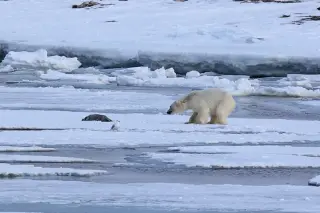
In spring 2026, a polar bear in Billefjorden, Svalbard, employed a sophisticated hunting tactic by striking a juvenile bearded seal and then retreating. The bear appeared to use the injured pup as bait to lure the mother seal onto the ice. When the mother did not emerge, the predator returned to the pup to feed. Experts describe this as learned behavior rather than simple instinct.
Norway removed China’s Yellow River Station lions and a sign from Ny-Ålesund in Svalbard, signaling a push to reinforce sovereignty as Arctic geopolitics intensify—with Russia and China maintaining a presence—driven by climate-driven ice loss and the treaty framework that allows broad visa-free access for researchers.
Archaeologists studying 20 burials at Likneset (Corpse Point) on Svalbard uncover evidence that 17th–18th‑century Arctic whalers endured brutal manual labor and widespread scurvy, with pipe smoking possibly accelerating health decline; the site’s permafrost preservation is eroding due to climate warming, threatening future research.
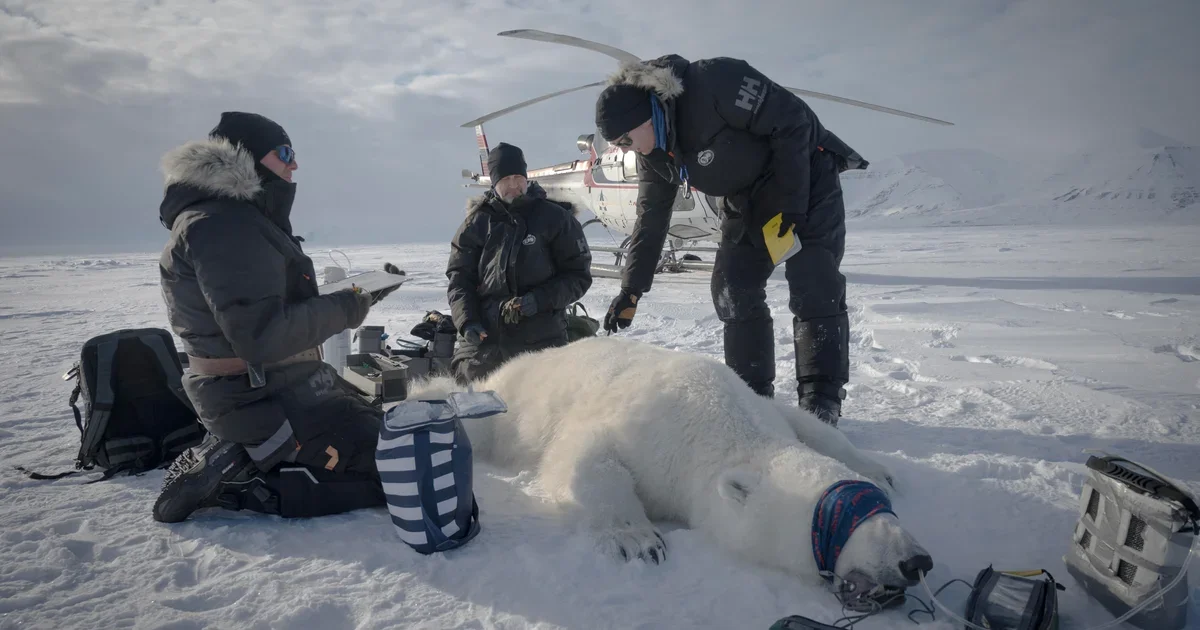
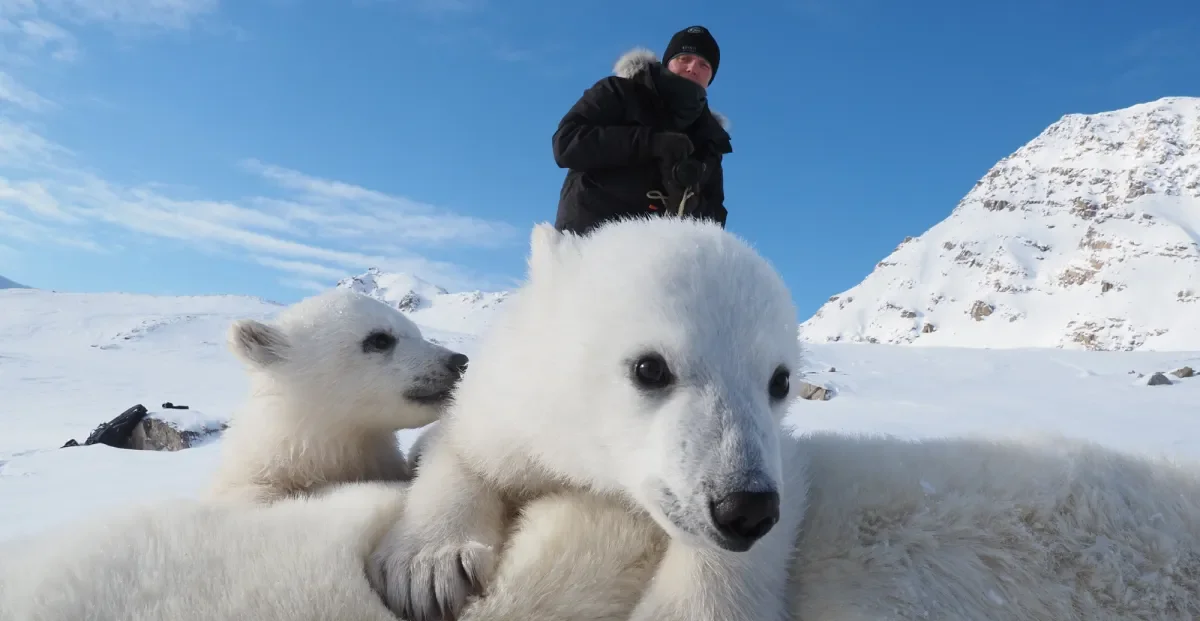
Researchers in Svalbard report a polar bear population thriving amid shrinking sea ice, with bears fat and able to raise cubs as they adapt by spending more time on land and preying on new species; scientists caution this success may be temporary and call for more Arctic-wide research.
A Scientific Reports study of hundreds of Svalbard polar bears finds their body condition improved from 2000 to 2019 even as sea ice declined, suggesting dietary adaptation (more ringed seals and land prey like reindeer, plus scavenging) and regional variability among roughly 20 populations; while other regions like Western Hudson Bay show declines, climate change remains a major threat, and polar bears are not doomed everywhere.
Norway is tightening its sovereignty over Svalbard, the Arctic archipelago governed by a century-old treaty, by curbing foreign voting rights, blocking land sales, and tightening control over foreign researchers while pushing to mine seabed minerals around the islands; the moves provoke pushback from Russia, Iceland, and the EU and fit into a broader great‑power contest for Arctic influence and resources, a context in which Greenland’s status has also drawn attention.