
Tesla's Roadster Downforce Tech Follows a 50-Year-Old Racing Lineage
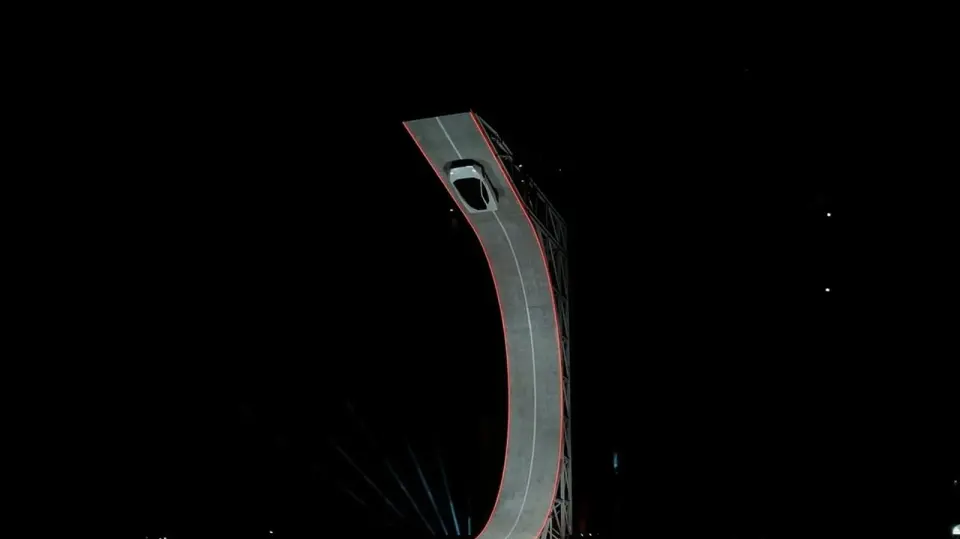
Tesla's new Roadster uses fans to generate up to 2g of downforce, allowing it to drive upside down. However, this technology is not new; it follows a lineage of racing cars like the 1970 Chaparral 2J and 1978 Brabham BT46, as well as the modern McMurtry Spéirling, which also uses suction to cling to surfaces.
Key points
- Tesla demonstrated the Roadster driving vertically and flipping in mid-air using a multi-mode fan and ground sealing system.
- The car can generate up to 2g of downforce, according to Tesla, while the Chaparral 2J generated 1.25g to 1.5g.
- McMurtry Automotive's Spéirling, unveiled in 2025, also uses fans to create suction, allowing it to hang upside down from a platform.
- The Brabham BT46, known as the 'Fan Car,' used a rear fan and skirts to extract air from under the car, winning the 1978 Swedish Grand Prix.
- Tesla plans to begin Roadster production in 2028, with reservations costing $50,000 for the base model and $250,000 for the 'Thrust' trim.
Background
Tesla's second-generation Roadster was originally announced in 2017, with production initially targeted for 2020. The vehicle has faced significant delays, with customers reserving units for nearly a decade. Recent archive coverage notes that analysts view the Roadster as a symbolic exit from traditional automaking rather than a major revenue driver, especially given Tesla's declining sales and focus on AI and robotics. The car's technology, including a deployable rear wing and cold-gas thrusters, has been the subject of patents and speculation regarding a potential merger with SpaceX.
How outlets are covering it
Engadget emphasizes the historical precedent for fan-based downforce, highlighting the Chaparral 2J and Brabham BT46 as early adopters of the technology. Teslarati focuses on the broader context of Tesla's product ecosystem, including the integration of Grok Bot into vehicles and the potential for a rival to Amazon, while also noting the Roadster's delayed production. The Los Angeles Times provides a critical perspective on the Roadster's impact on Tesla's sales, noting that while the demo was impressive, the car is unlikely to reverse the company's declining sales and may even be seen as a flop by some analysts. All sources agree that the Roadster's technology is a collaboration between Tesla and SpaceX, but they differ in their assessment of its commercial viability and historical significance.
Why it matters
The Roadster's use of fan-based downforce highlights the continued relevance of aerodynamic innovation in automotive design, even in the age of electric vehicles. It also underscores the competitive landscape, with companies like McMurtry Automotive pushing the boundaries of what is possible with suction technology. For Tesla, the Roadster serves as a marketing tool to generate attention and potentially boost sales, even if it is not a mass-market vehicle. The technology's historical roots in racing also suggest that future consumer vehicles may adopt similar innovations, potentially leading to safer and more efficient cars.
What to watch
Tesla plans to begin Roadster production in 2028, with reservations now open. The base model will cost $50,000 to reserve, while the 'Thrust' trim, which includes the suction system and acceleration thrusters, will cost $250,000. McMurtry Automotive expects to deliver the first 100 Spéirling vehicles before the end of 2026, with prices starting at $132,300. The future of fan-based downforce technology in consumer vehicles remains uncertain, but the Roadster's demo suggests that it may become more common in high-performance cars.
- The Tesla Roadster Is Far From The First Car To Use Fans For Downforce Engadget
- What Tesla’s Flying Roadster Really Means for the Global Auto Race WSJ
- Tesla Roadster owners to get "Flying Stunt Mode" and looping track access Teslarati
- Elon Musk just showed off a flying car. Here’s what to know about the Tesla Roadster Los Angeles Times
- Tesla’s new Roadster makes a flying debut, hitting 60 MPH in under a second Fox Business
Want the full story? Read the original reporting
Read on Engadget