
Clancy Trial Enters Final Phase: Jurors Weigh Competing Expert Opinions on Insanity Defense
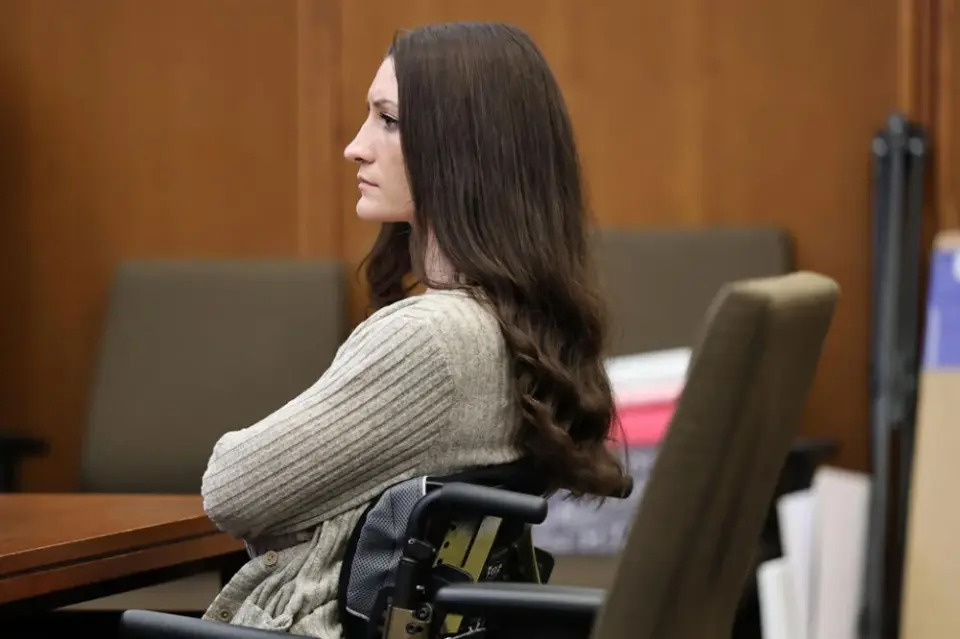
Testimony concluded in the Lindsay Clancy trial after 21 days, with closing arguments set for Thursday. The case hinges on whether Clancy was criminally responsible for strangling her three children in 2023. Prosecution experts argue she acted with control and premeditation, while defense experts maintain she suffered from postpartum psychosis and bipolar disorder, rendering her unable to conform to the law. Jurors must decide if her mental state met the legal threshold for an insanity defense in Massachusetts.
Key points
- Testimony ended on August 26, 2026, after 21 days and over 70 witnesses, with closing arguments scheduled for Thursday.
- Lindsay Clancy is charged with three counts of first-degree murder for the 2023 deaths of her children, Cora (5), Dawson (3), and Callan (8 months), in Duxbury, Massachusetts.
- The prosecution argues Clancy acted with control, deliberately planning the killings and suicide, while the defense claims she was incapacitated by postpartum psychosis and bipolar disorder.
- Prosecution expert Dr. Gregory Saathoff testified that Clancy was in control and that the reported 'command hallucination' was inconsistent with typical psychosis, as it occurred only once.
- Defense expert Dr. Phil Resnick testified that Clancy experienced a 'command hallucination' and was in a 'dream state' where she could not control her actions, meeting the insanity defense criteria.
- Clancy is currently held at Tewksbury Hospital, paralyzed from the waist down after jumping from a window following the killings, and remains under suicide watch.
Background
The trial has drawn international attention to mental health care for new mothers. Earlier coverage noted that the case centers on whether Clancy's mental illness prevented her from knowing right from wrong or conforming to the law. The defense has argued that Clancy was a devoted mother whose actions were driven by a psychotic delusion, while the prosecution has characterized the killings as a premeditated act of self-interest.
How outlets are covering it
WBUR and NBC Boston report that the trial has concluded testimony, with the prosecution resting its case after Dr. Saathoff's testimony. Both outlets highlight the stark contrast between the prosecution's view of Clancy as a controlled, premeditated actor and the defense's view of her as a victim of postpartum psychosis. Yahoo News, through a former prosecutor, suggests the prosecution may have lost credibility with jurors, though this is not detailed in the primary sources. The primary sources emphasize that the core dispute is whether Clancy's mental state met the legal threshold for an insanity defense, with experts on both sides offering conflicting assessments of her control and awareness during the killings.
Why it matters
The outcome will determine whether Clancy faces life in prison without parole or is committed to a state mental health facility. The case highlights the complexities of the insanity defense and the role of expert testimony in determining criminal responsibility, particularly in cases involving postpartum mental health crises. It also underscores the legal and ethical challenges of evaluating mental state in high-profile cases, where public opinion and media attention can influence the perception of justice.
What to watch
Closing arguments are scheduled for Thursday, after which jurors will begin deliberating. The verdict will determine whether Clancy is found guilty of first-degree murder or not guilty by reason of insanity. If found not guilty, she will be committed to a state mental health facility with periodic reviews to determine if she can be safely released.
- Clancy murder trial testimony wraps; closing arguments scheduled for Thursday WBUR
- Lindsay Clancy trial recap: Closing arguments ahead as last witness finishes testifying NBC Boston
- Prosecution lost credibility with Clancy jurors, former prosecutor says | Elizabeth Vargas Reports Yahoo
- Opinion | Lindsay Clancy Deserves Mercy, Not Life in Prison The New York Times
- Forensic psychologist testifying for prosecution says he believes Lindsay Clancy is ‘criminally responsible’ for killing her three children The Boston Globe
Want the full story? Read the original reporting
Read on WBUR