
Bayeux Tapestry’s London Debut Sparks National Fervor and Conservation Concerns
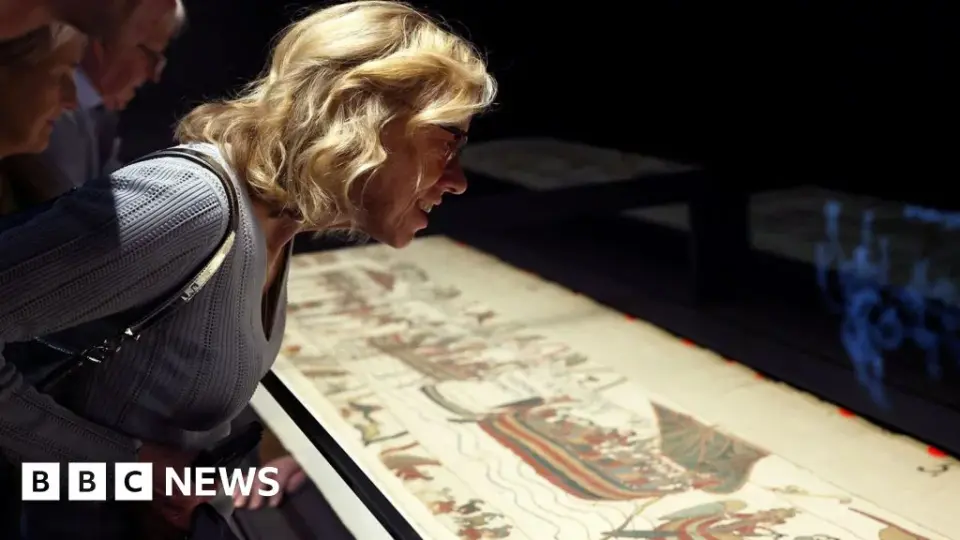
The 11th-century Bayeux Tapestry has opened to the public at the British Museum, marking its first display in the UK since its creation nearly a millennium ago. The 70-meter embroidery, depicting the Norman Conquest of 1066, arrived from Normandy for a 10-month loan. While the exhibition has generated massive public interest and diplomatic goodwill, it has also raised concerns about the artifact's condition and accessibility for those outside London.
Key points
- The 70-meter Bayeux Tapestry is on display at the British Museum until July 11, 2027, following a loan from Normandy, France.
- The exhibition is the museum's most anticipated show in decades, with tickets selling out rapidly and over 80,000 people waiting online for the initial release.
- Conservators identified two new, minor thread breaks in the tapestry after its arrival in London, sparking debate in France about the risks of the loan.
- The display is expected to attract approximately one million visitors, helping the museum fund a major refurbishment project estimated at 1 billion pounds.
- Public reaction has been mixed, with many praising the historical significance while others criticized the long queues and the cost of travel from northern England.
Background
The loan of the Bayeux Tapestry to the UK was the culmination of nearly a century of diplomatic efforts. The artifact, originally embroidered in England but kept in France for centuries, depicts the events leading to the Battle of Hastings in 1066. Its arrival in London in July 2026 was marked by high-profile private viewings attended by King Charles III, Queen Camilla, and French President Emmanuel Macron, underscoring the event's significance in Franco-British relations. The exhibition is also part of a broader national celebration, echoing a similar 'Bayeux fever' in 1966 during the 900th anniversary of the invasion.
How outlets are covering it
Outlets highlight different aspects of the exhibition's impact. The BBC focuses on the public's emotional reaction and the logistical challenges, noting that while many visitors were 'blown away' by the tapestry, others felt the event was 'out of reach' due to the cost of travel and extreme queuing. The New York Times emphasizes the cultural phenomenon, describing the event as a 'blockbuster' that has gripped the British public, with critics comparing the tapestry to Picasso's 'Guernica'. NBC News frames the exhibition as a 'once-in-a-millennium moment' that reflects a 'seismic moment in British history'. There is also a divergence in tone regarding the tapestry's condition: while the BBC notes the French Culture Minister's reassurance that the tapestry arrived in a 'wonderful state', the New York Times reports that conservators found two new 'small breaks' in the threads, leading to criticism from French art experts who called the loan an 'unacceptable risk'.
Why it matters
The Bayeux Tapestry exhibition is a significant cultural and diplomatic event, representing the first time the artifact has been displayed in the UK since its creation. It serves as a powerful symbol of shared history between the UK and France, while also highlighting ongoing debates about the preservation and accessibility of cultural heritage. The exhibition's success in drawing large crowds and generating revenue is crucial for the British Museum's ongoing refurbishment efforts, making it a key moment for the institution's future.
What to watch
The exhibition will continue at the British Museum until July 11, 2027. The next release of tickets is scheduled for October 21, 2026. The British Museum expects the show to attract around one million visitors, which will contribute to its goal of raising 1 billion pounds for a major refurbishment. The tapestry will eventually return to its home in Normandy, France, where it will undergo further conservation checks.
- Bayeux Tapestry unveiled to UK public for first time at British Museum BBC
- Bayeux Tapestry Exhibition Opens at British Museum The New York Times
- Tatler reimagines Bayeux Tapestry for modern England The Telegraph
- ‘Once-in-a-millennium moment��: Medieval masterpiece Bayeux Tapestry finally goes on show in London NBC News
- 'When England changed forever': Bayeux Tapestry and its most famous scene wow London viewers BBC
Want the full story? Read the original reporting
Read on BBC