
Trump Mandates Steam Catapults on Ford-Class Carriers, Orders Fifth Shipyard
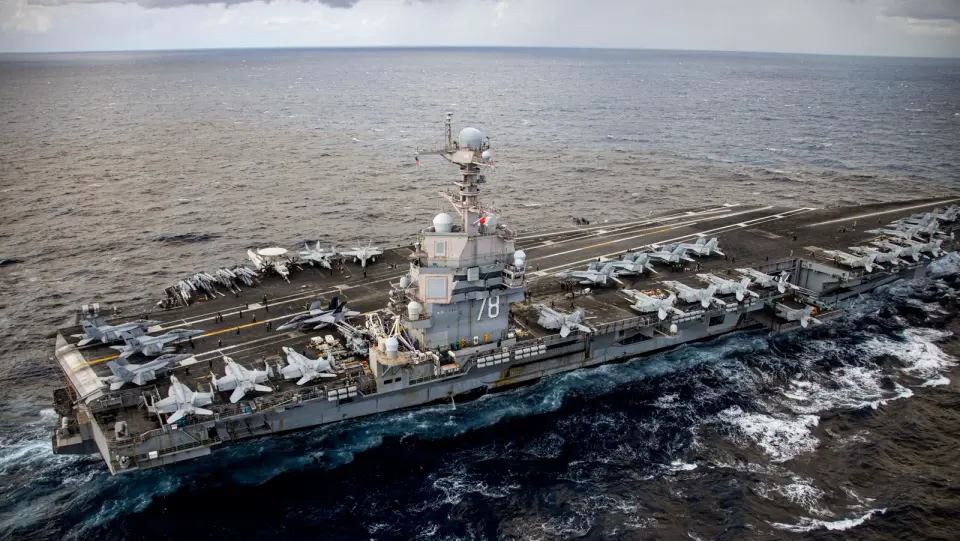
President Trump signed a National Security Presidential Memorandum on August 13, 2026, ordering the U.S. Navy to revert to steam-powered catapults and hydraulic elevators for the USS Doris Miller, the second Ford-class aircraft carrier. The order mandates that the Pentagon replace the Electromagnetic Aircraft Launch System (EMALS) and Advanced Weapons Elevators with legacy systems within 60 days. Simultaneously, the memorandum directs Secretary of Defense Pete Hegseth to propose a fifth public shipyard within 120 days to address submarine repair delays and accommodate a growing fleet. General Atomics, the EMALS manufacturer, warned that the change carries significant cost and schedule risks, as production of the new carrier is nearly 50% complete. The move reverses a decade of technological advancement in favor of older, proven systems, citing cost and reliability concerns raised by the President.
Key points
- Trump signed a memo requiring steam catapults and hydraulic elevators for the USS Doris Miller, replacing EMALS and AWE systems.
- The Pentagon has 60 days to submit a plan for the redesign; the Navy has not built a steam catapult in over 20 years.
- The memo also calls for a fifth public shipyard to handle submarine maintenance and support fleet growth over the next two decades.
- General Atomics stated that changing course now creates major integration risks and could widen the capability gap with adversaries.
- Trump has publicly criticized EMALS since 2017, arguing steam systems are cheaper and easier to repair with basic tools.
Background
This decision follows years of public criticism from Trump regarding the cost and complexity of modern carrier systems. In 2026, the Navy faced scrutiny over procurement costs, including the CBO’s estimate of $275 billion for 15 new battleships, highlighting broader concerns about shipyard capacity and industrial base sustainability. The current order intensifies debates about balancing technological innovation with traditional reliability in naval engineering.
How outlets are covering it
Breaking Defense reports that the move is part of a broader push to bolster readiness and reduce repair delays, noting that the Navy has not purchased steam catapults in over 20 years, which may require substantial investment to restart production. The Guardian emphasizes the long-standing nature of Trump’s opposition to EMALS, citing his repeated public anecdotes since 2017 and highlighting resistance from Navy leaders and industry experts who view the change as costly and technically regressive. General Atomics, as cited by both outlets, warns that the decision threatens U.S. technological superiority and workforce stability, while Senator Mark Kelly criticized the order as an uninformed interference in naval engineering. The Wall Street Journal, which first reported the changes, noted that senior Navy and industry leaders had resisted the move due to the expense of tearing out integrated systems.
Why it matters
The reversal to steam catapults could delay the USS Doris Miller’s delivery and increase costs, potentially affecting carrier readiness and U.S. naval dominance. The establishment of a fifth shipyard is critical for maintaining the nuclear fleet, but workforce availability and infrastructure costs remain significant hurdles. This decision signals a shift in defense procurement priorities, favoring legacy systems over new technology, which may have long-term implications for the U.S. defense industrial base and its ability to compete with adversaries.
What to watch
The Pentagon must submit a detailed plan for the EMALS replacement within 60 days. Hegseth is required to present a proposal for the fifth shipyard within 120 days, including site options, financing mechanisms, and timelines. General Atomics and other contractors will likely face contract adjustments and potential delays. The Navy will need to assess the feasibility of restarting steam catapult production, which may require new supplier agreements and significant up-front investment. Congressional hearings may follow to review the cost and strategic implications of the redesign.
- Trump orders return of steam catapults on carriers, fifth public shipyard Breaking Defense
- Exclusive | Trump Orders Navy to Restore Old Technology in Aircraft Carriers, Costing Billions WSJ
- Trump orders Pentagon to redesign US aircraft carrier to use steam catapults to launch jets The Guardian
- Presidential Memo: Rebuilding the United States Navy and America's Shipbuilding Industrial Base USNI News
- Trump directs Navy to return to steam catapults on aircraft carriers The Hill
Want the full story? Read the original reporting
Read on Breaking Defense