
Nobel Prize Recognizes Hall and Woodford for Macro Stabilization Frameworks
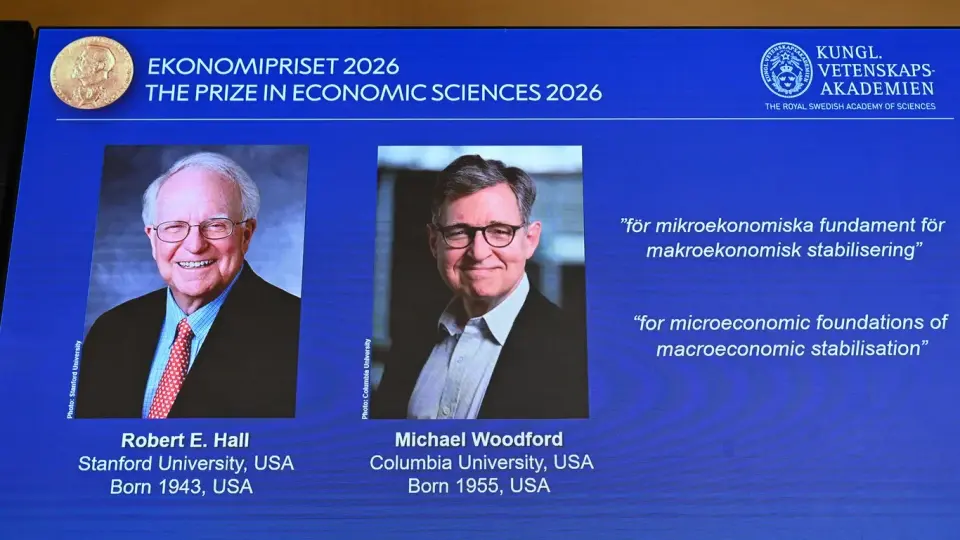
Robert Hall and Michael Woodford have been awarded the 2026 Nobel Prize in Economic Sciences for developing microeconomic foundations that guide macroeconomic stabilization. Their work provides central banks with tools to manage economic volatility, particularly during crises like the 2008 financial downturn.
Key points
- The Royal Swedish Academy of Sciences awarded the prize to Robert E. Hall of Stanford University and Michael Woodford of Columbia University.
- The award recognizes their research on how individual pricing and spending decisions influence broader economic stability and inflation.
- The prize amount is 12 million Swedish kronor, approximately $1.2 million, to be split between the two laureates.
- Their frameworks helped explain the effectiveness of non-traditional monetary tools like forward guidance and asset purchases during the 2008 crisis.
Background
This award follows a recent trend of Nobel recognition for research on economic institutions and labor markets. In 2024, Daron Acemoglu, Simon Johnson, and James Robinson won for their work on how institutions shape prosperity, while Claudia Goldin won in 2023 for her research on women's labor market outcomes. The 2025 prize recognized Joel Mokyr, Philippe Aghion, and Peter Howitt for their insights into innovation and growth. This year's award shifts focus back to the mechanics of economic stabilization and policy response to external shocks.
How outlets are covering it
Axios highlights the historical context of the 1970s stagflation, noting that traditional models linking inflation and unemployment failed, prompting the need for Hall and Woodford's new framework. The New York Times emphasizes the practical application of their work, describing it as insights that helped policymakers become better equipped to deal with economic shocks. Both sources agree on the winners' identities and the core contribution of their research, but Axios places greater weight on the theoretical breakthrough that replaced older models, while The New York Times focuses on the real-world utility for central banks during crises like the 2008 financial downturn. Woodford himself expressed surprise and elation at the award, noting its significance in understanding how economies navigate booms and busts.
Why it matters
The recognition of Hall and Woodford underscores the critical importance of microeconomic foundations in shaping macroeconomic policy. Their work provides the theoretical basis for modern central bank interventions, such as forward guidance and quantitative easing, which are essential tools for stabilizing economies during periods of high volatility or external shocks. This framework has become a standard reference for policymakers worldwide, influencing how central banks respond to crises and manage inflation expectations.
What to watch
The next step is the formal presentation of the Nobel Prize, where Hall and Woodford will receive their awards and likely discuss the ongoing relevance of their research in the current economic climate. Given the current disruptions in energy markets and global economic uncertainty, their frameworks may be increasingly scrutinized for their applicability to contemporary challenges. The prize also signals a continued interest in the intersection of microeconomic behavior and macroeconomic policy, potentially influencing future research and policy discussions.
- Two U.S. professors win Nobel prize in economics Axios
- Duo Share Nobel in Economics for Work on Steering Through Booms and Busts The New York Times
- 2 American economists win Nobel for work on managing economic shocks The Times of Israel
- Hall, Woodford win Nobel prize for work on how to stabilise economies Reuters
- Nobel Prize Goes to Economists Who Recast Ideas of Keynes Bloomberg.com
Want the full story? Read the original reporting
Read on Axios