The Fed’s latest meeting minutes suggest policymakers may adopt a hawkish stance, keeping rates higher for longer and tightening financial conditions, a backdrop that could reprice valuations in an historically expensive stock market and increase near-term volatility for investors.
President Trump used Kevin Warsh’s swearing-in as Federal Reserve Chair to stress Fed independence, telling Warsh to “do your own thing” and avoid White House pressure, in a backdrop of a 3.75% federal funds rate, sticky inflation around the high end of its range, and a flat yield curve. Markets are pricing independence as a key driver of the rate path, leaving three big questions for Warsh: whether the data permits further cuts, whether the curve resolves, and whether independence holds if policy and politics diverge.
The article notes that Kevin Warsh, a potential future Fed chair, suggests he may adopt a Greenspan-era approach to monetary policy, signaling a more flexible, growth-oriented stance rather than a strict, rules-based inflation target. If realized, this could influence rate guidance and market expectations as the Fed weighs balancing inflation with economic expansion.
Bond traders are pricing in a Warsh-influenced path for the Federal Reserve, expecting rate hikes this year and a higher-for-longer stance, as bond markets shift to a tighter monetary outlook.
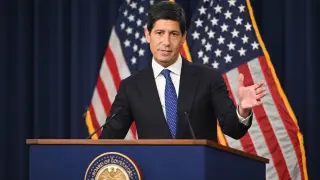
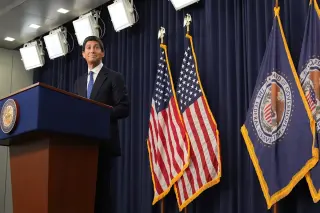
Kevin Warsh is sworn in as the Federal Reserve chair, taking charge of a divided central bank amid stubborn inflation; the ceremony, hosted at the White House, marks a rare transition as he pledges a reform-minded, independent approach to price stability and maximum employment, while Powell stays on the Board and markets eye possible rate hikes later this year.
Kevin Warsh begins as Fed chair facing stubborn inflation, an energy shock, and political pressure to cut rates, while Fed governor Christopher Waller signals a hawkish shift, making near-term easing unlikely as inflation and inflation expectations remain elevated.
Kevin Warsh is sworn in as Federal Reserve chair at the White House, the first such ceremony there since 1987, highlighting the central tension between maintaining the Fed’s independence and a president who has urged rate cuts. Analysts are divided on whether Warsh will resist political pressure given his conservative stance on easing, while observers note the White House ceremony signals optics that diverge from Fed tradition. Markets and policymakers will watch how Warsh handles inflation pressures from geopolitical events, communications reforms, and the Fed’s balance-sheet normalization, with some anticipating continued independence and others bracing for political influence similar to Powell’s experience.
Kevin Warsh was sworn in as Fed chair amid ongoing questions about the central bank's independence and inflation pressures; with a June policy meeting approaching and markets pricing a high likelihood of no rate change, Warsh—one of 12 voting members—faces a delicate balance between political pressure and monetary policy independence.
Kevin M. Warsh was sworn in as Federal Reserve chair amid rising inflation and expectations the Fed may raise rates, not cut them, despite President Trump’s push for cuts. He emphasizes independence and a reform-minded approach—critiquing inflation measurement, embracing real-time data, and signaling a potential balance-sheet shrinkage to offset higher long-term rates if price pressures persist. With the labor market holding up and consumer spending buoyant, markets await the June dot plot as policymakers weigh how aggressively to respond.
Fed minutes show a majority of participants signaled that some policy firming would likely be appropriate if inflation remains persistently above 2 percent, even as the statement allowed for possible cuts; four voting officials dissented, with some urging a two‑sided view. The minutes did not specify how long inflation would need to stay high to justify a hike. With war boosting energy prices and other costs, inflation uncertainty remains, and some officials suggested rate reductions could come later this year if pressures ease. Separately, several participants highlighted cybersecurity and AI risks to financial markets, reflecting broader concerns about tech-driven vulnerabilities in the sector.
Minutes from the latest Federal Reserve meeting show a majority of policymakers indicated further rate increases could be appropriate if inflation remains persistently above 2%, even as the committee kept the policy rate at 3.5%-3.75% and faced four dissenters. The discussions centered on how long war-driven inflation would last, with some participants pushing to drop easing-bias language; markets still price in a potential hike by late 2026 or early 2027. Warsh takes over as chair later this year, while inflation remains elevated amid energy price shocks and other factors.
President Trump will host Kevin Warsh's swearing-in as Federal Reserve chair at the White House, a break from the usual Fed ceremony and a sign of his personal stake in the central bank's independence amid ongoing tensions; Warsh was confirmed by the Senate 54-45.
The IMF lifted its 2026 UK growth forecast to about 1% and said the Bank of England should remain ready to cut rates if needed, even as holding at 3.75% may be appropriate to limit second-round inflation effects. With energy prices pushing inflation higher in the near term and then easing, the IMF expects inflation to return to target by end-2027 as growth gradually recovers, arguing for data-driven, meeting-by-meeting policy decisions.
Incoming Fed chair Kevin Warsh argues the central bank talks too much and hints at a new framework to curb its communications, signaling a potential shift in how the Fed signals policy. While Fed transparency has grown since Greenspan and Bernanke, such communications help guide markets, especially in times of uncertainty; a Brookings survey shows economists want continued post-meeting press conferences, though some regional presidents think officials should speak less.
Two Trump-nominated Fed officials object to keeping Powell as chair pro tempore for an unlimited duration, arguing the designation should be finite; Powell will remain chair until Kevin Warsh is sworn in after his Senate confirmation, marking a transitional, time-limited leadership. Miran voted against the designation and Bowman abstained; Warsh could be sworn in as soon as next week following a 54-45 Senate vote. The episode underscores tensions over Fed independence amid partisan pressure and continuing debate over the path of monetary policy and rate cuts.