economics19.17 min read
The Real Economics of Debt: Why Policy Tricks Won’t Fix Rising Rates
17 days ago•Source: Oaktree Capital Management

The latest economics stories, each synthesized from multiple sources with added background and context.

Six NFL teams are set to move into new stadiums from 2026–2031 with about $5.74 billion in public subsidies, yet economists argue such spending rarely spurs local growth and mostly reallocates existing spending. The piece explains how the novelty of a new venue and owners’ benefits encourage bigger, costlier stadiums (gold-plating) when the public absorbs part of the bill, and why subsidies are typically approved by lawmakers rather than voters. It notes voter skepticism in referendums and discusses incentives for politicians to back stadium deals despite limited public support.
Bloomberg.com•1 month ago
theins.press•2 months ago

Iran and Oman say they’ve reached a deal to reopen the Strait of Hormuz, but eight major shipping groups are protesting a proposed transit-fee scheme that could raise costs for European and Asian customers; the agreement hasn’t been published yet and U.S. commentary is pending, while oil markets hover around $79–$80 a barrel.

Fed Governor Lisa Cook says inflation remains too high and she’s prepared to act by raising rates if it fails to cool, even after last week’s hold; she warns the Fed cannot wait if inflation doesn’t continue to ease, signaling possible action as soon as September or October, with Kashkari also arguing for higher rates.
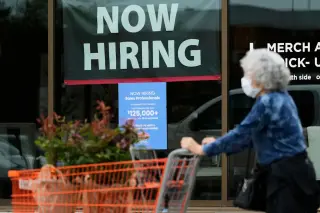
June payrolls rose by 57,000 and the unemployment rate fell to 4.2% as about 720,000 people left the labor force, pulling the participation rate to 61.5% (the lowest since March 2021) and prime‑age participation to 83.3%. Long‑term unemployment remained elevated at around 1.9 million. The Job Openings and Labor Turnover Survey showed 7.6 million openings but a hiring rate of 3.3% with little turnover. Economists warn the unemployment drop may reflect people exiting the workforce rather than stronger hiring, leaving the labor market uneven and possibly noise-driven, with anomalies like declines in 25–34-year-olds and softer leisure/hospitality hiring.

The June payroll report is expected to show a fourth straight month of steady hiring (about 115,000 jobs), a 4.3% unemployment rate, and wage growth near 3.5%, signaling a stabilizing labor market but wage gains still lag inflation. Analysts warn of risks from summer distortions and divergent forecasts—some see stronger payrolls while others expect modest gains—yet the overall picture points to resilience without rapid wage-driven inflation.

The BIS warns that inflation, rising financial vulnerabilities and record public debt—amid AI-driven investment and evolving non-bank risk—pose growing threats to global growth. It urges coordinated policy action to maintain price stability, shore up financial stability beyond banks, and pursue fiscal sustainability and structural reforms; delaying steps could raise costs and worsen future trade-offs.

China asserts it can endure a further deterioration or even a freeze in EU trade, via a CCTV-affiliated account that argues the EU altered tactics after an EV-subsidy probe and is weakening its normative power. EU Trade Commissioner Maros Sefcovic plans talks with Chinese minister Wang Wentao in Brussels amid a roughly €360 billion trade gap and concerns over subsidized Chinese imports, while China says firms are deprioritizing Europe even as investments in NEVs and automotive continue—leaving the outlook for deeper cooperation uncertain if the EU keeps a hard line.

China’s consumer spending and investment slumped to Covid-era levels, with retail sales down 0.6% year over year and fixed-asset investment dropping 4.1% in the first five months, even as industrial production rose and exports remain robust, signaling a stalled recovery amid ongoing headwinds for domestic demand.

The Dispatch reports on Texas pushing back against Wall Street’s influence over energy and finance policy, detailing political moves, potential regulatory changes, and the potential impact on Texas’s economy and national markets.

A Middlebury College study exploiting AT&T’s early iPhone exclusivity (2007–2011) finds birth rates fell faster in counties with more AT&T coverage, suggesting smartphones may influence social behavior and reduce fertility, though causation isn’t established and other factors could contribute; the finding adds to broader policy discussions on aging populations and impacts of technology on society.

A New York Fed analysis using the Survey of Consumer Expectations finds rising food insecurity since 2020—disproportionately among lower‑income, less‑educated households and those with children—alongside a sharp drop in consumer optimism and job-finding prospects. Despite solid macro indicators, sentiment remains weak, reflecting a K‑shaped economy where the bottom half faces renewed financial strain. The study links higher insecurity to deteriorating outlooks, while acknowledging that inflation, cost of living, and policy changes (e.g., SNAP) also drive pessimism and that multiple factors influence consumer expectations even among those not reporting food insecurity.