
Cornell hires former DOJ official for independent review as protests and vandalism escalate
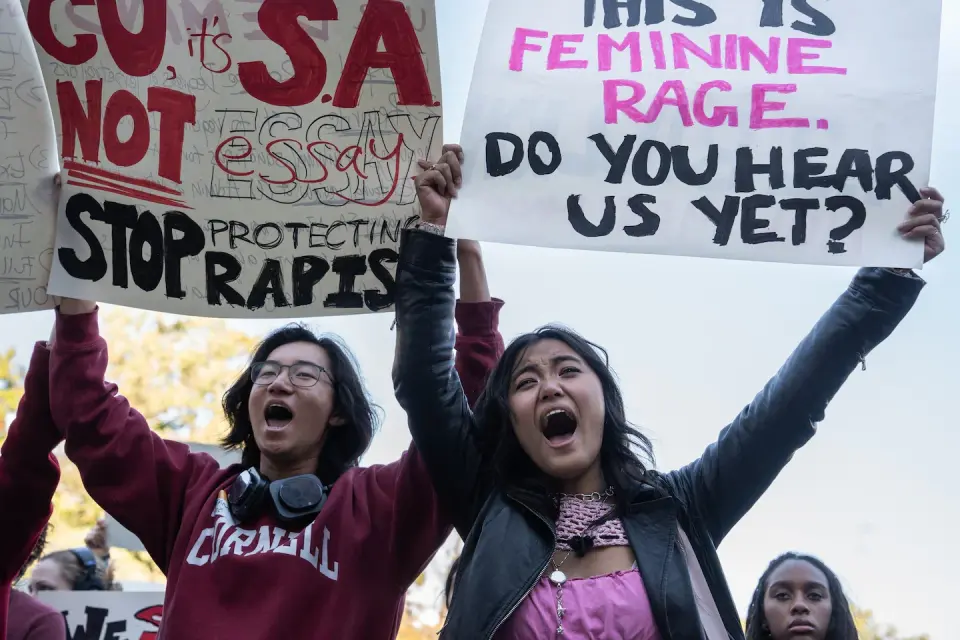
Cornell University announced Tuesday that former US Deputy Attorney General Sally Yates will lead an independent review of the school’s response to the 2024 alleged gang rape of a student known as Jane Doe. This decision follows a week of intense unrest, including a 1,000-person protest, vandalism of administrative buildings, and a faculty motion for a vote of no confidence against President Michael Kotlikoff. While the university expelled two fraternity members in 2025, critics argue the disciplinary actions were insufficient. The controversy has intensified after New York Attorney General Letitia James took over the criminal investigation from the local district attorney, who declined to file charges. The independent review will assess whether Cornell followed its policies in handling the allegations, which involve seven Chi Phi fraternity members accused of drugging and assaulting the victim in October 2024.
Key points
- Cornell University appointed former US Deputy Attorney General Sally Yates to conduct an independent review of its handling of the Jane Doe sexual assault case.
- The review will examine whether the university followed its policies and procedures in responding to the allegations against seven Chi Phi fraternity members.
- Over 1,000 students protested at Ho Plaza on Monday, demanding the expulsion of all accused members and the resignation of President Michael Kotlikoff.
- Activists vandalized the administration building early Monday, smashing windows and spray-painting slogans, an act the university is investigating.
- New York Attorney General Letitia James has taken over the criminal investigation as special prosecutor after the Tompkins County District Attorney declined to file charges.
- Cornell’s Faculty Senate is considering a vote of no confidence against the administration, with approximately 40 senators supporting the resolution.
Background
The current crisis stems from a civil lawsuit filed in September 2026 by a former student, identified as Jane Doe, alleging she was drugged and gang-raped by seven members of the Chi Phi fraternity in October 2024. The Tompkins County District Attorney, Matthew Van Houten, declined to file criminal charges, citing insufficient evidence, which led to public outcry. In response, New York Governor Kathy Hochul appointed Attorney General Letitia James as a special prosecutor to investigate the case. Prior to the current wave of protests, Cornell had expelled two fraternity members and suspended others, but critics argued these actions were inadequate. The university had also faced criticism for placing disciplinary authority in administrative hands during the pandemic, removing an independent judicial system that existed from 1969 to 2020.
How outlets are covering it
The Washington Post emphasizes the scale of student mobilization and the demand for systemic changes, such as restoring an independent judicial system and mandatory training, highlighting the fear among activists regarding administrative retaliation. CNN focuses on the institutional response, detailing the appointment of Sally Yates for an independent review and the faculty’s move toward a vote of no confidence, while also noting the threats faced by Jane Doe and the hiring of high-profile defense attorneys by the accused. The Guardian, through columnist Robert Reich, contextualizes the incident within a broader cultural climate of misogyny, linking the alleged assault to the political environment fostered by the Trump administration and the 'manosphere,' suggesting that the case reflects a wider issue of impunity for men regarding violence against women. While the Post and CNN focus on the immediate procedural and disciplinary failures, the Guardian frames the event as a symptom of a larger societal shift toward toxic masculinity and authoritarianism.
Why it matters
The case highlights the ongoing tension between university administrations and student bodies regarding the handling of sexual assault allegations, particularly in the wake of the removal of independent judicial systems at many Ivy League institutions. The appointment of a former high-ranking Justice Department official signals the severity of the crisis and the potential for significant institutional accountability. Furthermore, the case has sparked a national conversation about the adequacy of criminal justice responses to sexual violence, as evidenced by the state attorney general’s intervention and the surge in calls to sexual assault hotlines. The outcome of the independent review and the criminal investigation will likely set precedents for how universities and local authorities handle similar cases in the future.
What to watch
The independent review led by Sally Yates will determine whether Cornell followed its policies in handling the case. The Faculty Senate is expected to vote on the resolution of no confidence on October 14. The state attorney general’s office is seeking outside counsel to support the criminal investigation, which may lead to grand jury proceedings. Students are planning a seven-hour sit-in on Wednesday in solidarity with survivors. The university is also investigating the vandalism of its administrative building. The outcome of these actions will likely influence future policies on sexual assault prevention and disciplinary procedures at Cornell and potentially other institutions.
- Hundreds protest at Cornell, call for expulsion of frat members after rape report The Washington Post
- Cornell faculty prepare no-confidence vote against administration over handling of alleged sexual assault case CNN
- Trump is fueling a culture of misogynistic impunity The Guardian
- Cornell students stage anti-rape rally in support of 'Jane Doe' reuters.com
- Cornell Case Highlights Drop in Resolved Sexual Assault Cases Under Trump The New York Times
Want the full story? Read the original reporting
Read on The Washington Post