
SS United States Sinks Off Florida to Become World’s Largest Artificial Reef
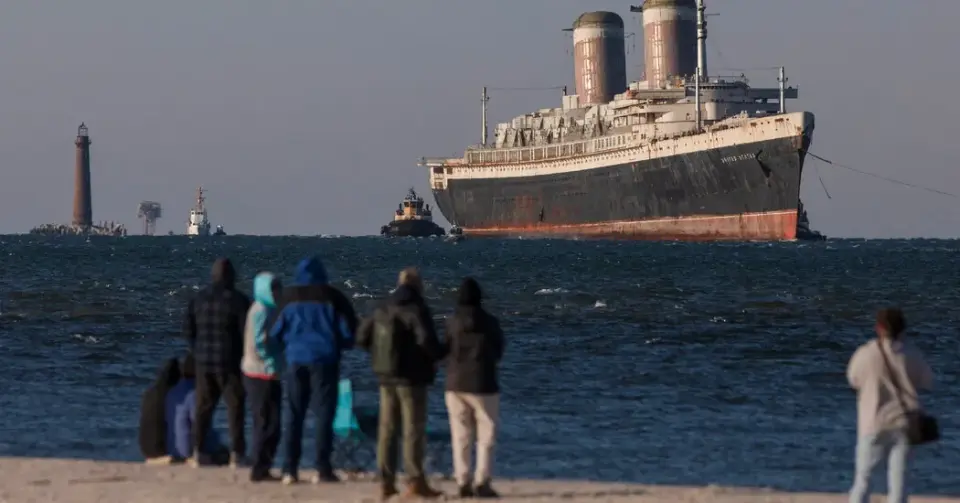
On Nov. 11, 2026, the S.S. United States, a 990-foot midcentury ocean liner, was deliberately sunk off Destin, Fla., to become the world’s largest artificial reef. The vessel, which spent nearly 30 years docked in Philadelphia, was towed to the Gulf of Mexico and submerged in a controlled operation without explosives. This decision ends years of failed efforts to preserve the ship as a museum or floating hotel, instead prioritizing its use as a marine habitat and diving attraction. A land-based museum featuring the ship’s removed smokestacks is also planned to preserve its history.
Key points
- The S.S. United States, designed by William Francis Gibbs, was once the fastest ocean liner in the world and carried notable figures like Bill Clinton, Harry Truman, and Marlon Brando between 1952 and 1969.
- The ship was moved from Philadelphia to Alabama last year for cleaning and remediation, then towed to Destin, Fla., for its final journey to the ocean floor.
- The sinking was executed in a precision operation without explosives, beginning around 3:45 p.m. Central time on Nov. 11, 2026.
- The project is funded by Okaloosa County and aims to create a marine habitat and diving destination, while a land-based museum will preserve the ship’s legacy.
- Activists, including the SS United States Conservancy, unsuccessfully fought to keep the ship above water as a museum, with President Susan Gibbs noting the ship’s symbolic value.
Background
The S.S. United States, a 990-foot ocean liner and former speed record holder, was deliberately sunk off the Florida coast on Nov. 11, 2026, to become the world’s largest artificial reef. The vessel, which spent nearly three decades docked in Philadelphia, was towed to Destin and submerged without explosives in a controlled operation. The project, funded by Okaloosa County, aims to create a marine habitat and diving attraction while preserving the ship’s legacy through a planned museum featuring its removed smokestacks.
How outlets are covering it
The New York Times emphasizes the ship’s historical significance and the end of efforts to save it, framing the sinking as a final chapter for a 'midcentury monument to postwar American technology and ambition.' The BBC highlights the ship’s cultural impact, noting that it carried royalty and celebrities, and mentions the failed proposals to preserve it as a museum or floating hotel. The Pensacola News Journal focuses on the visual spectacle of the sinking, describing the ship as a 'ghostly hunk' on the horizon and noting the presence of pleasure craft to witness the event. All sources agree on the ship’s transformation into an artificial reef but differ in emphasis: The Times and BBC focus on historical and cultural aspects, while the Pensacola News Journal highlights the public spectacle.
Why it matters
The sinking of the S.S. United States marks the end of a significant chapter in maritime history and the beginning of a new one as a marine habitat. It reflects broader trends in the repurposing of historic vessels and the balance between preservation and environmental conservation. The decision to sink the ship, despite activist efforts, underscores the challenges of preserving large, historic structures and the shifting priorities in how such artifacts are valued and utilized.
What to watch
The S.S. United States will serve as an artificial reef and diving destination, while a land-based museum featuring its removed smokestacks will preserve its history. The project is expected to attract tourists and contribute to marine conservation efforts. Further developments may include the ship’s impact on local marine life and the success of the museum in preserving its legacy.
- The S.S. United States, a Historic Supership, Heads to the Ocean Floor The New York Times
- WATCH LIVE: SS United States, once world's fastest ocean liner, sinks to become reef off Florida PBS
- Florida artificial reef dives: 8 sites to know in 2026 qz.com
- See the SS United States being sunk off Florida coast Pensacola News Journal
- Famed ship SS United States to be sunk off coast of Florida BBC
Want the full story? Read the original reporting
Read on The New York Times