
Druckenmiller Admits AI Drafted Op-Ed Criticizing Bessent’s Bond Strategy
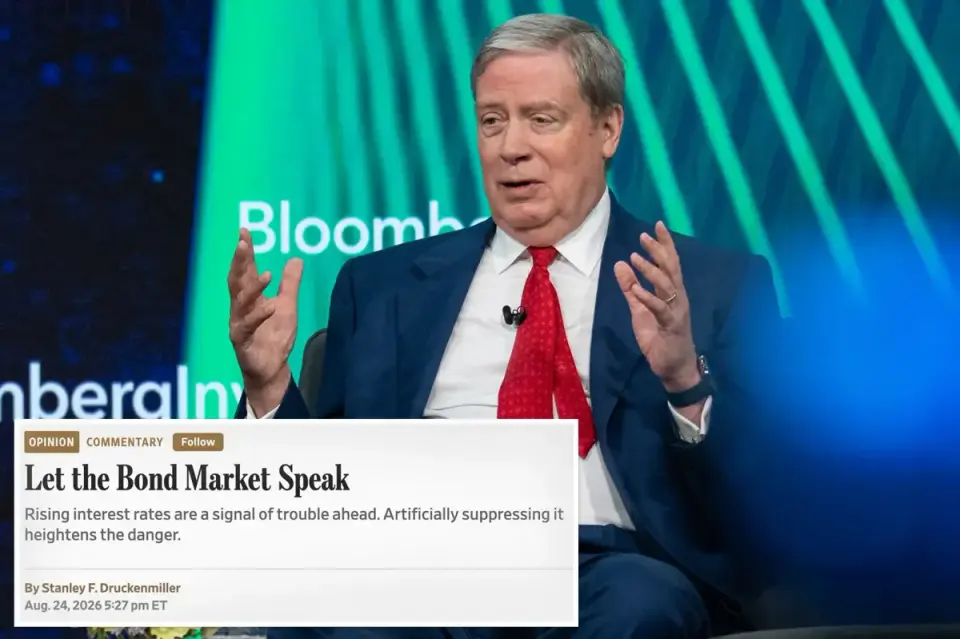
Billionaire investor Stanley Druckenmiller confirmed he used artificial intelligence to draft a Wall Street Journal op-ed criticizing Treasury Secretary Scott Bessent’s plan to double government bond buybacks. Druckenmiller argued that suppressing yields without addressing the primary deficit is unsustainable, while WSJ editors defended the piece as his genuine opinion. Market experts remain skeptical that Treasury interventions can offset the impact of a $40 trillion national debt and a projected $2 trillion deficit.
Key points
- Druckenmiller admitted to NOTUS that he used AI to write his op-ed, comparing the tool to a calculator for math.
- The op-ed, titled 'Let the Bond Speak,' criticized Bessent’s plan to double buybacks to potentially $4 billion.
- Paul Gigot, WSJ editorial page editor, defended the publication, stating the argument reflects Druckenmiller’s genuine views.
- CNBC reported that Druckenmiller warned that artificial yield suppression is a 'subsidy to procrastination.'
- JPMorgan compared the buyback strategy to 'paying your mortgage with your credit card' amid rising debt levels.
Background
This controversy follows earlier reports that Druckenmiller had increased positions in AI infrastructure companies like Alphabet and Amazon. The current debate occurs against a backdrop of soaring U.S. debt, which recently eclipsed $40 trillion, and a budget deficit approaching $2 trillion for 2026. Previous coverage noted that Druckenmiller and Bessent share a professional history, having worked together under George Soros in the 1990s.
How outlets are covering it
The New York Post highlighted the admission of AI usage and the subsequent defense by WSJ editor Paul Gigot, who emphasized the integrity of the author's argument. CNBC focused on the financial implications, noting that Druckenmiller’s criticism joins a broader chorus of skeptics who believe Treasury lacks the firepower to manage a $4.8 trillion debt issuance market. The New York Times framed the op-ed as part of a growing 'heat' on Bessent, noting the irony of Druckenmiller, who employed Fed Chair Kevin Warsh, criticizing government market intervention. Yahoo Finance featured a JPMorgan comparison, likening the buyback strategy to using credit cards for mortgage payments, underscoring concerns about fiscal sustainability.
Why it matters
The incident raises questions about the role of AI in high-profile financial commentary and the credibility of government interventions in bond markets. As U.S. debt and deficits rise, the effectiveness of Treasury buybacks in lowering yields is increasingly questioned by market participants, potentially influencing future monetary policy decisions by the Federal Reserve.
What to watch
The Federal Reserve is scheduled to meet on September 15-16, where Chair Kevin Warsh may address the Treasury’s bond market interventions. Markets are currently pricing in a 40% chance of a rate hike, reflecting uncertainty about the administration’s fiscal and monetary strategies. Druckenmiller’s op-ed may continue to influence public and market sentiment regarding the sustainability of current debt management tactics.
- Billionaire investor Stanley Druckenmiller admits he used AI to write WSJ op-ed bashing Bessent New York Post
- Druckenmiller’s Surprising Critique of Bessent Was Delivered With the Help of AI WSJ
- Stanley Druckenmiller leads doubters who think Bessent's bond ploys will fail CNBC
- The Heat on Treasury Secretary Scott Bessent Grows The New York Times
- JPMorgan compares Bessent's $4B bond buyback to 'paying your mortgage with your credit card' as U.S. debt hits $40T Yahoo Finance
Want the full story? Read the original reporting
Read on New York Post