
COP31 Collapses in Historic Deadlock Over Fossil Fuel Omissions
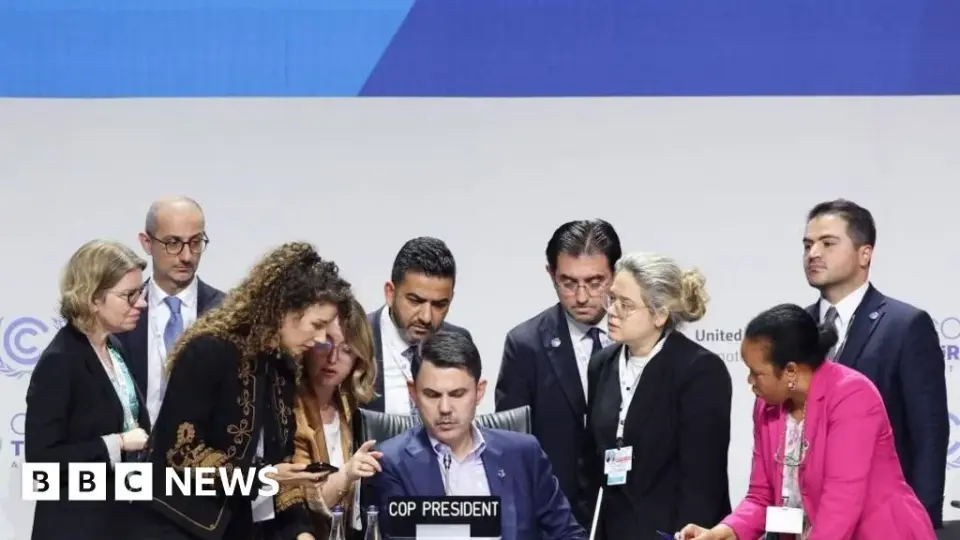
The 2026 UN climate conference in Antalya ended without a final consensus agreement, marking the first major failure since 2009. Negotiations collapsed after oil-producing nations blocked explicit references to phasing out fossil fuels, while vulnerable nations rejected the lack of concrete financial commitments for climate adaptation.
Key points
- COP31 became the longest UN climate conference in history, running late into Sunday after failing to reach a deal by the scheduled Friday deadline.
- The final draft text omitted any mention of 'fossil fuels,' leading the EU, Pacific island nations, and others to reject the agreement as insufficient.
- Oil-producing nations, led by Saudi Arabia, argued that removing fossil fuel language would cause 'fuel poverty' and that their historical emissions were low.
- Developing nations criticized the absence of specific financial figures or baselines for adaptation funding, despite a 2025 pledge to triple such support.
- The conference marked the first formal UN discussion on 'overshoot,' acknowledging that current policies project global warming of 2.8C by 2100, missing the 1.5C Paris target.
Background
Previous coverage noted that the 1.5C warming limit is effectively unattainable under current policies, with projections showing 2.6-2.8C by 2100. Earlier reports highlighted that while clean energy investment has doubled fossil fuel spending, stalled policies and new oil projects have negated progress. The 2023 COP28 agreement to 'transition away' from fossil fuels was not built upon in subsequent years due to resistance from oil-exporting states.
How outlets are covering it
The BBC and CNN emphasized the collapse as a historic failure of leadership, with UN Secretary-General Antonio Guterres criticizing 'powerful fossil fuel interests' for blocking action. The New York Times highlighted the bitter geopolitical clash between nations seeking to wind down fossil fuels and those aiming to prolong them. TribLIVE provided direct quotes from negotiators, including Irish climate minister Darragh O'Brien, who called the omission of fossil fuels 'unconscionable,' and Australian COP31 president Chris Bowen, who acknowledged 'unbridgeable red lines' but noted progress in electrification pledges. Critics like Mohamed Adow of Power Shift Africa labeled the outcome a 'shameful lack of urgency,' while some Pacific island nations refused to accept 'false solutions' like carbon capture without phase-downs.
Why it matters
The failure to reach a consensus deal signals a deepening fragmentation in global climate governance. Without a binding political agreement, the UN climate process faces questions about its viability in a geopolitically divided world. The omission of fossil fuel language and concrete finance commitments undermines the ability of vulnerable nations to adapt to accelerating climate impacts, such as extreme heat and flooding, while allowing oil-producing nations to maintain current production levels without international constraint.
What to watch
The UN climate chief, Simon Stiell, has indicated he will seek advice on potential reforms to the consensus-based process. The next conference, COP32, is scheduled for November 2027 in Ethiopia. In the interim, more than 80 countries have backed a target to increase the share of global energy use met by electricity to 35% by 2035, and progress was made on a 'just transition mechanism' for workers in shifting economies, though these side agreements do not replace the failed main pact.
- COP31 climate talks fail to reach deal amid fossil fuel and money rows BBC
- COP31 Talks Collapse in Turkey in a Clash Over Fossil Fuels The New York Times
- In their own words: Leaders at UN climate talks discuss why negotiations ended without deal TribLIVE.com
- Global climate summit collapses as countries fail to agree on moving away from fossil fuels CNN
- COP31 climate talks collapse as EU and others reject deal Reuters
Want the full story? Read the original reporting
Read on BBC