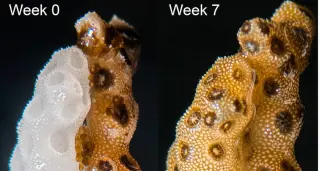
A Stanford University study published in Science Advances demonstrates that bleached corals can fully recover within seven weeks when physically touching healthy clones of the same genetic lineage. The rapid recovery is driven by the transfer of beneficial algae through fused tissues, offering a potential new restoration method, though it currently requires identical specimens and does not address the root cause of warming oceans.
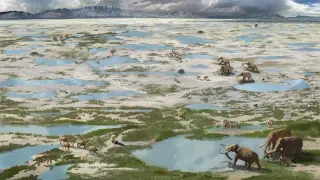
A new study confirms that early humans inhabited White Sands National Park in New Mexico for nearly 2,000 years during the Last Glacial Maximum, enduring rapid and extreme environmental shifts. By analyzing 20 sediment layers containing footprints, pollen, and organic molecules, scientists reconstructed a landscape that transitioned from a large lake surrounded by conifer forests to a drier, sagebrush-dominated environment. The findings demonstrate that human presence was not continuous but occurred in pulses, often coinciding with geological conditions that preserved tracks. This evidence pushes back the timeline of human arrival in the Americas to approximately 23,500 years ago, challenging previous assumptions that the continent was uninhabited until 13,000 years ago. The study highlights that while footprints provide intimate glimpses of human activity, they do not represent a continuous record of population size or movement, as preservation depended on specific hydrological and climatic events.
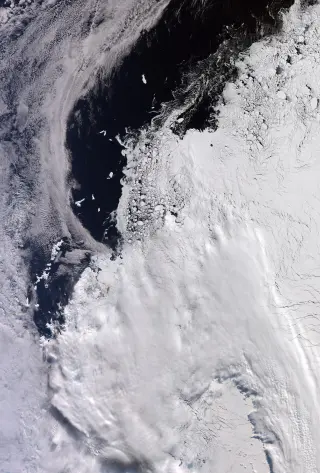
New research indicates that Thwaites Glacier, the world's largest, is losing mass twice as fast as previously estimated. This accelerated melting could add 1.2 inches to global sea levels by 2100, even without further warming, due to warm seawater penetrating under the ice.
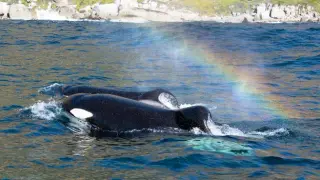
Orcas have emerged as the primary predators of great white sharks, a behavior confirmed through forensic evidence and drone footage across South Africa, California, and Australia. By targeting sharks' nutrient-rich livers, orcas have forced great whites to abandon traditional hunting grounds, causing significant ripple effects in marine food chains. This shift is exacerbated by climate change, which is bringing these two apex predators into closer proximity.
New research indicates Thwaites Glacier, known as the 'Doomsday Glacier,' is melting significantly faster than previously estimated. By accounting for dynamic 'grounding zones' where seawater penetrates under the ice, researchers project the glacier could contribute up to 1.2 inches to global sea-level rise by 2100, doubling earlier forecasts. This potential impact raises concerns about coastal flooding in major cities like Miami and Manila.
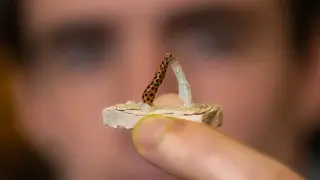
Stanford researchers found that bleached corals can fully recover in as little as seven weeks when physically touching a healthy clone. The contact allows beneficial algae to transfer via fused tissues, offering a potential rapid restoration method, though it currently requires genetically identical specimens.
China remains the world’s largest greenhouse gas emitter, accounting for 30.3% of global totals in 2025, though its emissions saw a slight decline. The top five emitters, including the U.S. and India, generate nearly 58% of global output, while European nations continue to decouple economic growth from emissions.
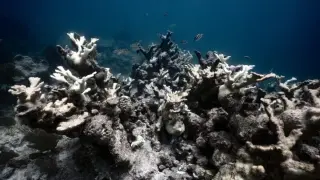
A new peer-reviewed study in Nature confirms that 44% of reef-building coral species are threatened with extinction, but the data excludes the most recent global bleaching events, suggesting the true risk is higher.
A new study reveals that the Thwaites Glacier, often called the 'Doomsday Glacier,' is melting significantly faster than previously estimated. By accounting for dynamic 'grounding zones' where warm ocean water penetrates under the ice, researchers project the glacier could contribute up to 1.2 inches to global sea-level rise by 2100, doubling earlier forecasts.
Satellite data confirms 2026 saw record-low sea ice extents in both the Arctic and Antarctic, with the Arctic minimum tying 2008 and 2025, and the Antarctic maximum ranking third-lowest on record.
Istanbul experienced its most severe flooding in over 80 years, resulting in at least four deaths and widespread infrastructure damage. The city received more rainfall in 48 hours than the historical average for September and October combined. Emergency services rescued nearly 600 stranded individuals, while schools and public offices closed as authorities warned of continued heavy rain and climate-related risks.
New research confirms that early humans inhabited White Sands National Park in New Mexico for nearly 2,000 years during the Last Glacial Maximum, enduring rapid and extreme environmental shifts. By analyzing 20 sediment layers containing footprints, pollen, and organic molecules, scientists reconstructed a landscape that transitioned from a large lake surrounded by conifer forests to a drier, sagebrush-dominated environment. The findings demonstrate that human presence was not continuous but occurred in pulses, often coinciding with geological conditions that preserved tracks. This evidence pushes back the timeline of human arrival in the Americas to approximately 23,500 years ago, challenging previous assumptions that the continent was uninhabited until 13,000 years ago. The study highlights that while footprints provide intimate glimpses of human activity, they do not represent a continuous record of population size or movement, as preservation depended on specific hydrological and climatic events.
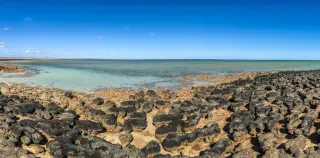
A new review in the journal Alcheringa highlights that microbialites, Earth’s oldest visible evidence of life, are critically vulnerable. While Western Australia preserves records spanning 3.5 billion years, living and fossil sites face damage from tourism, climate change, and poor geoheritage protection.
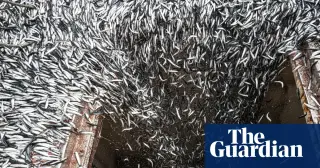
Peru has fully suspended its anchoveta fishing season for 2026 due to a severe El Niño event, causing a 30.7% contraction in the sector and threatening global fishmeal supplies. The government prioritized stock sustainability over economic losses, while industry groups demand emergency financial aid.
Stanford researchers discovered that bleached corals can fully recover within seven weeks when physically fused with healthy clones. The process relies on tissue fusion to transfer beneficial algae, offering a potential rapid restoration method despite current scalability limits.