
Trump, Putin, and Xi Agree to Loosen Energy Sanctions and Criticize ICC in Shenzhen Summit
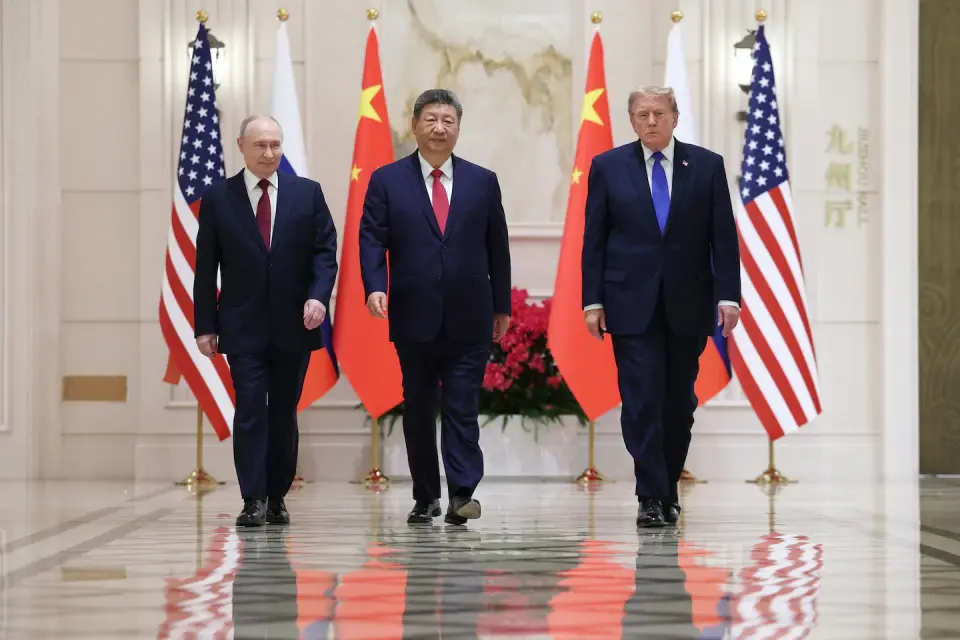
In a trilateral meeting in Shenzhen, China, on November 19, 2026, US President Donald Trump, Russian President Vladimir Putin, and Chinese President Xi Jinping issued a joint statement agreeing to reform the United Nations, limit the authority of the International Criminal Court, and reduce energy sanctions. The 80-minute summit, held on the sidelines of the Asia-Pacific Economic Cooperation forum, focused on increasing global fuel supplies and reducing nuclear weapons, though no concrete arms control agreements were reached. The agreement drew sharp criticism from US Republicans and Ukraine allies, who argued that lifting energy constraints would fund Russia’s war in Ukraine and fail to lower domestic fuel prices. While the leaders expressed camaraderie, observers noted the lack of substantive breakthroughs on artificial intelligence or nuclear disarmament.
Key points
- The three leaders signed a joint statement committing to reform the United Nations and limit the International Criminal Court and similar bodies.
- The agreement includes a pledge to reduce energy sanctions and increase energy output to address global fuel supply concerns.
- The meeting took place at a lakeside villa in Shenzhen, China, lasting approximately 80 minutes.
- No concrete agreements were reached on nuclear arms control or artificial intelligence regulation, despite Trump’s framing of the nations as uniquely positioned to discuss disarmament.
- US Senator John Cornyn criticized the move, stating that increased Russian energy exports would fund the war in Ukraine and would not effectively lower diesel prices.
Background
This summit followed earlier speculation that the meeting might be symbolic rather than substantive, given Trump’s recent midterm election losses and domestic scandals. Previous coverage noted that analysts expected limited concrete outcomes, with the White House framing the trip as an effort to project strength and manage trade tensions, particularly regarding rare earth exports and tariff truces expiring in January. The current agreement on energy sanctions and ICC limitations marks a shift from the anticipated focus on trade and security, instead prioritizing the reduction of constraints on major powers.
How outlets are covering it
The Washington Post highlighted the joint statement’s focus on reducing constraints on major powers, including UN reform and ICC limitations. The New York Times emphasized the lack of substantive outcomes, noting that while Trump expressed camaraderie, there were no breakthroughs on nuclear control or AI, and the leaders were largely silent on new threats. Politico focused on the backlash, reporting that Ukraine’s allies and US Republicans viewed the energy agreement as a mistake that would fund Russian aggression and fail to lower fuel prices. The outlets diverge in emphasis: The Post and NYT focus on the diplomatic content and lack of progress, while Politico centers on the political and strategic consequences for Ukraine and US domestic policy.
Why it matters
The agreement signals a potential shift in US foreign policy toward reducing multilateral constraints, which could weaken international accountability mechanisms like the ICC. The focus on energy sanctions may impact global fuel markets and Ukraine’s ability to sustain its defense efforts. The lack of progress on nuclear arms control and AI raises concerns about the future of great-power diplomacy and global security frameworks.
What to watch
The implementation of the joint statement’s commitments on UN reform and ICC limitations will likely face diplomatic hurdles. The impact on energy markets and fuel prices will be monitored in the coming weeks. Further discussions on nuclear arms control and AI may occur in future bilateral or multilateral settings, but no immediate follow-up meetings were announced. The political fallout in the US and Europe may influence future US-Russia and US-China relations.
- The one thing Putin, Trump and Xi agreed on — fewer limits on major powers The Washington Post
- Trump’s trilateral draws backlash from Republicans and Ukraine allies Politico
- Trump's personalized diplomacy hits its limits with 3-way summit Reuters
- Trump Flaunts Camaraderie With Xi and Putin but Has Little to Show for It The New York Times
- Trump’s world stage ‘triumph’ is turning into a domestic disaster The Times
Want the full story? Read the original reporting
Read on The Washington Post