
Coalition Forces Exit Iraq, Ending 12-Year Anti-IS Mission Amid Militia Tensions
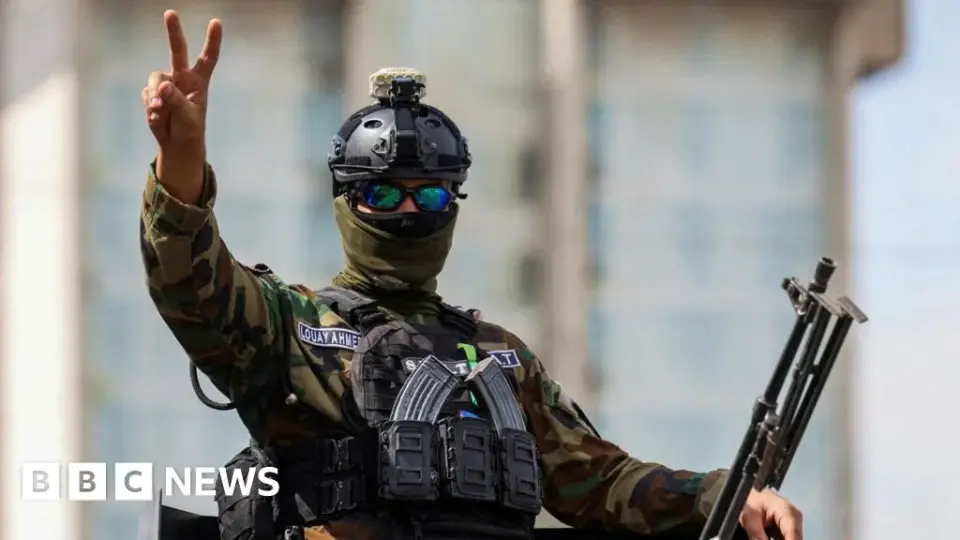
The last US and UK troops have withdrawn from Iraq, concluding the 12-year Operation Inherent Resolve. While Baghdad and Washington frame the exit as a victory for Iraqi sovereignty and the defeat of Islamic State, the departure leaves a security vacuum. Kurdish officials fear increased vulnerability to Iranian-backed militias, while powerful armed groups have resisted disarmament deadlines, now pushed to June 2027.
Key points
- The final British and American personnel left the Irbil air base in northern Iraq on Wednesday, ending a military presence that began in 2014 to combat Islamic State.
- The withdrawal fulfills a 2024 agreement between Washington and Baghdad to end the mission by September 30, 2026, following a decade of counter-terrorism operations.
- Iraqi Prime Minister Ali al-Zaidi declared the exit a transition to full national sovereignty, while US officials confirmed the coalition would continue providing targeted training and intelligence support.
- The UK Ministry of Defence reported that coalition forces trained over 111,000 Iraqi security personnel and struck more than 2,300 Islamic State targets during the mission.
- The departure occurs amid ongoing tensions with Iran-backed militias, which have attacked US bases in Iraq since the US-Israel war with Iran began in February 2026.
Background
This withdrawal marks the third time US and UK forces have exited Iraq, following departures in 2011 and 2014. Previous archive coverage highlights that the 2024 agreement was signed under the Biden administration but executed by the Trump administration. Earlier reports noted concerns about a potential 'Balkanisation' of Iraq if armed factions are not brought under state control, a risk that has intensified as the US presence diminishes.
How outlets are covering it
US and Iraqi officials, including President Donald Trump and Prime Minister Ali al-Zaidi, framed the withdrawal as a decisive victory over Islamic State and a milestone for Iraqi sovereignty. In contrast, the Associated Press reported that Kurdish regional officials expressed anxiety over the removal of US air defense systems, fearing a resurgence of Islamic State and emboldened Iranian-backed militias. While Iran-aligned groups like Kataib Hezbollah celebrated the exit as an end to 'occupation,' the BBC noted that powerful factions have resisted disarmament plans, with the deadline for weapon surrender now pushed to June 2027.
Why it matters
The end of Operation Inherent Resolve shifts the primary responsibility for Iraq's security to Baghdad, but the unresolved status of Iranian-backed militias and the removal of US air defenses create a potential security vacuum. This could alter regional power dynamics, potentially increasing Iranian influence and destabilizing the Kurdish region, while also testing the resilience of Iraqi security forces against Islamic State remnants.
What to watch
The US and UK will continue providing targeted training and intelligence support to Iraqi partners, with the RAF expected to maintain missions over Syria to prevent Islamic State resurgence. The Iraqi government faces the immediate challenge of disarming non-state armed groups by the new June 2027 deadline, a task complicated by the resistance of powerful factions and the absence of US military deterrence.
- Last UK and US troops leave Iraq as anti-Islamic State mission ends BBC
- What I Saw as the U.S. Debacle in Iraq Unfurled The New York Times
- U.S. military says its withdrawal of troops from Iraq is complete toledoblade.com
- Statement by Chief Pentagon Spokesman Sean Parnell on the Conclusion of the U.S. Military Mission in Iraq U.S. Department of War (.gov)
- US withdraws forces from bases in Iraq on Tuesday, raising fears of vacuum for terror groups | LIVE BLOG i24NEWS
Want the full story? Read the original reporting
Read on BBC