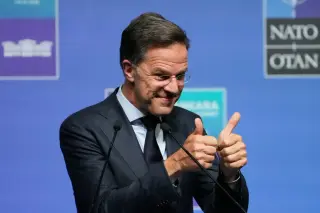
NATO’s top leadership urged allied members to present credible, concrete plans to reach the alliance’s defense spending targets, signaling a renewed emphasis on burden-sharing ahead of key discussions.
Cuban President Miguel Díaz-Canel Bermúdez warned that any U.S. military action against Cuba would trigger a ‘bloodbath’ and destabilize the region, as Cuba navigates energy strains tied to Venezuela amid Washington’s hawkish policy; the report notes U.S. rhetoric about Cuba, intelligence claims of potential Cuban drone actions, and a high-level Havana visit by the CIA, while Cuban officials dispute some unverified assertions.
North Korea launched several ballistic missiles toward the sea from the Sinpo area, prompting heightened surveillance and an emergency meeting of South Korea's National Security Council, with Japan protesting and the United States tracking the launches; the moves follow Kim Jong Un’s recent vow to accelerate the country’s “limitless expansion” of its nuclear forces and come amid broader sanctions-related tensions.
An expert explains Iran’s missiles span short-, medium-, and intermediate-range, with declared ranges up to about 2,000 km and possible payload-reduction mods that could push them toward 3,000 km; there’s no solid evidence of a true longer-range system. The Diego Garcia launches, about 4,000 km away, likely used modified existing missiles—one failed and the other was intercepted—showing defenses can counter such threats and that long-range missiles are expensive and hard to sustain. Overall, Iran’s credible threat today is more about regional missiles and deterrence than a ready, large-scale 4,000+ km strike, though the episode may heighten diplomatic pressure.
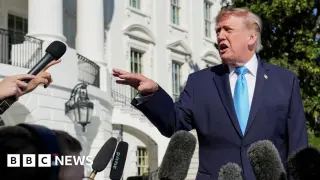
President Trump says NATO and most allies rejected his push to join a U.S.-led mission to secure the Strait of Hormuz, claiming broad support but vocal opposition; he blasted NATO as a 'one-way street' that would require Americans to bear the burden, while reiterating that Iran must not be allowed to obtain a nuclear weapon and urging partners to help safeguard the strategic waterway.
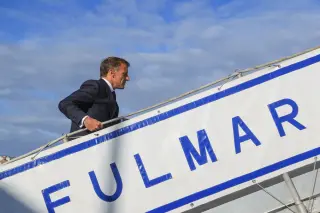
A widening crisis in the Middle East sees US-Israeli strikes targeting Iran triggering wider regional violence, with attacks reported in Iran and Lebanon and ongoing evacuations of foreigners. France has deployed Rafale jets and carrier assets to protect UAE bases amid the conflict, while global markets react to oil and gas supply disruptions and rising prices. Countries scramble to move citizens out, and the situation remains highly volatile as alliances tighten and strategic targets shift.
An aviation expert argues that Russia’s Oreshnik missile used to strike Lviv Oblast was likely assembled from older Soviet components and functions as a political, psychological intimidation tool rather than a decisive military asset; Moscow reportedly informed the US ahead of the launch, signaling a message to Europe, while speed claims of 13,000 km/h are disputed. Ukraine lacks intercept capability, but the strike is not expected to alter the frontline balance.
Iran has proposed to sell advanced weapons systems in exchange for cryptocurrency, raising concerns about the potential use of digital currencies in international arms transactions.
President Trump announced the resumption of US nuclear testing, raising concerns among experts about potential environmental and health risks, as well as geopolitical consequences, including provoking other nuclear powers to restart their programs.
President Trump announced the resumption of US nuclear testing with some inaccuracies and unclear details, prompting international scrutiny and debate about nuclear capabilities and modernization efforts, amidst ongoing global nuclear tensions.
The article discusses the complexities and risks of resuming nuclear testing in the US, highlighting concerns about environmental impact, the sufficiency of current stockpile certification without testing, and the geopolitical implications of such a move, amid debates on nuclear deterrence and disarmament.
U.S. President Donald Trump announced he has approved South Korea to build a nuclear-powered submarine, marking a significant shift in regional security dynamics, with Seoul also seeking permission for nuclear fuel reprocessing, raising questions about proliferation and U.S.-South Korea relations.
Ukraine is moving closer to acquiring up to 150 Swedish Gripen E fighter jets, with the first deliveries potentially starting within three years, enhancing Ukraine's aerial capabilities amid ongoing conflict.
Pakistan and Saudi Arabia have signed a defense agreement that stipulates an attack on one country will be considered an attack on both, strengthening their military alliance.
The article covers global political and military developments, including European support for Ukraine, US and Latin America security issues, China's military advancements, and international diplomatic tensions, highlighting ongoing conflicts, strategic alliances, and technological progress worldwide.