
Oslo Talks Resume US Intel Sharing, but Defense Gaps Persist
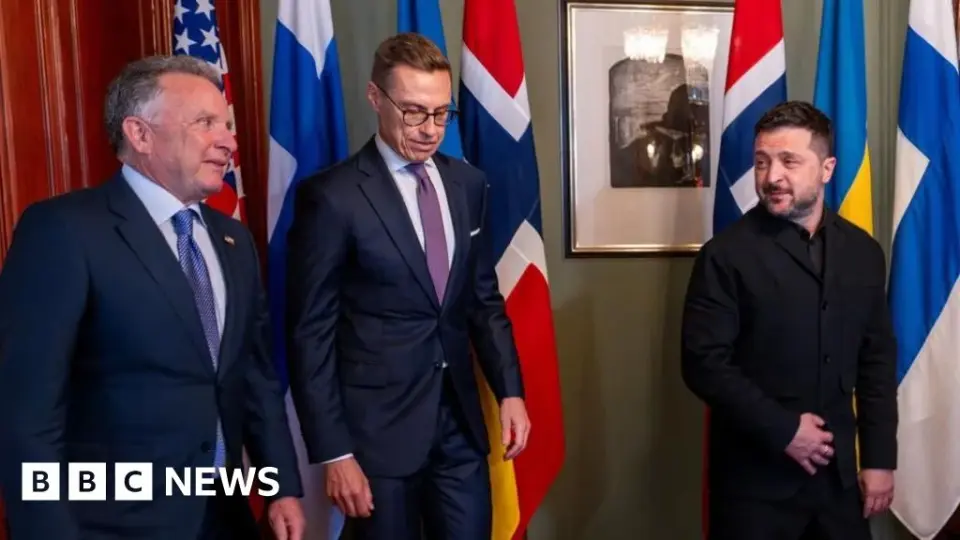
Ukrainian President Volodymyr Zelensky confirmed that US intelligence sharing regarding Russian missile attacks has resumed following talks in Oslo with US envoy Steve Witkoff. While early warning systems are operational again, critical defense gaps remain, including delayed Patriot interceptors and restricted Starlink satellite access. European leaders emphasized the need for continued support, while Witkoff prepares to present peace proposals to Russia.
Key points
- Zelensky stated that US intelligence sharing on Russian ballistic missile attacks 'works now' after Tuesday's talks in Oslo.
- US envoy Steve Witkoff is scheduled to travel to St Petersburg on Wednesday to present peace proposals to Russian President Vladimir Putin.
- Zelensky confirmed that restrictions on Starlink satellite access, which hampered Ukrainian drone strikes, were discussed with US Secretary of State Marco Rubio.
- The Pentagon has blocked the delivery of Patriot missile interceptors to Ukraine, despite offers from other nations to fund them.
- Russian drone attacks continued on Tuesday, killing at least 10 people across Kyiv, Donetsk, and Dnipro regions.
- Zelensky rejected a proposed trilateral summit involving Putin, Trump, and China's Xi Jinping that would exclude Ukraine from negotiations.
Background
These developments follow a sharp deterioration in US-Ukraine relations over the past two weeks. On October 19, tensions peaked after President Donald Trump waived sanctions on Russian diesel exports to lower fuel prices ahead of US midterm elections, a move Zelensky criticized as a 'happy birthday present' for Putin. This triggered a dispute over US support, with Zelensky alleging that Washington deliberately paused intelligence sharing and restricted satellite communications to pressure Kyiv into ending the war. US officials, including Secretary of State Marco Rubio, denied these claims, attributing issues to technical 'software problems' rather than political sabotage. The Oslo talks represent an attempt to de-escalate this crisis and revive peace negotiations, building on earlier failed attempts to secure an energy ceasefire.
How outlets are covering it
Outlets largely agree on the resumption of intelligence sharing but differ on the broader diplomatic context. The BBC and AP News focus on the technical restoration of early warning systems and the immediate humanitarian impact, noting that Zelensky expressed gratitude for the change. The Guardian provides a more critical perspective, highlighting the 'worst crisis in US-Ukraine relations' and emphasizing that the US has effectively positioned itself as a pro-Russian ally by favoring Moscow's maximalist demands. The Guardian also notes that EU foreign policy chief Kaja Kallas questioned whether US negotiators were acting as honest brokers. While all sources confirm the Oslo talks, The Guardian uniquely highlights Zelensky's rejection of a proposed trilateral summit that would exclude Ukraine, a detail not emphasized in the BBC or AP reports. The Yahoo source was inaccessible due to technical errors, so its perspective could not be synthesized.
Why it matters
The resumption of intelligence sharing is a critical step in reducing civilian casualties from Russian missile attacks, but it does not resolve the deeper strategic tensions between the US and Ukraine. The continued block on Patriot interceptors and Starlink restrictions leaves Ukraine vulnerable to air attacks and limits its ability to strike Russian targets, potentially affecting the balance of power on the battlefield. The upcoming Witkoff visit to St Petersburg is a pivotal moment; if Russia rejects the proposals, the peace process could collapse, leading to further escalation. Additionally, the US stance on sanctions and defense support signals a potential shift in American foreign policy that could undermine European security guarantees and NATO cohesion. The outcome of these negotiations will determine whether the war moves toward a diplomatic resolution or a prolonged, intensified conflict.
What to watch
Steve Witkoff is expected to arrive in St Petersburg on Wednesday to present peace proposals to the Kremlin. Russian Foreign Minister Sergei Lavrov indicated that Moscow would listen to the proposals but ruled out 'any political concessions.' The US administration will likely continue to pressure Ukraine to end the war, while European leaders will push for stronger security guarantees and continued military support. The next few days will be critical in determining whether the Oslo talks lead to a sustainable peace framework or if the US-Russia-Ukraine dynamic remains fragmented. Additionally, the status of Patriot interceptor deliveries and Starlink access will be closely monitored as indicators of US commitment to Ukraine's defense.
- Zelensky says US intelligence sharing 'works now' after talks with Trump envoy in Oslo BBC
- Zelenskyy says Kyiv receiving early warnings again from partners Yahoo
- US has resumed sharing intelligence with Ukraine about Russian strikes, says Zelenskyy The Guardian
- Zelenskyy says early warning system resumes following Rubio call AP News
- Rubio says Ukraine interceptors may not have been delivered, but not for political reasons Reuters
Want the full story? Read the original reporting
Read on BBC