
Spain deploys floating barrier in Ceuta as EU fractures over migrant surge
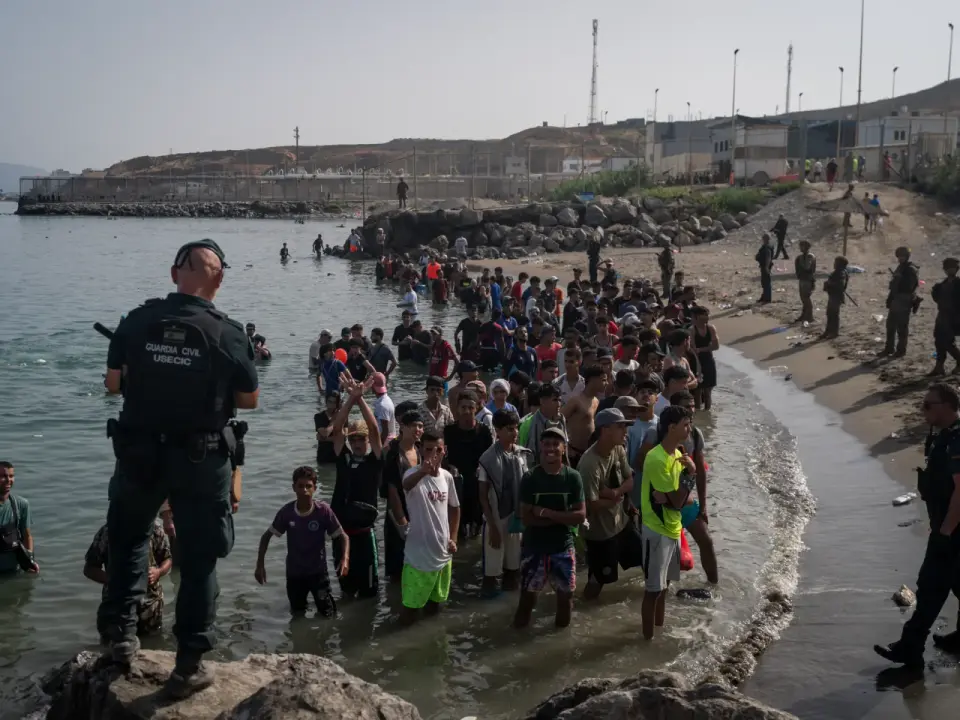
Spain has installed a 500-meter floating barrier off Ceuta following a mass migrant influx that killed at least 67 people. While nearly all 60,000 entrants have returned to Morocco, the incident has triggered a diplomatic rift, with Spain criticizing EU members for suspending Schengen border controls.
Key points
- Spain's Civil Guard installed a 500-meter containment barrier at the Tarajal breakwater to prevent future crossings.
- At least 67 people died during the surge, with many drowning or crushed against the border fence.
- Spain reported that virtually all 60,000 migrants who entered Ceuta have voluntarily returned to Morocco.
- The EU is convening an emergency meeting of interior ministers to coordinate a response to the breach.
- Spain has condemned Italy and other nations for temporarily suspending Schengen border controls with Spain.
Background
This incident follows a series of deadly border crossings in late July 2026, where initial reports indicated 18 to 34 deaths before the toll rose. The surge was linked by Spanish authorities to a Supreme Court ruling regarding sea returns, though activists disputed this connection. Previous coverage noted that Spain had already begun restoring order and discussing inflatable barriers as a long-term solution.
How outlets are covering it
Al Jazeera emphasizes the humanitarian toll and the immediate physical response, highlighting the installation of the floating barrier and the return of migrants. Fox News focuses on the political fallout, detailing Prime Minister Pedro Sánchez's letter to EU leaders criticizing Italy's decision to suspend Schengen as 'selfish' and 'unlawful.' The Washington Post frames the event as a touchstone for the global migrant debate, noting that while physical calm returned to Ceuta, political intrigue and suspicions of orchestrated crossings deepened. Outlets disagree on the primary driver of the surge: Spain blames 'mafias' spreading rumors about a court ruling, while activists argue most migrants were unaware of such legal decisions.
Why it matters
The crisis exposes deep fractures within the EU regarding border security and solidarity. The suspension of Schengen controls by Italy and France tests the open-border system, while Spain's push for a unified EU response highlights the tension between national sovereignty and collective European policy. The high death toll underscores the lethal nature of migration routes in the Mediterranean.
What to watch
An emergency meeting of the EU Justice and Home Affairs Council is scheduled for Tuesday, chaired by Ireland's rotating presidency. Spain expects to finalize the return of remaining migrants and may seek further security enhancements for the Tarajal border crossing. The EU is expected to debate coordinated measures to prevent future uncontrolled crossings and address the role of human traffickers.
- Spain says migrants leaving Ceuta after mass influx in which 67 died Al Jazeera
- Spain Says Most Immigrants Who Overran Its African Enclave Have Left wsj.com
- Spain pushes migrants home as Ceuta vents over ‘invasion’ Financial Times
- Socialist Spanish PM blasts Meloni over restored border controls after Ceuta surge, demands emergency meeting Fox News
- Spain pushes migrants back to Morocco as fallout deepens over mass border breach The Washington Post
Want the full story? Read the original reporting
Read on Al Jazeera