Two humpback whales completed a record-breaking journey of about 9,000 miles between breeding sites in Australia and Brazil, highlighting their remarkable long-range migration and the global scale of whale movements.
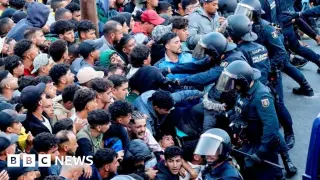
Dozens of European nations endorsed a new interpretation of the European rights conventions governing migration at the Council of Europe’s 135th ministerial session in Chisinau, Moldova, signaling a coordinated approach to asylum and migrant protections across member states.
Former Defense Secretary Robert Gates tells CBS that Cuba’s biggest risk to the United States is its potential collapse and a Mariel Boatlift–style exodus, not an imminent military threat, as Washington maintains sanctions while signaling possible engagement with Havana.
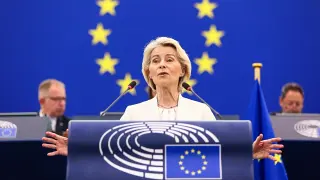
Macron argues Europe is no longer the colonial predator and urges a new Africa partnership grounded in mutual security, rule-based trade, and mobilizing private capital. He proposes Africa-led mineral processing, an expanded African Union security framework, and reforms to global finance to unlock investment, while promoting closer Franco-African ties, responsible migration integration, and restitution initiatives as part of a shared destiny.
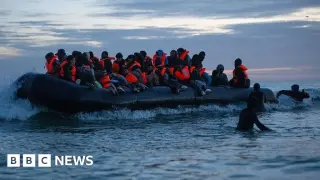
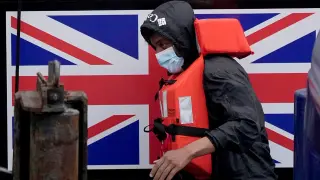
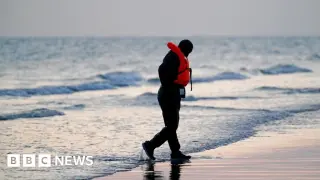
Two women, about 20 years old, died when a boat carrying around 82 people attempting to cross the English Channel from France ran aground on a northern French beach; several others were injured and a Boulogne-sur-Mer prosecutor’s office has launched an investigation. The incident underscores ongoing migrant crossings and comes as UK-French efforts to curb small-boat arrivals continue under a £662m deal, with the Home Office stressing commitment to preventing perilous journeys.
Samsung will retire the Samsung Messages app in July 2026 across the US, prompting users to switch to Google Messages for SMS/MMS/RCS. Google Messages offers typing indicators, higher‑quality media, multi‑device access, and Gemini AI features, and Samsung provides instructions to migrate. To switch, download Google Messages and set it as the default SMS app; Android 11+ users are unaffected but are advised to migrate. Older Galaxy Watch (Tizen) users may lose full chat history, while Wear OS watches will retain full conversations. Exact July date isn’t specified, and emergency messaging remains available after deactivation.
New ancient DNA from three Moroccan sites shows the Maghreb’s shift from hunting-gathering to farming was multi-directional and layered: European Neolithic farmer ancestry reached Morocco around 7,400 years ago, indigenous hunter-gatherers adopted farming while retaining local genetics, and later Fertile Crescent pastoralists added new lineages, painting a mosaic rather than a single-wave spread of farming.
Researchers modeling ancient Europe show Homo sapiens survived Neanderthals not through brains or brawn but via more interconnected populations enabling resource and information exchange during climate shifts 35,000–60,000 years ago. Neanderthals’ smaller, scattered groups were more vulnerable, with only limited overlap between the lineages, suggesting networks—and not direct competition—helped sapiens prevail. Modern non-Africans carry a small percentage of Neanderthal DNA, but the study highlights networks as the key factor in our species’ rise.
Archaeologists in Saudi Arabia uncovered 120,000-year-old footprints—the oldest known on the Arabian Peninsula—alongside animal tracks at the Alathar paleolake site, suggesting early Homo sapiens briefly inhabited interior Arabia during out-of-Africa migrations before the Ice Age.
An international analysis of 128 Indigenous American genomes from across the Americas reveals three migration waves into South America: the earliest over 9,000 years ago, a second lineage around that period, and a previously unrecognized dispersal at least 1,300 years ago linked to Mesoamerica. Researchers also identify a faint Asian “ghost lineage” called Ypykuéra that contributed genes to Indigenous Americans and early Australasians, indicating a more complex peopling of the continents. Indigenous genomes are less diverse than those of other continents but harbor adaptive genes related to immune function, metabolism, and fertility, underscoring environmental pressures and the importance of including Indigenous communities in genomic studies.
On the return flight from Africa, Pope Leo XIV says he cannot support war because innocent people die, calls for a culture of peace and continued dialogue to resolve the Iran crisis, discusses migration and human dignity, condemns capital punishment, and explains the Holy See’s diplomatic approach with various regimes to serve the Gospel without endorsing oppression.
On the return flight from Africa, Pope Leo XIV urged a culture of peace amid Iran–Israel–US talks, condemned capital punishment, defended the Holy See’s pragmatic diplomacy with difficult regimes, emphasized the dignity of migrants and the need for richer nations to aid poorer countries, and cautioned that church unity should not hinge on sexual ethics while addressing the issue of same-sex blessings.
Britain and France announced a three-year deal to reduce migrant crossings in the English Channel, signed by UK Home Secretary Shabana Mahmood and France’s Interior Minister Laurent Nunez in Dunkirk, with measures including enhanced patrols and the construction of a detention centre in Dunkirk to deter crossings.
On the eve of a visit to Bata prison in Equatorial Guinea, Pope Leo XIV arrives for the final leg of his Africa tour amid calls from 70 rights groups to speak out against human-rights abuses and migrant deportations tied to U.S. deals; rights advocates point to long-standing prison and judicial shortcomings, even as authorities release nearly 100 detainees from a 2022 crackdown and activists press for broader reforms.