
US Envoys Secure Russian Agreement to Include Europe in Ukraine Peace Talks
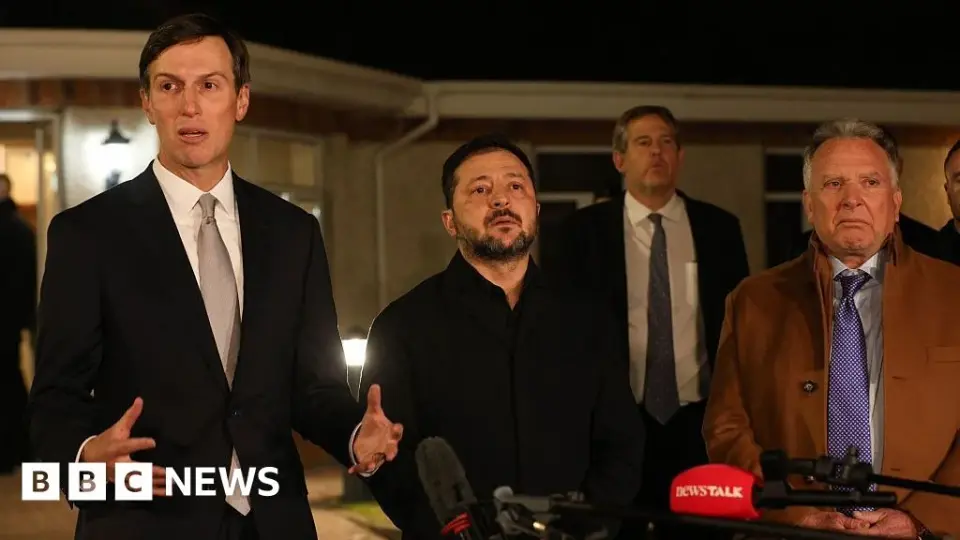
US envoys Jared Kushner and Steve Witkoff secured a preliminary agreement from Vladimir Putin to include European delegates in the next round of Ukraine peace talks. This development follows the largest prisoner exchange of the war and marks a shift from previous US-Russia bilateral discussions, though fundamental disagreements over territorial concessions and security guarantees remain unresolved.
Key points
- Kushner and Witkoff met Volodymyr Zelensky in Dublin after visiting Putin in Moscow, where they reportedly secured a tentative agreement to allow European participation in future negotiations.
- Russia and Ukraine agreed to a new prisoner exchange, described by US officials as the largest since the 2022 invasion, though specific numbers and timelines were not disclosed.
- Zelensky expressed hope for a breakthrough before 2027, stating that European involvement is essential given Ukraine's long-term ambition to join the EU and the continent's security concerns.
- Despite the diplomatic progress, core issues remain divisive, including Russia's demand for territory in the Donbas and Ukraine's refusal to cede land or recognize Russian sovereignty over occupied areas.
- Tensions persist between the US and Ukraine, with Zelensky alleging that SpaceX has reinstated speed limits on Starshield satellite services, hindering Ukraine's ability to intercept Russian drones.
Background
This development follows a series of trilateral talks in Abu Dhabi last week, which concluded without a breakthrough but established a framework for future negotiations. Prior to these talks, European leaders, including German Chancellor Friedrich Merz, had criticized the US for excluding European nations from peace discussions, arguing that Ukraine's future security and EU membership require European consensus. The current diplomatic push in Dublin and Moscow represents an attempt to address these concerns by formally integrating European delegates into the process, although previous attempts to include Europe have faced resistance from Moscow.
How outlets are covering it
BBC reports that Zelensky welcomed the US pledge to include the EU, noting that European leaders have expressed deepening security concerns and view the war as fundamentally reshaping the region's security. The outlet highlights that while Putin agreed to 'give it a try,' Moscow has historically been dismissive of European involvement. The Guardian emphasizes Zelensky's view of a 'window of opportunity' for a breakthrough before 2027, noting that while the Abu Dhabi talks showed alignment between the US, Ukraine, and Europe, Russia's position on territory remains unchanged. CNBC provides a more skeptical view, with analysts arguing that Russia's fundamental obstacles, including demands for additional territory and restrictions on NATO membership, make a deal elusive. CNBC notes that Zelensky has warned that Ukraine is 'not real estate' and that a ceasefire along current front lines is a prerequisite for further negotiations, a stance that conflicts with Russia's demand for security guarantees before ending the fighting.
Why it matters
The inclusion of European delegates in peace talks signals a potential shift in the diplomatic landscape, moving away from a purely US-Russia bilateral process. This development is significant for European security, as the war has been described as fundamentally reshaping the continent's defense posture. However, the unresolved issues of territorial sovereignty and security guarantees suggest that a lasting peace remains distant, with the risk of continued conflict and potential expansion of aggression into Europe if Ukraine falls.
What to watch
The next round of peace talks will likely include European delegates, as agreed by Putin and the US envoys. The focus will be on resolving the fundamental disagreements over territorial boundaries and post-war security guarantees. Additionally, the implementation of the agreed prisoner exchange will be a key indicator of progress. The situation on the ground, including ongoing Russian strikes on Ukrainian infrastructure and the status of Starshield satellite services, will also influence the pace and outcome of negotiations.
- Zelensky welcomes US bringing Europe into Russia-Ukraine peace talks BBC
- Ukraine's Zelenskiy says progress in peace talks hinges on US approach to Russia Reuters
- Ukraine war briefing: Zelenskyy sees ‘window of opportunity’ for peace as US envoys to meet Putin The Guardian
- Zelenskyy Says Political Shifts Open Window for Russia Talks Bloomberg.com
- Zelenskyy warns Ukraine is 'not real estate' as experts say a Russia peace deal remains elusive CNBC
Want the full story? Read the original reporting
Read on BBC