
Dolores Huerta, UFW Co-Founder and Labor Icon, Dies at 96
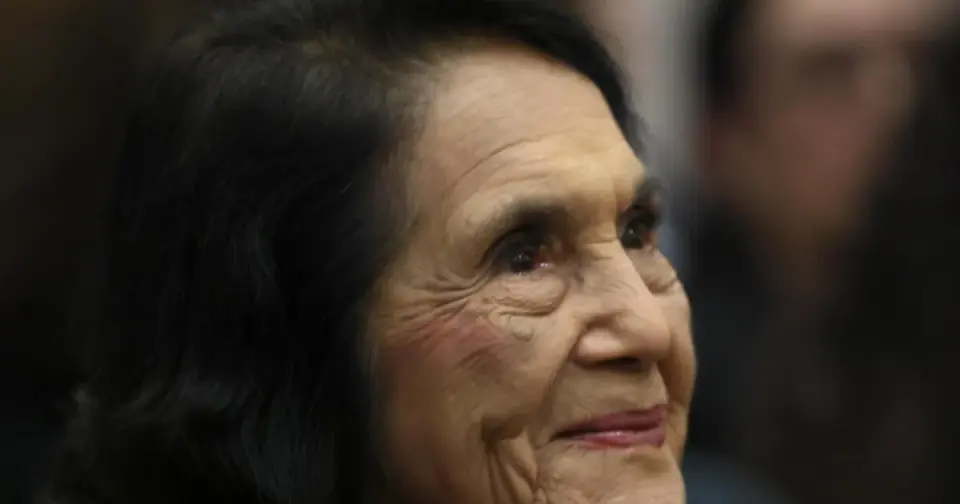
Dolores Huerta, the co-founder of the United Farm Workers (UFW) and a pivotal civil rights activist, has died at age 96 from cancer. She passed away at her home in Bakersfield, California, on Wednesday. Huerta is remembered for her decades of organizing farmworkers, coining the slogan 'Sí se puede', and negotiating key labor contracts. Her legacy is complex, marked by her 2026 revelations of sexual abuse by her partner, Cesar Chavez.
Key points
- Dolores Huerta died at 96 from cancer at her home in Bakersfield, California, surrounded by family.
- She co-founded the United Farm Workers (UFW) with Cesar Chavez in 1962, serving as its vice president for nearly four decades.
- Huerta was instrumental in organizing strikes, negotiating the first farmworker labor contracts, and coining the slogan 'Sí se puede'.
- In March 2026, Huerta publicly accused Chavez of sexual assault, stating she had remained silent for 60 years to protect the movement.
- Her family and the UFW have announced plans for a public memorial, while her foundation continues to support community organizing and voter registration.
Background
Dolores Huerta, born in 1930 in New Mexico, moved to California as a child and became a teacher before joining the labor movement. She met Cesar Chavez through the Community Service Organization and they co-founded the UFW in 1962. Their partnership was central to the farmworker movement, though it was marked by intense personal and professional conflicts. Huerta received the Presidential Medal of Freedom in 2012. In 2026, she revealed that Chavez had sexually abused her, a disclosure that complicated her legacy but was widely supported by her family and many allies who emphasized her contributions to the movement.
How outlets are covering it
The Los Angeles Times provides a detailed account of Huerta's life, emphasizing her role as the primary organizer and negotiator, while also highlighting the complexity of her relationship with Chavez, including the 2026 sexual abuse revelations. The New York Times focuses on her role in founding the UFW and her impact on labor laws, noting her status as a Mexican American folk hero. BBC highlights her continued activism through her foundation and the UFW's tribute, which emphasizes her legacy of empowering communities. KCRA 3 features personal anecdotes from journalist Leticia Ordaz, who recalls Huerta's dedication to engaging with young people and her enduring energy, even at age 95. All sources agree on the significance of her contributions but differ in emphasis: the LA Times and NYT focus on her historical role and the controversy surrounding Chavez, while BBC and KCRA 3 highlight her ongoing activism and personal interactions.
Why it matters
Dolores Huerta's death marks the end of an era for the labor and civil rights movements. Her work with the UFW helped secure better wages and working conditions for farmworkers, influenced labor laws, and inspired generations of activists. Her 2026 revelations about sexual abuse by Chavez have prompted a re-evaluation of her legacy, but her contributions to social justice and community organizing remain widely recognized. Her foundation and the planned cultural center in Bakersfield will continue to support community organizing and education, ensuring her impact endures.
What to watch
The family of Dolores Huerta is expected to announce details of a public memorial in the coming days. The Dolores Huerta Peace & Justice Cultural Center in Bakersfield, a $35-million project funded largely by the state of California, is under construction and will include an academy for community organizing. Her foundation will continue to support voter registration, education, and community services. The UFW and other organizations are expected to hold tributes and events to honor her legacy.
- Dolores Huerta, the fiery and resolute activist who helped launch the nation's first enduring union for poor farmworkers, dies Los Angeles Times
- Dolores Huerta, Who Founded United Farm Workers With Cesar Chavez, Dies The New York Times
- Dolores Huerta, Influential Labor Leader, Feminist and Civil Rights Icon, Dies at 96 KQED
- ‘She turned no one away’: KCRA 3’s Leticia Ordaz recalls conversations with Dolores Huerta KCRA
- US civil rights leader Dolores Huerta dies aged 96 BBC
Want the full story? Read the original reporting
Read on Los Angeles Times