
2026 Midterms: Demographic Shifts Drive Democratic Control of Congress
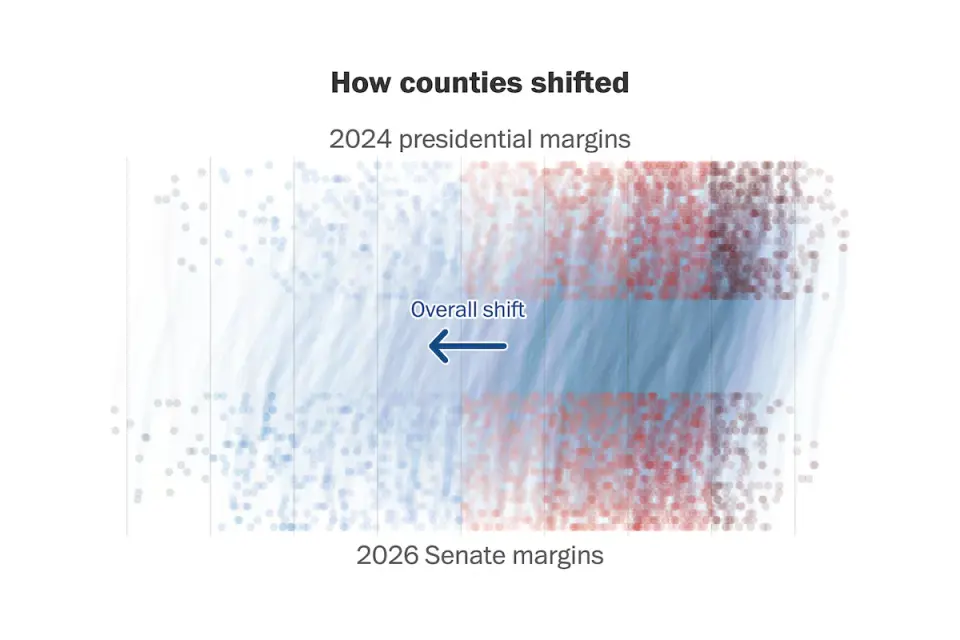
Democrats won control of both chambers of Congress in the 2026 midterms, driven by significant shifts among Latino, young, and rural voters. The party flipped seven Senate seats and expanded its House majority, marking a sharp rebuke of the Trump administration. Key demographic groups that supported Republicans in 2024 swung heavily toward Democrats, with record-low approval ratings for President Trump cited as a primary driver.
Key points
- Democrats won control of both the House and Senate, flipping seven Senate seats in Iowa, Kansas, Maine, North Carolina, Ohio, South Carolina, and Texas.
- Latino voters swung 21 points toward Democrats compared to 2024, while Asian Americans shifted 21 points, moving from a 22-point to a 43-point Democratic advantage.
- Voters aged 18 to 29 voted for Democrats by 48 points, a 34-point swing from 2024, surpassing the margin seen in the 2008 presidential election.
- Democrats won men by 2 points, their first victory with this demographic since 2008, while women voted for Democrats by 19 points.
- Rural counties shifted 16 points toward Democrats, narrowing a 32-point Republican margin from 2024, driven by economic concerns over tariffs and the Iran war.
- White voters split evenly between parties, a result not seen in a presidential election since 1964, with Democrats gaining ground among non-college-educated White voters in South Carolina.
Background
The 2026 midterms followed a period of intense federal election interference, including the Justice Department's 'Operation Protect the Vote' in California and lawsuits in Texas and Alaska aimed at delaying or blocking certification of results. These actions, which sought to challenge ballot counts and voter eligibility, created a backdrop of heightened political tension and distrust in election integrity leading up to November 3.
How outlets are covering it
The Washington Post emphasized geographic and county-level shifts, highlighting that rural, suburban, and urban areas all moved double digits toward Democrats, with specific focus on Hispanic-majority counties in Texas and lower-income areas in Michigan. NBC News provided detailed exit poll data, noting that 63% of voters disapproved of Trump's job performance and that 89% cited cost of living as a crucial or major factor in their vote. NPR focused on the historical significance of demographic swings, particularly the 48-point margin among young voters and the first Democratic win with men since 2008, while also noting that Republicans' 38% share of independents was their worst since 1998. All three sources agree that the 2024 coalition of Trump, including Latinos and young voters, reversed sharply, but they differ in emphasis: The Post focuses on geographic realignment, NBC on economic and approval metrics, and NPR on historical demographic benchmarks.
Why it matters
The 2026 midterms mark a decisive shift in the American political landscape, with Democrats regaining control of Congress after a period of Republican dominance. The demographic reversals, particularly among Latino, young, and rural voters, suggest that economic concerns and opposition to Trump's policies, including tariffs and the Iran war, outweighed previous partisan loyalties. This shift could influence future legislative agendas, including economic policy, immigration, and foreign affairs, and may signal a broader realignment in voter priorities. The results also highlight the fragility of the 2024 Republican coalition, which relied heavily on groups that have now moved decisively toward Democrats.
What to watch
With Democrats controlling both chambers of Congress, the next steps will likely involve legislative battles over economic policy, immigration, and foreign affairs. The sharp decline in Trump's approval rating and the demographic shifts suggest that the Republican Party may face challenges in future elections, particularly in retaining support among Latino, young, and rural voters. The outcome of the 2026 midterms may also influence the 2028 presidential race, as both parties seek to rebuild or maintain coalitions based on these demographic trends. Additionally, the federal lawsuits and election interference efforts that preceded the midterms may continue to shape the legal and political landscape surrounding election integrity.
- The voting groups that powered the Democratic sweep The Washington Post
- National Exit Polls: Election 2026 Results NBC News
- How 2026 Midterm Voters Swung Back to Democrats Amid Trump Backlash The New York Times
- See how Latinos, young voters and other demographic groups fueled Democrats' big wins NPR
- Five takeaways on the demographic shifts that powered the Democrats’ midterm victory The Hill
Want the full story? Read the original reporting
Read on The Washington Post