
2026 Midterms See Record Turnout as Democrats Win Historic Blue Wave
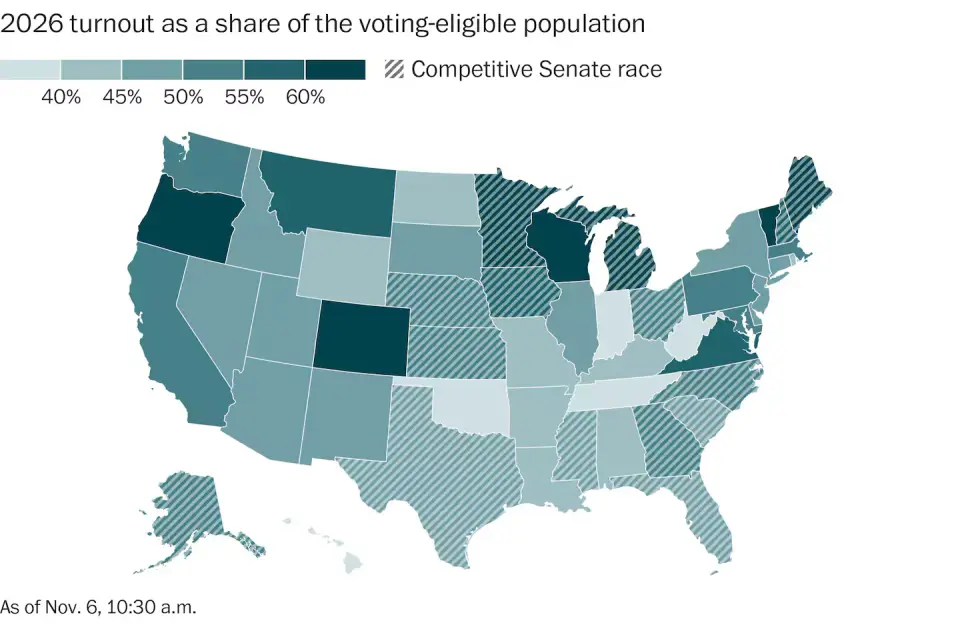
The 2026 US midterm elections resulted in a historic Democratic victory, with the party seizing control of both the House and Senate. This 'blue wave' was driven by record voter participation, marking the second-highest turnout in over a century. The shift in power, which includes unexpected wins in traditionally Republican states like Texas and Ohio, reflects widespread voter frustration with economic costs and the administration's handling of the Iran conflict. While President Trump retains executive authority over tariffs and foreign policy, the new Democratic Congress is positioned to block his agenda and intensify oversight of the tech sector, including scrutiny of figures like Elon Musk. International markets reacted with mixed signals, and global powers are assessing the impact on trade and geopolitical stability.
Key points
- Democrats achieved a historic sweep of both the House and Senate in the 2026 midterms, marking the most significant power shift since 1974.
- Voter turnout reached the second-highest level in more than a century, slightly behind the 2018 midterms, with the highest participation in states where Democrats won unexpected victories.
- The Democratic victory was driven by voter frustration over affordability, the Iran war, and the expansion of AI data centers, leading to a rejection of the current administration.
- Key states such as Texas, Michigan, South Carolina, and Ohio flipped to blue, including the Texas governorship and a Senate seat, despite Republican registration advantages in some rural areas.
- President Trump retains unilateral power over tariffs and foreign policy, but the new Democratic Congress is expected to block his legislative agenda and intensify oversight of tech billionaires like Elon Musk.
- Global markets reacted with mixed signals, with clean energy and bank stocks rising while defense shares fell, and international reactions ranged from relief in Europe to concern in Russia and Israel.
Background
Prior coverage established that the 2026 midterms resulted in a decisive Democratic rebuke of President Trump, with the party winning control of both chambers of Congress. Earlier reports highlighted the role of voter frustration with economic costs and the Iran conflict, as well as the backlash against tech donors like Elon Musk. The current focus shifts to the specific mechanics of the victory, particularly the historic voter turnout that powered the blue wave.
How outlets are covering it
The Washington Post emphasizes the historic nature of the voter turnout, noting it was the second-highest in over a century and concentrated in states where Democrats achieved unexpected victories. WFMZ.com, through political science professor Chris Borick, highlights that Democrats were more engaged in competitive districts, particularly in Pennsylvania's 7th Congressional District, where modest shifts in voter participation could have significant impacts. La Repubblica frames the result as a heavy defeat for Trump that reshapes the political balance of power in the US and could alter the international landscape, from Iran to Israel and Ukraine. While all sources agree on the Democratic victory, they differ in emphasis: The Post focuses on turnout, WFMZ on regional engagement, and La Repubblica on global implications.
Why it matters
The 2026 midterms mark a significant shift in US political power, with Democrats gaining control of both the House and Senate for the first time since 1974. This shift allows the new Congress to block executive actions and intensify oversight of the tech sector, while President Trump retains unilateral power over tariffs and foreign policy. The historic voter turnout underscores the depth of voter frustration with economic costs and the administration's handling of the Iran conflict. The outcome has global implications, affecting trade tensions, geopolitical stability, and the balance of power in international relations.
What to watch
The immediate focus shifts to governance and delivering on economic promises, with the new Democratic Congress expected to intensify oversight of the tech sector and challenge Trump's agenda in his final two years. Detailed voter-file data will emerge this month to provide a more precise picture of participation by party, particularly in competitive districts like Pennsylvania's 7th Congressional District. International markets and governments will continue to assess the impact of the shift on trade tensions and geopolitical stability, with analysts debating whether the new Congress will ease or intensify gridlock.
Want the full story? Read the original reporting
Read on The Washington Post