
China Launches Shenzhou-24, Sending Pakistan’s First Astronaut to Tiangong Station
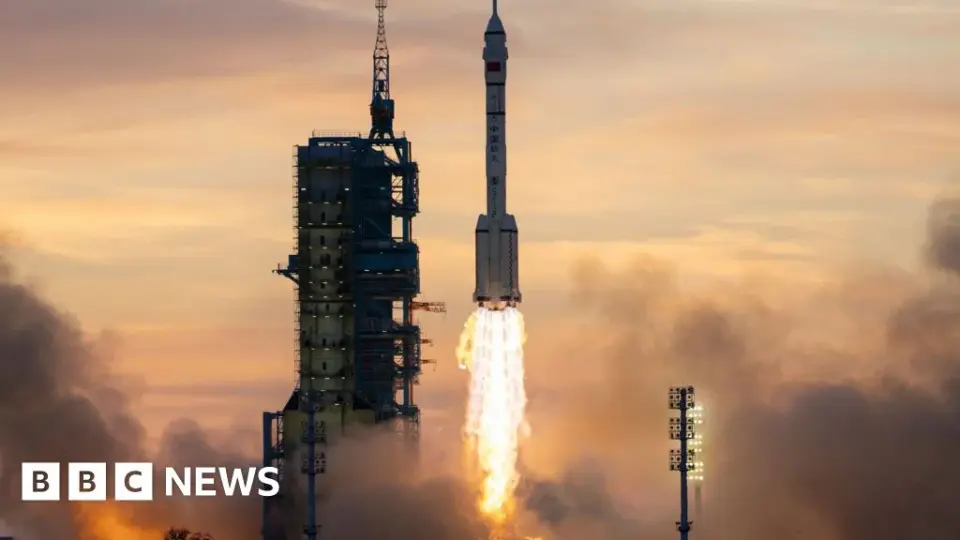
China launched its Shenzhou-24 mission on November 24, 2026, from the Jiuquan Satellite Launch Center, marking the first time a foreign astronaut has visited the Tiangong space station. The crew includes Pakistani payload specialist Muhammad Zeeshan Ali, Chinese commander Tang Hongbo, and flight engineer Wu Yi. Ali, a former fighter pilot, will conduct short-term experiments before returning to Earth, while the Chinese crew remains for six months. The mission strengthens China-Pakistan ties and signals Beijing’s intent to make Tiangong an international research platform.
Key points
- Shenzhou-24 launched at 08:18 Beijing time (00:18 GMT) on November 24, 2026, from Jiuquan in the Gobi Desert.
- Muhammad Zeeshan Ali, 40, is the first Pakistani and first foreigner to join a Chinese crewed space mission.
- Ali will conduct experiments on photosynthesis in bacteria, radiation effects, and microgravity impacts on seeds.
- Tang Hongbo, 51, will become the first person to visit Tiangong three times; Wu Yi, 39, is on his first flight.
- The mission includes over 90 scientific experiments, including studies on aging and vascular diseases in space.
- Ali will return to Earth after approximately one week, while Tang and Wu remain for six months.
Background
China and Pakistan signed a spaceflight cooperation agreement in February 2025, leading to the selection of two Pakistani candidates for training in China. This mission follows earlier Chinese space milestones, including the completion of Tiangong in 2022 and the Shenzhou-23 launch in May 2026. China aims to land astronauts on the Moon by 2030, positioning itself as a rival to the US-led Artemis program.
How outlets are covering it
BBC emphasizes the diplomatic significance of the mission for China-Pakistan relations and Beijing’s goal to open Tiangong to international collaboration. Space.com highlights the historic nature of the first foreign astronaut on a Chinese mission and notes that Tang Hongbo will be the first to visit Tiangong three times. CBS News focuses on the scientific experiments, including over 90 tests, and quotes Pakistani Prime Minister Shehbaz Sharif praising the friendship. All sources agree on the launch success and crew composition, but differ in emphasis: BBC on diplomacy, Space.com on historical milestones, and CBS on scientific and political statements.
Why it matters
This mission marks a shift in China’s space program from a closed national project to an international platform, potentially challenging US dominance in space exploration. It also deepens China-Pakistan strategic ties, with implications for regional geopolitics and future joint ventures, including a planned Pakistani lunar rover for China’s Chang'e-8 mission.
What to watch
Ali will return to Earth after a short stay, while Tang and Wu remain at Tiangong for six months. China continues preparations for a crewed lunar landing by 2030, and may pursue further international collaborations, including with other nations, to expand Tiangong’s role as a global research facility.
- China's Shenzhou-24 carries Pakistan's first astronaut into space BBC
- Pakistani pilot to become first foreigner to fly to China's space station Reuters
- China's Shenzhou-24 mission launches 1st international astronaut to Tiangong space station Space
- China's Shenzhou 24 mission lifts off, carrying first foreign astronaut to its space station CBS News
- China launches Shenzhou-24 crew, setting up a year-long orbital stay for one astronaut DW.com
Want the full story? Read the original reporting
Read on BBC