
Polls show deep US opposition to Trump's 'Lake America' rename and Canada tariffs
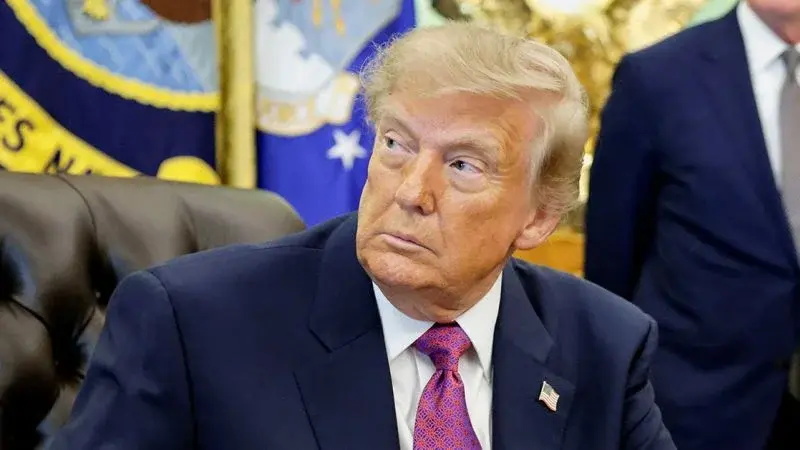
A new Reuters-Ipsos poll reveals that 63% of Americans oppose President Trump’s executive order renaming Lake Ontario to 'Lake America,' with only 14% in support. Opposition is even stronger for his new tariffs on Canadian goods, which 57% of Americans reject. The backlash is notable because it includes significant dissent within the Republican party, where 43% oppose the lake rename and 44% oppose the tariffs. This marks a steeper decline in public support compared to Trump’s previous renaming of the Gulf of Mexico. The controversy has also sparked a cultural moment, with the retro mapping app MapQuest becoming the number one app in the US after refusing to change the lake's name.
Key points
- 63% of Americans oppose the 'Lake America' rename, compared to 14% support, a more lopsided margin than the previous Gulf of Mexico rename.
- 57% of Americans oppose new tariffs on Canadian goods, with 43% strongly opposing them.
- 46% of Americans believe the US is more responsible for the trade dispute than Canada.
- 40% of Americans expect the tariffs to hurt their personal finances, compared to 4% who expect them to help.
- MapQuest became the top app in the US after refusing to change Lake Ontario's name, seeing a 50x increase in usage.
Background
The renaming of Lake Ontario follows a similar executive order by Trump in his first term to rename the Gulf of Mexico to 'Gulf of America.' The current move is part of a broader trade dispute with Canada, which includes retaliatory tariffs from Canadian Prime Minister Mark Carney. Previous archive coverage noted that several US states, including New York, Wisconsin, and Vermont, rejected the name change, and Ontario Premier Doug Ford launched a public campaign to defend the original name.
How outlets are covering it
CNN and The Guardian both highlight the severe unpopularity of the trade war and the renaming, but they frame the political implications differently. CNN focuses on the potential impact on the 2026 midterm elections, noting that border states like Michigan and Ohio are key battlegrounds. The Guardian, through columnist Robert Reich, frames the trade war as a 'bullying' tactic that is backfiring by strengthening Canadian patriotism and boosting the Liberal party's electoral prospects. KCRA focuses on the cultural and technological reaction, highlighting how MapQuest's refusal to comply with the order led to a massive surge in its popularity, contrasting with Google Maps and Apple Maps, which quickly updated their databases to reflect the new name for US users.
Why it matters
The strong opposition to both the tariffs and the symbolic renaming, even among Republicans, suggests that Trump's trade policies may face significant political resistance in the upcoming 2026 midterms. The widespread public disapproval and the cultural pushback, exemplified by the MapQuest phenomenon, indicate that these actions are not only unpopular but are also creating a narrative of resistance that could influence voter sentiment in key border states.
What to watch
The next major developments will likely include the implementation of Canada's retaliatory tariffs on September 8 and Trump's threatened 50% tariffs on autos and auto parts on January 1. The political fallout will be closely watched in the 2026 midterm elections, particularly in border states like Michigan, Ohio, and Maine, where the economic impact of the trade war is most felt.
- Americans hate both ‘Lake America’ and Trump’s trade war with Canada CNN
- Trump’s ridiculous bullying of Canada is backfiring | Robert Reich The Guardian
- MapQuest is No. 1 on the App Store after refusing to change Lake Ontario's name KCRA
- Map Apps Are Handling Trump’s Renaming of Lake Ontario to Lake America Differently The New York Times
- Majority of Americans oppose Trump's new Canada tariffs, renaming Lake Ontario, Reuters/Ipsos poll finds Reuters
Want the full story? Read the original reporting
Read on CNN