
Supreme Court Lifts Injunction on Trump’s Mail-Ballot Restrictions Ahead of Midterms
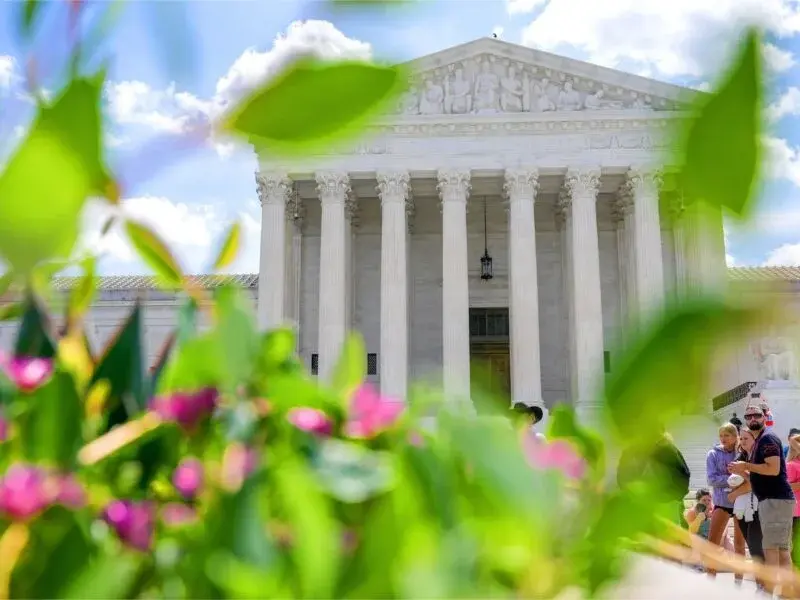
The Supreme Court issued a 6-3 ruling allowing President Trump to enforce an executive order restricting mail-in voting for the November midterms. The decision lifts a federal injunction that had blocked the order in 23 states and D.C., permitting the Department of Homeland Security to compile voter lists and the USPS to deliver ballots only to verified citizens. While the court ruled the states lacked standing to challenge the order before it took effect, liberal justices dissented, warning that the ruling narrows the window for election-related litigation. The order does not immediately change voting procedures but creates uncertainty for nearly one-third of voters who rely on mail ballots.
Key points
- The Supreme Court granted a stay, allowing the Trump administration to enforce its 'Ensuring Citizenship Verification and Integrity in Federal Elections' executive order.
- The order directs the Department of Homeland Security to create state-specific lists of eligible voters and instructs the USPS to send mail ballots only to those on the lists.
- A Massachusetts federal court had previously blocked key sections of the order at the request of 23 Democratic-led states and D.C., citing potential chaos and disenfranchisement.
- The majority ruled that the states could not seek a preliminary injunction because the order had not yet taken effect, meaning no concrete harm had occurred.
- Justices Sotomayor, Kagan, and Jackson dissented, arguing that the court was improperly narrowing the timeframe for election-related legal challenges.
- The ruling does not validate the constitutionality of the order itself, leaving room for future legal challenges before the November elections.
Background
This ruling follows a series of legal battles in 2026 regarding federal control over mail voting. In July, the Trump administration sought Supreme Court intervention after a Massachusetts judge blocked the USPS from implementing new mail-ballot restrictions. The administration argued that delays would irreparably harm election integrity, while Democratic states contended the changes were premature and would disrupt voting preparations. The current decision resolves the immediate injunction but leaves the underlying legal validity of the order open to further litigation.
How outlets are covering it
Fox News framed the 6-3 decision as a significant political victory for the Trump administration, emphasizing the immediate implementation of USPS restrictions and the president’s long-standing concerns about mail-in voting fraud. The Washington Post and AP News offered a more cautious interpretation, noting that while the injunction is lifted, no actual voting procedures have changed yet. They highlighted that the decision creates uncertainty for the nearly one-third of Americans who vote by mail and that the order’s ultimate impact remains unclear. Courthouse News Service detailed the legal mechanics, focusing on the standing issue and the dissents from liberal justices who argued the court was creating a 'Kafkaesque nightmare' for plaintiffs seeking to challenge election laws. Democratic officials, as reported by multiple outlets, warned that the order could disenfranchise voters and that the president lacks the authority to direct the USPS in this manner.
Why it matters
The decision sets a precedent for the timing of election-related litigation, potentially limiting the ability of states to challenge federal election policies before they are fully implemented. It also shifts the balance of power in mail voting, a method used by a significant portion of the electorate, by introducing federal verification requirements that could disrupt state-run election processes. The ruling may influence the outcome of the 2026 midterms by altering how ballots are distributed and verified, raising concerns about access and integrity.
What to watch
The Department of Homeland Security and the USPS are expected to begin implementing the order’s provisions, including the creation of citizenship lists and the rollout of secure envelopes with tracking barcodes. Democratic-led states may file new lawsuits challenging the constitutionality of the order itself, as the Supreme Court’s ruling did not address the merits of the policy. The administration has also pushed Congress to pass the 'Save America Act,' which would further restrict mail-in voting and voter ID requirements, potentially leading to additional legal and political battles before the November elections.
- Supreme Court frees Trump to enforce mail-in voting changes ahead of midterms Courthouse News
- Nothing changes yet with the Supreme Court's order on elections. But it could open door to 'chaos' The Washington Post
- Trump scores Supreme Court win on mail-in voting restrictions before midterms Fox News
- US Postal Service issues new rule for mail ballots, but its impact on the midterms is uncertain AP News
- The Supreme Court just revived Trump’s attempt to sabotage the 2026 election vox.com
Want the full story? Read the original reporting
Read on Courthouse News