
Delhi Police Intercept 'Cockroach' Leaders on Plane Amid SIR Protests
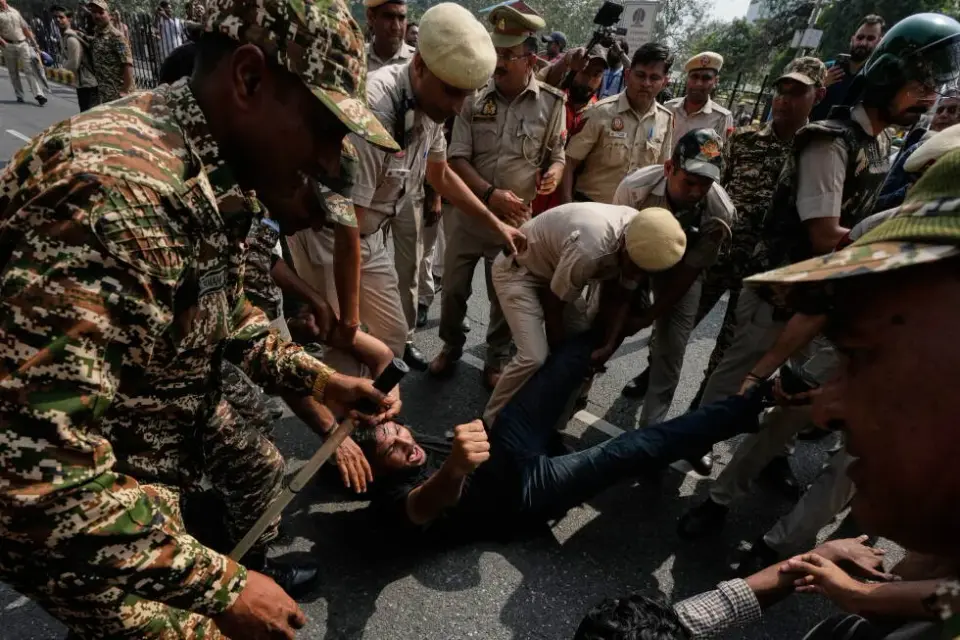
Indian authorities detained leaders of the youth-led 'Cockroach' movement on a flight to New Delhi, aiming to disrupt planned protests against the Special Intensive Revision (SIR) of voter rolls. The movement demands the resignation of Chief Election Commissioner Gyanesh Kumar, alleging the SIR has disenfranchised over 130 million voters to favor the ruling BJP. Despite heavy police presence and bans on gatherings of five or more people in parts of the capital, some protesters breached cordons. Opposition figures, including Rahul Gandhi and John Brittas, were also briefly detained, with critics accusing the government of suppressing dissent in the world's largest democracy.
Key points
- Delhi Police intercepted 'Cockroach' movement leaders on a plane to prevent them from reaching the protest site.
- Protests demand the resignation of Chief Election Commissioner Gyanesh Kumar over the Special Intensive Revision (SIR) of voter rolls.
- The SIR has removed over 130 million names from voter lists, with critics alleging it disenfranchises eligible voters to favor the BJP.
- Authorities imposed sweeping security restrictions in New Delhi, banning gatherings of five or more people in certain areas.
- Some protesters broke through police cordons, chanting slogans against Prime Minister Narendra Modi and election officials.
- Opposition leaders, including Rahul Gandhi and John Brittas, were briefly detained during the unrest.
Background
The 'Cockroach' movement, a Gen Z-led group, gained prominence in May 2026 through protests over alleged exam paper leaks, culminating in the resignation of the education minister in July. The movement has now shifted focus to the Special Intensive Revision (SIR) of voter rolls, which has removed over 130 million names. Previous protests in New Delhi and Mumbai saw hundreds of demonstrators detained, with opposition parties accusing the government of curbing dissent. The current unrest occurs midway through Prime Minister Narendra Modi's third term, with state elections in Uttar Pradesh and Gujarat scheduled for 2027.
Why it matters
The crackdown on the 'Cockroach' movement highlights growing tensions between the Indian government and youth-led opposition groups. The dispute over voter rolls raises concerns about democratic legitimacy and the fairness of elections, potentially influencing public sentiment ahead of state elections in 2027. The heavy police response and restrictions on protests underscore the government's efforts to contain dissent, raising questions about the space for public expression in India.
What to watch
The 'Cockroach' movement is expected to continue its protests, demanding the resignation of Chief Election Commissioner Gyanesh Kumar. Opposition parties may escalate their campaign against the Special Intensive Revision, potentially leading to further clashes with authorities. The political impact of the unrest remains uncertain, but it could influence public opinion ahead of state elections in Uttar Pradesh and Gujarat in 2027.
Want the full story? Read the original reporting
Read on AP News