
Democrats Poised for Historic Midterm Sweep as Trump’s Approval Plummets
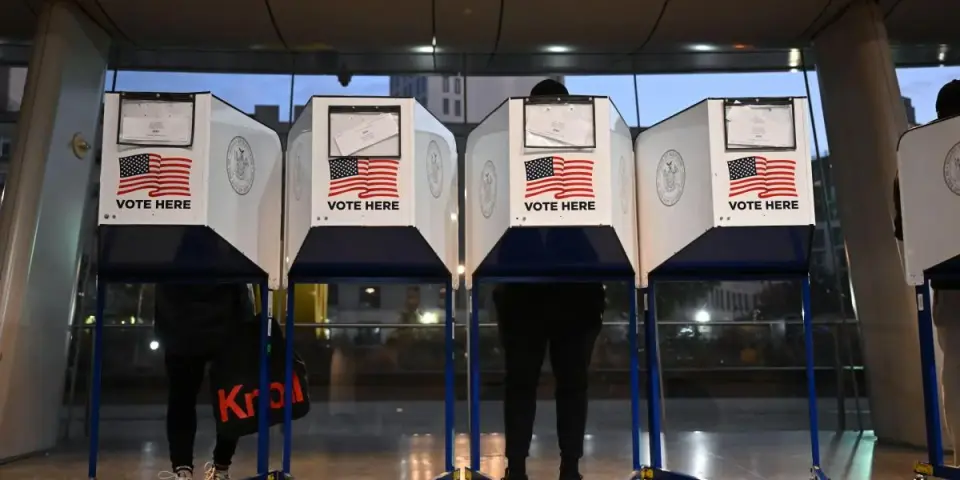
With six days until Election Day, Democrats hold a 9-point lead on the generic ballot and are favored to flip the House majority. The Senate remains highly competitive, with Democrats needing to win four seats to overcome Vice President JD Vance’s tie-breaking vote. Trump’s approval rating has hit historic lows, particularly regarding the cost of living, driving a wave election that contrasts with the 2018 suburban surge. Key battlegrounds include Michigan, Ohio, and Texas, where polling shows tight margins despite Republican redistricting efforts.
Key points
- Democrats lead the generic congressional ballot by 9 points, a margin comparable to the 2018 wave election, though they only need to flip three House seats to regain control.
- The Senate race is unsettled, with Democrats needing to win 51 seats to counter Vice President JD Vance’s tie-breaking vote; polls show competitive races in Maine, Michigan, Ohio, and Texas.
- President Trump’s net approval rating stands at -22.7%, with 71% of voters disapproving of his handling of inflation, marking his second-lowest approval heading into a midterm since 1946.
- The 2026 wave differs from 2018, focusing on blue-collar and Hispanic voters in previously red districts rather than upper-income suburbs, as few Republican seats remain in college-educated areas.
- Republicans are outspending Democrats in Senate tossup races, while Democrats have out-raised Republican contenders in competitive House races, highlighting divergent financial strategies.
Background
This election cycle follows the 2018 midterms, where Democrats flipped the House by capturing upper-income suburban districts. Current polling indicates a shift toward reversion in blue-collar and independent-leaning areas. Recent archive coverage notes internal GOP divisions, such as former leaders refusing to support Trump-backed successors in Texas and North Carolina, and rare bipartisan endorsements for Democratic candidates in South Carolina and Alaska, reflecting deep dissatisfaction with the current administration.
How outlets are covering it
The Cook Political Report emphasizes the demographic shift from suburban to blue-collar voters, noting that few Republican seats remain in college-educated areas. Yahoo highlights the generic ballot lead and specific Senate margins, such as Abdul El-Sayed’s 6-point lead in Michigan. CNN categorizes House races by likelihood, identifying 'low-hanging fruit' like California’s 1st District and 'wave' indicators like Kentucky’s 6th District. The New York Times focuses on the unsettled Senate map and Trump’s strategic avoidance of unpopular battlegrounds like Maine and New Hampshire, while noting his rallies in red states like Kansas and North Carolina.
Why it matters
The outcome will determine whether Democrats can block the president’s agenda, investigate his administration, and potentially impeach him. A Democratic victory in the Senate would also allow them to stymie Supreme Court nominees. The election serves as a referendum on Trump’s second term, with affordability and cost of living being the primary drivers of voter dissatisfaction.
What to watch
Election Day is six days away. Polls may shift in the final days, particularly in Senate races where Republicans are outspending Democrats. Trump is scheduled to hold rallies in Mississippi, Texas, Ohio, and Florida, while Vice President JD Vance will campaign in Montana, Michigan, and Texas. The final results will determine control of both chambers of Congress and the balance of power in the 119th Congress.
- 2026 Is the ‘Back to the Future’ Midterm Cook Political Report
- The 2026 midterms are just 6 days away. Which party has a better chance of winning? Here's what the latest polls say. Yahoo
- How to tell if Democrats are heading for a landslide in the House CNN
- Who’s Winning the Race for Congress? The New York Times
- US midterms: Six days left – who leads in the polls as Trump, Obama rally Al Jazeera
Want the full story? Read the original reporting
Read on Cook Political Report