
El-Sayed clashes with Watters over circumcision, taxes, and sports in fiery Michigan debate
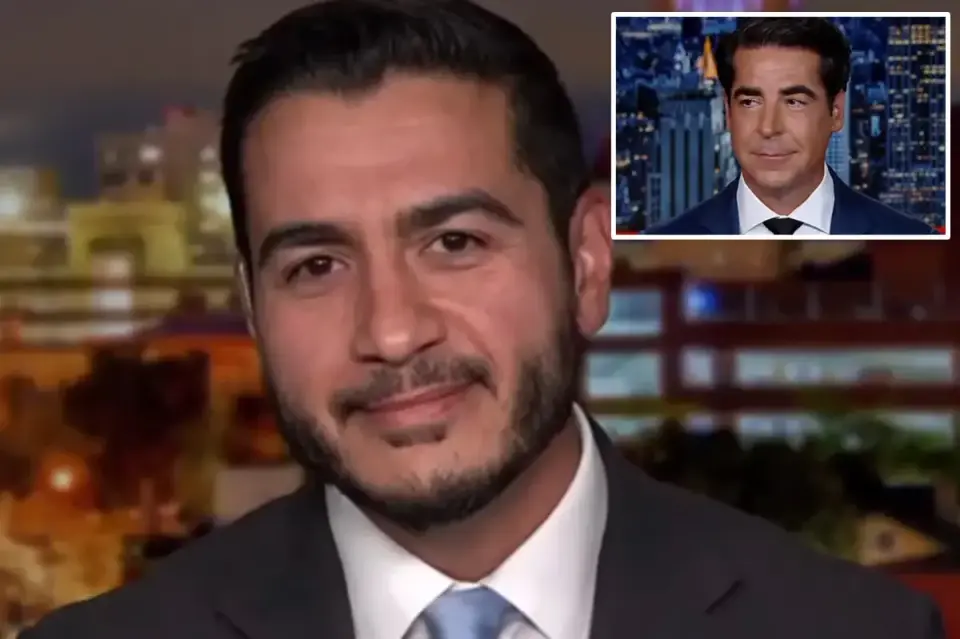
Michigan Senate candidate Abdul El-Sayed engaged in a contentious 25-minute interview with Fox News host Jesse Watters on August 24, 2026. The discussion covered El-Sayed's support for gender-affirming care for minors, his stance on taxing the wealthy, and his opposition to abolishing ICE. El-Sayed notably asked Watters if he was circumcised to argue against government interference in minor medical procedures. Watters criticized El-Sayed's policies as 'wacky' and 'naive,' while El-Sayed accused Watters of defending billionaires and dodging questions on cultural issues.
Key points
- El-Sayed asked Watters if he was circumcised to argue that government should not regulate medical procedures for minors, including gender-affirming surgeries.
- Watters described El-Sayed's policy positions as 'wacky' and 'naive,' particularly regarding Medicare for All and taxing the ultra-wealthy.
- El-Sayed refused to answer questions about the cost of his healthcare proposals and the size of the US budget.
- El-Sayed criticized Watters for focusing on cultural issues like men in women's sports rather than economic concerns in Michigan.
- El-Sayed accused Watters of 'defending billionaires' and argued that taxing the wealthy would not significantly impact their wealth.
- El-Sayed called his opponent, Mike Rogers, a 'beta' male and accused him of dodging interviews.
Background
El-Sayed won the Michigan Democratic primary in August 2026, defeating Rep. Haley Stevens in a race described as a 'battle for the soul of the Democratic Party.' Establishment Democrats, including Chuck Schumer, Pete Buttigieg, and Gavin Newsom, quickly endorsed El-Sayed to present a united front. The general election will be against Republican nominee Mike Rogers, a former congressman and FBI special agent. The race is seen as potentially decisive for Senate control in 2026.
How outlets are covering it
The New York Post highlighted El-Sayed's personal question about circumcision as a 'bizarre' moment, emphasizing his defense of gender-affirming care for minors. The Independent focused on the combative nature of the interview and El-Sayed's progressive policy positions. 930 WFMD Free Talk detailed El-Sayed's responses to questions about Sharia law, taxing the wealthy, and reparations, noting his household income of $686,069 in 2025. Mediaite summarized Watters' criticism of El-Sayed as 'naive' and 'wacky,' while noting El-Sayed's attempts to steer the conversation toward affordability and healthcare. All outlets agreed the interview was contentious, but differed in emphasis: the Post focused on the circumcision exchange, the Independent on policy clashes, 930 WFMD on specific policy stances, and Mediaite on the overall tone and Watters' final assessment.
Why it matters
The interview highlights the deep ideological divide between El-Sayed and the Republican nominee, Mike Rogers, in a crucial Senate race. El-Sayed's willingness to engage in a combative interview and defend his progressive policies, even when facing criticism, signals his strategy to appeal to Democratic base voters. The clash over cultural issues like gender-affirming care and sports, as well as economic policies like taxing the wealthy, reflects the broader national debate on these topics. The outcome of the Michigan race could influence Senate control and shape the political landscape for the 2028 presidential election.
What to watch
El-Sayed will continue his campaign against Mike Rogers in the November 2026 general election. The interview may influence public perception of El-Sayed's ability to handle tough questions and defend his policies. The race will likely focus on economic issues, healthcare, and cultural divides, with both candidates seeking to appeal to Michigan voters. The outcome could determine which party controls the Senate and impact the political dynamics for the 2028 presidential election.
- Abdul El-Sayed asks Jesse Watters 'Are you circumcised?' while defending sex change surgery for minors New York Post
- Abdul El-Sayed Joins Jesse Watters of Fox News for Some Light Verbal Combat The New York Times
- Abdul El-Sayed asks Jesse Watters if he is circumcised during combative Fox News interview The Independent
- Abdul El-Sayed grilled on past statements on Sharia law and White supremacy, taxing the rich 930 WFMD Free Talk
- ‘You Seem a Little Naive’: Jesse Watters Tells Democratic Candidate His Ideas Are ‘Straight-Up Wacky’ Mediaite
Want the full story? Read the original reporting
Read on New York Post