Maine Secretary of State Shenna Bellows announced that a referendum on transgender athletes participating in sports has been removed from the 2026 ballot, shelving the measure for now and leaving no immediate voter decision on the issue.
Bill Maher and David Cross spar over transgender rights on the Club Random podcast, with Maher arguing against transgender women competing in female sports and questioning whether kids can decide their gender, while Cross cites his daughter's transgender friends, in a debate about the looney left that ends with Maher joking about President Vance.
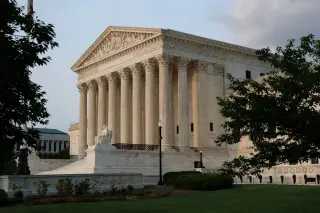
The U.S. Supreme Court declined to hear a Florida parents’ lawsuit alleging that a Tallahassee middle school and district officials concealed their child’s gender identity from them, arguing this violated their 14th Amendment parental rights and due process. The case was dismissed by lower courts, and the Court has previously rejected similar challenges in Wisconsin and Maryland; the decision fits into a broader national debate over transgender rights and how schools disclose gender-related information to families.
Andrew Garfield says he recently watched the Harry Potter films for the first time and acknowledges it’s controversial because supporting the Potter universe could financially benefit JK Rowling, whose views on transgender rights he critiques; he lauds the films’ themes but won’t reward what he calls 'inhumane legislation' with his money.
A Douglas County judge refused to issue a temporary restraining order blocking a fast-tracked Kansas law that bars transgender people from using bathrooms matching their gender identity and invalidates some residents’ gender markers on driver’s licenses, allowing the law to take effect while the lawsuit alleging due process, privacy and equality violations proceeds. The judge found insufficient information to grant the TRO; the law imposes fines and civil liability, and has already affected hundreds of licenses. A case management conference is set for March 18, and advocacy groups launched Operation Lifeboat to assist affected residents.
An emergency Supreme Court ruling blocked California from enforcing a 2024 law that bars schools from automatically informing parents about a transgender student’s pronouns or gender expression without consent, a decision advocates say could widen protections rollbacks for transgender youth as the Court weighs other related cases (sports participation, conversion therapy). The majority found the policy likely violated parents’ religious and due-process rights, but Justice Kagan dissented. The ruling is temporary and remains in limbo pending appellate review, with the exact timeline unclear.
Vox’s Ian Millhiser argues that Mirabelli v. Bonta marks a dangerous expansion of judicial power by grounding a California public-education policy in substantive due process, effectively forcing teachers to disclose a student’s gender identity to parents even if the student wishes to keep it private. He warns that substantive due process has repeatedly been used to rewrite law from Lochner to Roe, calling it a “One Ring” that tempts justices to impose personal preferences. The piece also suggests the ruling could create unworkable obligations for schools and threaten public education, while highlighting concerns about religious liberty and the cyclical nature of Court power.
The Supreme Court temporarily blocked California's law requiring schools to notify parents when a student identifies as transgender, reinstating a lower-court injunction and letting school policies stand while the case proceeds. The unsigned order aligned with religious parents who argued the policy violated their rights, while liberal justices dissented.
The Supreme Court temporarily blocked California from applying policies that would prevent teachers from informing parents about a student’s transgender status, siding with religious parents who argued the policy infringed parental rights; California contends the policy does not prohibit disclosures and may require them in some cases while the challenge proceeds.
Two transgender Kansans have filed a lawsuit challenging SB 244, a law that immediately invalidates state-issued IDs with gender markers reflecting identity and creates a private right to sue people suspected of being transgender for using government restrooms; the suit argues the measure violates Kansas constitutional protections of personal autonomy, privacy, equality, due process, and free speech, with the ACLU and Ballard Spahr LLP representing the plaintiffs.
Two transgender men sue Kansas to block a new law that invalidates updated driver’s licenses and birth certificates reflecting gender identity, arguing the measure is dehumanizing and violates privacy and bodily autonomy. The law, enacted Feb. 18 over Gov. Laura Kelly’s veto, imposes strict enforcement tied to a policy barring transgender people from some facilities, fines, and even allows lawsuits against transgender individuals. About 1,700–1,800 people are affected; the plaintiffs—anonymous as Daniel Doe and Matthew Moe—seek an injunction to halt enforcement.
Two transgender Kansans filed a lawsuit to block a new law that invalidates driver’s licenses and birth certificates unless they reflect biological sex, allows license surrender for new IDs, designates bathrooms by biological sex, and lets aggrieved individuals sue. The law, which took effect Thursday, could mean about 1,700 license cancellations and 1,800 birth certificates reissued; the ACLU says it violates Kansas constitutional protections, and Gov. Kelly’s veto was overridden by the Legislature.
Two transgender Kansans filed a lawsuit to block a new law that immediately invalidates driver’s licenses whose gender markers don’t match birth sex and also voids related birth certificates, affecting about 1,700 licenses. They argue the measure violates due process, equal protection, and free expression, and that it targets transgender people while allowing others to update details. The ACLU represents the plaintiffs; the law was rapidly enacted over a veto and supported by the state attorney general, prompting some residents to reconsider remaining in Kansas.
A fast-tracked Kansas law requires about 1,800 transgender residents to surrender and replace their driver’s licenses and birth certificates, and mandates restroom use in government buildings be aligned with birth sex. The law took effect within days of a veto override, prompting fear, confusion, and mobilization among trans Kansans and LGBTQ activists. Some are updating IDs or facing potential legal challenges, while organizers push for lawsuits, legislation, and mutual-aid support; others worry about vulnerable youth and even consider leaving the state if conditions don’t improve.
The Defense Department is pushing policy changes to Scouting America that critics say target transgender youths, signalling a broader shift in participation rules and program administration.