
European Far-Right Exploits Urban Unrest to Advance Anti-Immigration Agendas
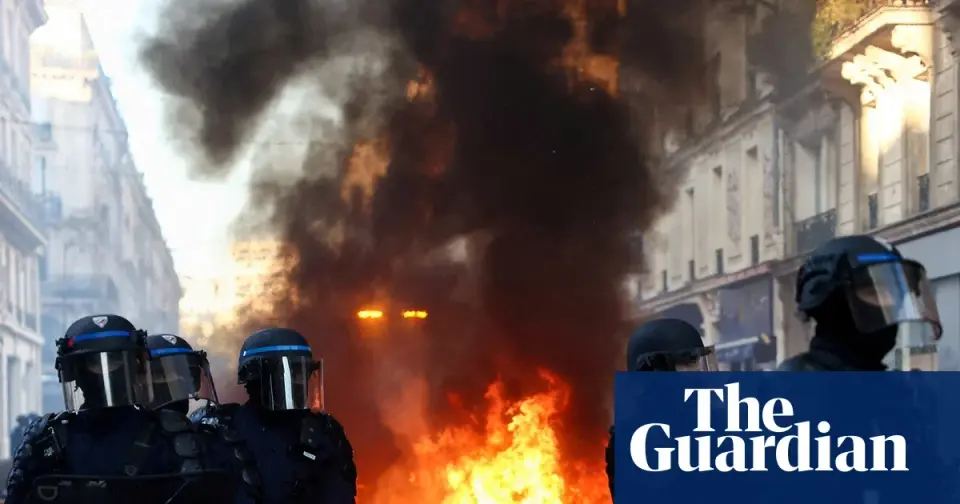
The Guardian reports that European far-right parties are leveraging recent violent unrest in cities like Paris, Milan, and Brussels to promote authoritarian anti-immigration policies. Leaders in France, Italy, and Spain are framing the riots as evidence of state failure and open-border chaos, while The American Prospect argues the unrest stems from deep-seated economic inequality and the collapse of the political center. Although the violence originated from cost-of-living grievances, nationalist leaders are successfully redirecting public anger toward immigration, a strategy reinforced by US officials ahead of midterm elections.
Key points
- Jordan Bardella of France’s National Rally called the government 'impotent' amid rioting in Paris, Marseille, and Lyon, while Marine Le Pen described the state as 'collapsing' due to 'anarchic immigration.'
- Italy’s Prime Minister Giorgia Meloni passed emergency decrees imposing tougher penalties on rioters and noted that nearly half of those arrested in Milan were of immigrant background.
- In Spain, Vox leader Santiago Abascal labeled housing protesters as 'Sánchez’s militias,' while in Belgium, Vlaams Belang described the unrest as 'imported violence.'
- The American Prospect notes that French President Emmanuel Macron’s approval rating has fallen to 18 percent, with Marine Le Pen leading polls at 36 percent ahead of the 2027 presidential election.
- US President Donald Trump and Vice President JD Vance framed the French unrest as a cautionary tale, blaming 'third world' imports and 'diversity' policies for the chaos.
Background
This escalation follows a pattern of anti-immigrant unrest in Europe earlier in 2026. In September, Dutch authorities dismantled a violent far-right rally in The Hague, and UK police faced clashes in Dover and Portsmouth linked to anti-migrant activists. Those events highlighted growing tensions between nationalist groups and government authorities, setting the stage for the broader political weaponization of street violence seen in October.
How outlets are covering it
The Guardian emphasizes the strategic maneuvering of far-right leaders, noting how they are hijacking protests that began over economic grievances to push an authoritarian agenda. In contrast, The American Prospect focuses on the structural causes of the unrest, arguing that the violence is a symptom of a failing welfare state and widening inequality rather than immigration. While the Guardian highlights the specific rhetoric of leaders like Bardella and Meloni, The American Prospect points to the collapse of the political center, noting that moderate parties have failed to address working-class concerns, thereby energizing both the far-left and far-right. The two sources agree that the unrest has significantly boosted the electoral prospects of nationalist candidates, but they differ on whether the primary driver is state incompetence or economic despair.
Why it matters
The ability of far-right parties to frame economic and social unrest as an immigration crisis could reshape electoral outcomes in key European nations. With elections approaching in France, Spain, and Italy, the weaponization of violence by nationalist leaders threatens to marginalize centrist and moderate parties. This shift may lead to the implementation of harsher security measures and anti-immigration policies, further polarizing European societies and potentially undermining democratic norms.
What to watch
Analysts expect the political fallout from these protests to intensify in the coming months. In France, Marine Le Pen is positioned to win the 2027 presidential election unless moderate candidates unite. In Italy, Giorgia Meloni’s government may continue to expand its law-and-order agenda. In Spain, the snap election called by Pedro Sánchez will likely see Vox leveraging the housing crisis to gain ground. The coming weeks will determine whether the far-right can translate street unrest into lasting legislative power across the continent.
- Europe’s far right seizes on protest violence to push authoritarian anti-immigration agenda The Guardian
- What We Saw at Fast-Track Trials of Riot Suspects in France The New York Times
- Is Paris Burning? The American Prospect
- What’s Behind the Protests in France and What Happens Next WSJ
- France announces nightly curfews 'for as long as necessary' in Paris and other cities NPR
Want the full story? Read the original reporting
Read on The Guardian