
France’s Eighth Week of School Protests Exposes Deep Generational and Political Fractures
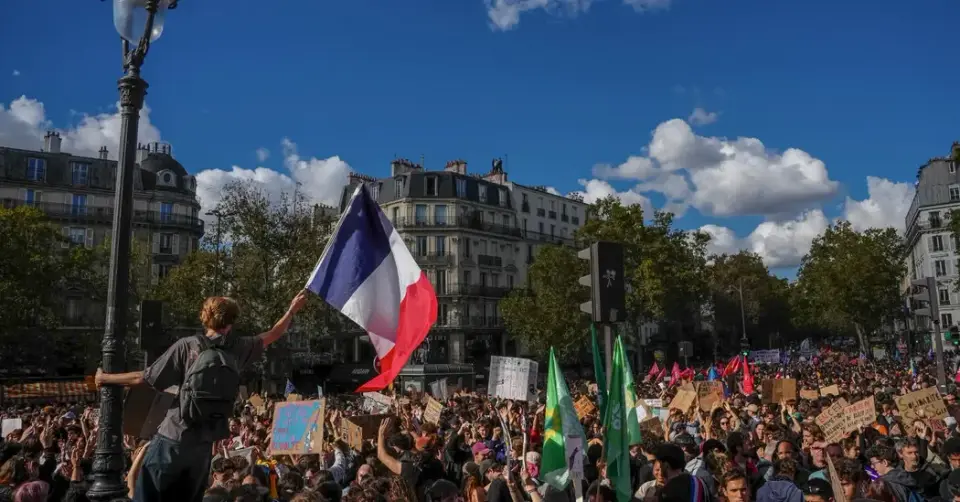
France is entering its eighth week of unprecedented school protests, with hundreds of high schools barricaded since September. While the government has offered concessions on class sizes and university admissions, teachers and parents report a deepening crisis of trust and violence. The unrest highlights a sharp generational divide, with young people feeling more acutely the impacts of inequality and climate change, while political polarization splits youth between left-wing student leaders and far-right critics.
Key points
- The protest movement has persisted for eight weeks, with hundreds of high schools barricaded using wheelie bins or closed due to security concerns.
- Over 360 students and 245 staff have been injured since the protests began, including a 16-year-old who lost an eye to a rubber bullet.
- The government has faced criticism for initial security crackdowns and subsequent attempts to downplay the crisis, while teachers’ unions accuse authorities of letting violence fester.
- Students demand repairs to dilapidated buildings, more replacement teachers, solutions to overcrowding, and equality in university admissions.
- A 'French Fractures' survey indicates young people (18-24) feel more affected by social inequality, assault, and climate change impacts than older demographics.
- The movement is split between left-wing student leaders like Soumaya Sarré and far-right critics like Louise Montangon, reflecting broader political polarization.
Background
The current unrest follows the 2018 Yellow Vests movement, which marked a shift toward more violent social protest in France. The 2027 presidential election is approaching, adding political urgency to the education crisis. Previous archive items are unrelated to this story.
How outlets are covering it
The New York Times emphasizes the political polarization within the youth movement, contrasting left-wing student leader Soumaya Sarré with far-right activist Louise Montangon. The Guardian focuses on the practical and human cost of the protests, highlighting the exhaustion of teachers, the trauma of injured students, and the missed educational hours (up to 150 hours for some). Le Monde provides sociological data, noting that young people report higher levels of feeling affected by inequality and violence, suggesting a fundamental shift in how youth relate to politics and state authority.
Why it matters
The crisis threatens the integrity of the French education system, with key baccalauréat exam years potentially compromised. It also signals a potential shift in political alignment among young voters ahead of the 2027 presidential election, as traditional channels of negotiation appear to have failed, leading to a 'crisis of trust' between the state and its youth.
What to watch
More strikes and protests are scheduled for Tuesday. The government faces pressure to de-escalate violence and restore normalcy before the start of the electoral season. Teachers and parents are calling for a path back to education, while the government continues to argue that its concessions have ended the movement's momentum.
- They’re Young, Frustrated and Want France to Change. They Disagree on How. The New York Times
- Riots in France: How anti-government protests spiraled out of control Reuters
- ‘We need to get back to class’: some teachers lose patience as France enters its eighth week of student protests The Guardian
- 'French Fractures': October 17, a day of protests and violence that reveals a deep generational divide Le Monde.fr
- France Braces for More Strikes and Protests Over Cost of Living Bloomberg.com
Want the full story? Read the original reporting
Read on The New York Times