
Michigan Senate Debate Devolves Into Personal Attacks Over Iran, Tariffs, and Israel
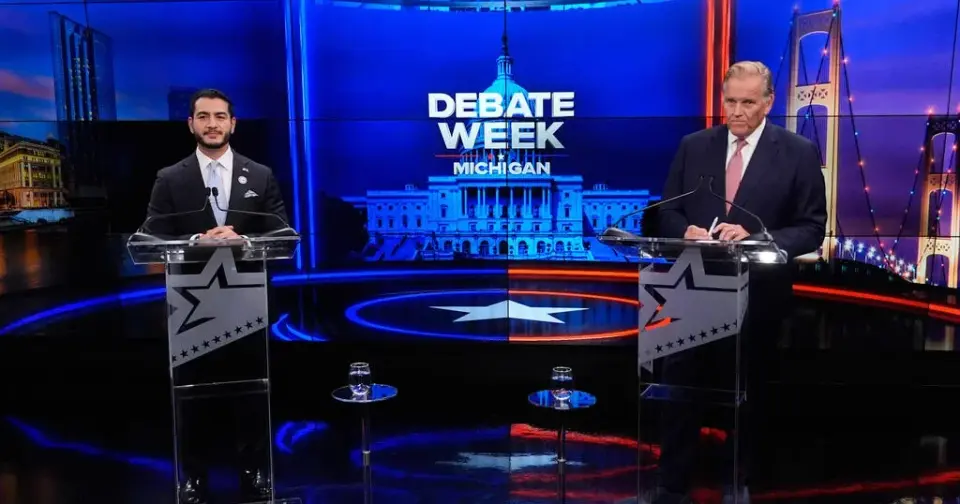
The first televised debate between Michigan Senate candidates Abdul El-Sayed and Mike Rogers on October 8 was marked by intense personal insults and policy clashes. The candidates traded accusations regarding their integrity, finances, and loyalty to President Trump. Key topics included the Iran war, Canadian tariffs, and healthcare. The race remains razor-thin and is viewed as pivotal for Senate control.
Key points
- El-Sayed called Rogers 'weak' and a 'sock puppet,' while Rogers labeled El-Sayed a 'glitchy AI chatbot' and 'con man.'
- Rogers stated he called Commerce Secretary Howard Lutnick to negotiate a trade deal with Canada, breaking with Trump’s tariff stance.
- El-Sayed criticized the Iran war as 'stupid' and opposed U.S. military aid to Israel, while Rogers supported Israel’s right to self-defense.
- Moderator Rick Albin noted the candidates continued arguing during commercial breaks, struggling to maintain order.
- Rogers signaled openness to support from AIPAC, a group that spent over $30 million against El-Sayed in the primary.
Background
This contest replaces retiring Senator Gary Peters and is considered one of the most critical races for determining Senate control. Previous coverage highlighted El-Sayed’s challenges in unifying diverse Democratic constituencies, including Black and Jewish voters, following his primary victory. Rogers had previously skipped an earlier debate, drawing criticism for avoiding scrutiny on culture-war issues.
How outlets are covering it
CBS News emphasized the chaotic nature of the debate, noting the moderator’s struggle to keep the exchange orderly. The New York Times focused on the hostility, highlighting personal attacks involving family members and insinuations about terrorism ties. CNN detailed the specific policy reversals, such as Rogers’s shift on Canadian tariffs, and El-Sayed’s mockery of Rogers’s new advertising. Politico highlighted the financial dimension, noting Rogers’s openness to AIPAC support despite previous reports of him discouraging such spending. While all outlets agreed on the heated tone, they differed in emphasis: CBS focused on the disorder, NYT on the personal nature, CNN on policy shifts, and Politico on campaign finance dynamics.
Why it matters
The outcome of this race could determine which party controls the U.S. Senate. The debate revealed deep divisions on foreign policy and economic issues, reflecting broader national trends. The personal attacks may influence swing voters, while the candidates’ stances on Iran and Israel could impact their support among key demographic groups. The tight polling suggests that even minor shifts in voter perception could decide the race.
What to watch
A second and final debate is scheduled for October 21 in Detroit. Campaigns will likely continue to exploit the personal attacks and policy disagreements from the first debate. Polling in the final weeks will be crucial to gauge whether the hostile tone has affected voter sentiment. The race remains competitive, with no clear winner emerging from the October 8 exchange.
- El-Sayed and Rogers spar over Iran and Trump, and toss insults, in Michigan Senate debate CBS News
- 5 Key Moments From a Hostile Michigan Debate: ‘You Going After My Mom?’ The New York Times
- ‘Con man’ and ‘cowardly’: Personal insults fly in heated Michigan, Georgia, Maine Senate debates CNN
- Mike Rogers opens the door for AIPAC support in Michigan Senate race Politico
- Mike Rogers, Abdul El-Sayed trade barbs over Iran, ICE, AI and tariffs The Detroit News
Want the full story? Read the original reporting
Read on CBS News