
Netanyahu offers to serve as alternate PM in unity deal with rival Eisenkot
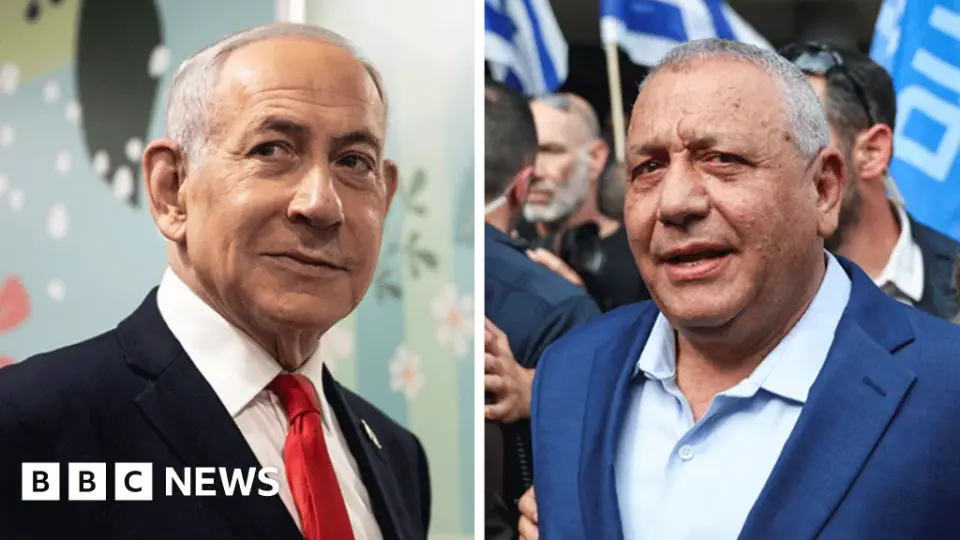
Israeli Prime Minister Benjamin Netanyahu has proposed a rotating unity government with opposition leader Gadi Eisenkot, agreeing to serve as alternate prime minister after Eisenkot's initial term. The offer comes as Eisenkot faces a December 6 deadline to form a government, having failed to secure a majority with his own bloc. Eisenkot has invited Netanyahu to 'genuine and accelerated negotiations' but remains skeptical of Likud's commitment, while allies are divided on whether the proposal is a genuine concession or a stalling tactic.
Key points
- Netanyahu stated on Saturday that he would 'put everything aside' to allow Eisenkot to serve as prime minister first, with Netanyahu serving as 'alternate prime minister' in a rotating arrangement.
- Eisenkot, who has until December 6 to form a government, responded by inviting Netanyahu to 'genuine and accelerated negotiations' but noted that Likud had not responded to a 'detailed proposal' sent a week earlier.
- Eisenkot's bloc holds 48 seats, while Netanyahu's Likud bloc holds 53; a majority requires 61 seats in the 120-seat Knesset.
- Arab-led parties won a record 19 seats, but most Jewish parties have pledged not to form a government with them, complicating Eisenkot's path to a majority.
- Eisenkot has secured coalition deals with Yisrael Beiteinu and The Democrats, but the left-wing Democrats party suspended talks in protest at the prospect of Netanyahu remaining in government.
Background
The October 27, 2026 election produced no clear majority, with Netanyahu's bloc winning 53 seats and Eisenkot's opposition bloc winning 48. President Isaac Herzog tasked Eisenkot with forming a government within 28 days, extendable by 14. Previous attempts to form a government have failed, leading to multiple elections between 2019 and 2022. Netanyahu previously entered a unity government with Benny Gantz in 2020 but refused to transfer power, triggering new elections.
How outlets are covering it
BBC and CNN report that Netanyahu's proposal is a genuine concession to form a unity government, with CNN noting that Netanyahu 'running out of options' to hold power. Al Jazeera emphasizes that the talks have stalled, with Eisenkot accusing Likud of 'stalling' and refusing to put forward concrete proposals. The Washington Post highlights the 'strange-bedfellow' nature of coalition talks, noting that alliances that seemed unthinkable before the election are now possible. CNN also notes that some of Eisenkot's allies, including Yair Golan and Yair Lapid, dismissed Netanyahu's proposal as a 'bluff' or 'transparent con,' while Naftali Bennett celebrated it as the 'right decision.'
Why it matters
The outcome of these negotiations will determine whether Israel forms a new government or faces new elections. A unity government could provide stability and address the 'existential danger' Netanyahu cited, but it may also prolong Netanyahu's influence. If Eisenkot fails to form a government by December 6, President Herzog may assign the task to Netanyahu or call new elections, potentially leading to further political instability.
What to watch
Netanyahu and Eisenkot agreed to meet on Sunday morning to discuss the 'detailed proposal' Eisenkot sent a week earlier. Eisenkot has until December 6 to form a government, with a possible 14-day extension. If no government is formed, President Herzog may assign the task to Netanyahu or call new elections.
- Netanyahu proposes Israeli unity government where rival Eisenkot becomes PM first BBC
- Netanyahu, Under Pressure, Offers Rival Lead in Unity Government The New York Times
- How Israel’s odd-couple politics could be close to toppling Netanyahu The Washington Post
- Israel unity government talks stall: What happens now? Al Jazeera
- Running out of options, Israel’s Netanyahu offers power sharing deal to main rival Eisenkot CNN
Want the full story? Read the original reporting
Read on BBC