
New Zealand’s 2026 Election: A Historic Clash Between Two 'Chrises' and a Centrist Kingmaker
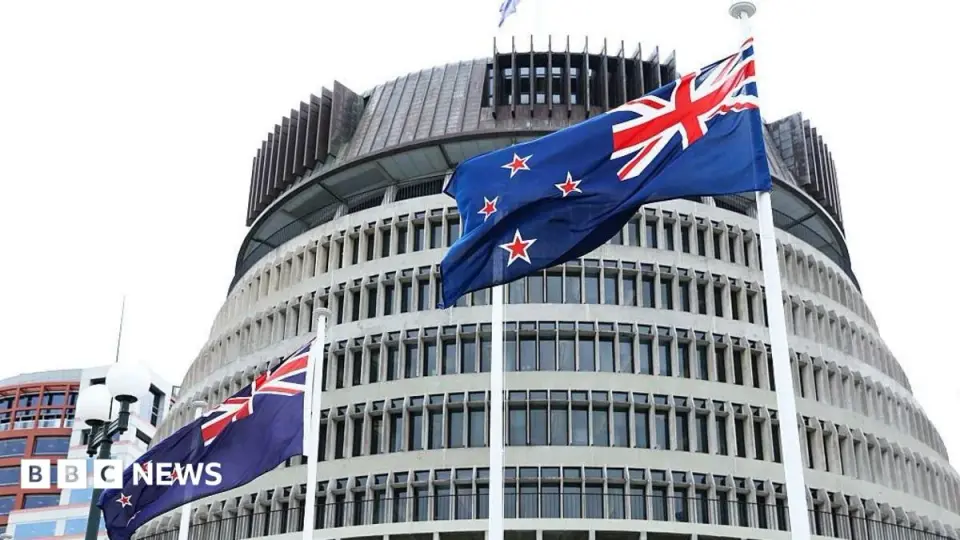
New Zealanders voted on November 7, 2026, in a fragmented election where incumbent Prime Minister Christopher Luxon and opposition leader Chris Hipkins both face historic lows in approval. The outcome hinges on the centrist Opportunity Party, led by newcomer Qiulae Wong, which is poised to become the decisive kingmaker in a parliament where no single bloc holds a majority.
Key points
- The election features a rare 'battle of the Chrises' between National Party leader Christopher Luxon and Labour Party leader Chris Hipkins, both of whom are polling at near-historic lows.
- Under New Zealand’s mixed-member proportional (MMP) system, voters cast two votes: one for a local candidate and one for a party, with parties needing 5% of the party vote or one electorate seat to enter parliament.
- The centrist Opportunity Party, led by 38-year-old Qiulae Wong, is expected to cross the 5% threshold, potentially making it the first total outsider party to enter parliament in 30 years.
- Luxon, a former airline executive, faces criticism for slow economic recovery and high living costs, while Hipkins, a former prime minister, is associated with unpopular pandemic-era policies.
- Minor parties, including ACT and New Zealand First, hold significant leverage, with some advocating for culture-war policies or sweeping immigration changes, complicating coalition negotiations.
Background
New Zealand’s MMP voting system, which includes an 'overhang' mechanism and a Maori roll, has historically led to coalition governments. Previous coverage noted that the 2026 election was marked by a strict 19-hour voting blackout and over 1.6 million early ballots cast. The current election follows a period of economic stagnation and high unemployment, with voters expressing widespread discontent with traditional major parties.
How outlets are covering it
The New York Times emphasizes the economic sluggishness and lack of a clear front-runner, noting that both major parties are polling at historic lows. AP News highlights the personal dynamics of the 'battle of the Chrises,' detailing Luxon’s business background and Hipkins’s pandemic-era controversies. CNN focuses on the unprecedented influence of minor parties, particularly the centrist Opportunity Party, and the potential for a fragmented parliament where minor parties dictate policy. BBC News provides a technical explanation of the MMP voting system, clarifying how party votes and electorate votes determine parliamentary representation.
Why it matters
The outcome of this election will determine whether New Zealand continues with a right-wing coalition or shifts toward a center-left or centrist government. The rise of minor parties like the Opportunity Party signals a shift in voter priorities, with issues such as living costs, healthcare funding, and immigration policy likely to dominate the next government’s agenda. The potential for a single-term government for the National Party would mark a historic first in decades.
What to watch
Final results are expected by November 27, 2026, following the close of polls. Coalition negotiations will be critical, with the Opportunity Party potentially holding the balance of power. Luxon has ruled out a deal with the Opportunity Party, but may need to reconsider if his coalition fails to secure a majority. The next government’s policy direction will depend on which bloc can form a stable coalition, with minor parties likely demanding significant concessions.
- New Zealand election 2026: Live updates BBC
- Will New Zealand Join Voters’ Global Revolt Over Soaring Costs? The New York Times
- A man named Chris will be New Zealand's next prime minister, whichever party wins the election AP News
- New Zealand election campaign enters final day with result too close to call Reuters
- A moderate millennial newcomer could decide knife-edge New Zealand election CNN
Want the full story? Read the original reporting
Read on BBC