
Roberts Halts Court Order, Allowing Trump's White House Ballroom Construction to Resume
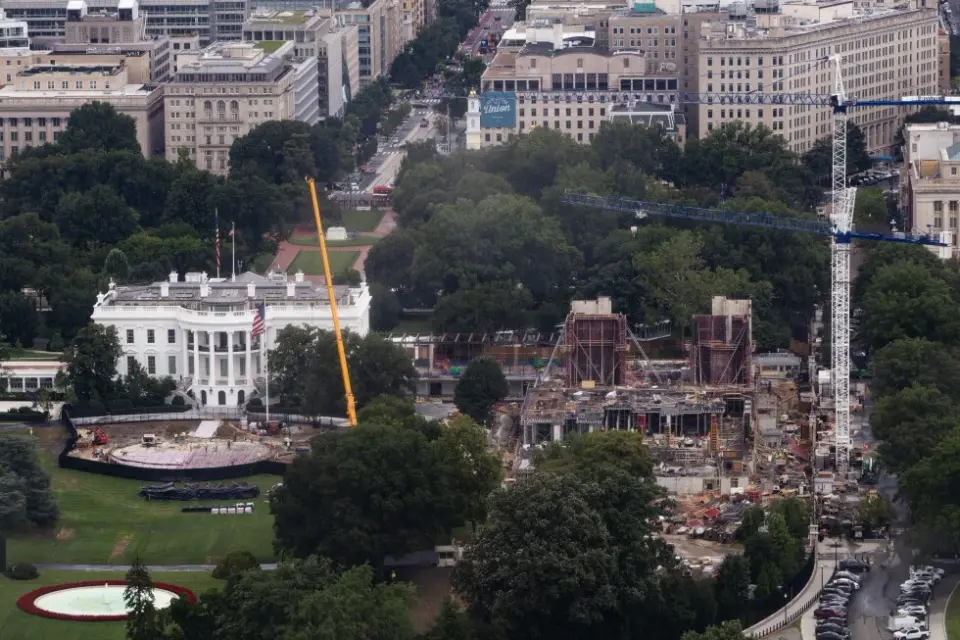
Chief Justice John Roberts issued an emergency administrative stay, allowing construction of the White House ballroom to continue indefinitely while the Supreme Court reviews the case. The move pauses a DC Circuit Court order that had mandated a halt to work by August 21. The project, described as 65% complete, remains legally contested by the National Trust for Historic Preservation, which argues Congress must approve such major renovations.
Key points
- Chief Justice John Roberts granted an administrative stay, freezing a lower court ruling that required construction to stop at midnight on August 21, 2026.
- The stay does not address the legality of the project but allows work to continue until the full Supreme Court issues a new order.
- The White House ballroom project is approximately 65% complete, with a 250-person crew working 20-hour days, seven days a week.
- The DC Circuit Court previously ruled that the executive branch cannot redesign the White House without congressional approval, a decision the administration called 'judicial overreach.'
- The National Trust for Historic Preservation argues the administration is attempting to 'outrun judicial review' by using irreversible building materials, such as concrete used in nuclear plants.
Background
The dispute began after the National Trust for Historic Preservation sued in December 2025, leading to a federal judge ordering a halt to the ballroom construction. The DC Circuit Court upheld this injunction in early August 2026, setting an August 21 deadline for work to cease. The project has evolved from a $200 million estimate to nearly $400 million, with the administration framing it as a critical national security asset and military complex.
How outlets are covering it
AP News and CNN both report that Chief Justice Roberts allowed construction to continue without setting a new deadline. CNN provides additional detail on the legal arguments, noting that the administration claims the National Trust lacks standing, while the Trust argues the project is irreversible. CNN highlights the administration's use of specialized concrete and the rapid pace of construction as evidence of an attempt to preempt judicial review, a detail not emphasized in the AP report. Both outlets agree that the order is an administrative stay rather than a final ruling on the merits of the case.
Why it matters
The decision sets a precedent for executive authority over federal property and the limits of judicial review in ongoing construction projects. It raises questions about the balance of power between the executive and legislative branches regarding major renovations of historic government buildings. The use of irreversible materials and the speed of construction may complicate future legal challenges and set a template for how the executive branch can bypass congressional approval for significant infrastructure changes.
What to watch
The Supreme Court is expected to refer the case to all nine justices for a full review. The National Trust for Historic Preservation has stated it awaits further action, while the administration continues construction. The outcome will determine whether the ballroom can be completed without congressional approval or if the project must be halted or modified.
- Supreme Court's chief justice allows work on Trump’s $400M White House ballroom to continue for now AP News
- Trump Can Keep Building Ballroom While Supreme Court Weighs Appeal WSJ
- Supreme Court temporarily allows construction of White House ballroom to continue CNN
- The Case of the Disappearing, Reappearing White House Ballroom Stairs The New York Times
- Supreme Court allows Trump’s ballroom construction to continue for now NPR
Want the full story? Read the original reporting
Read on AP News