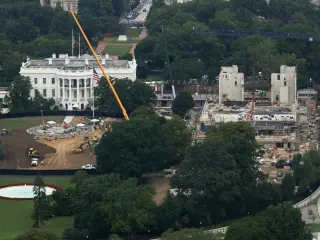
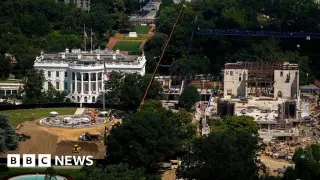
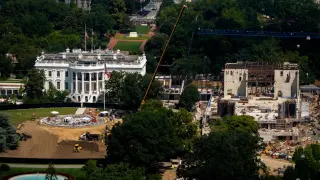
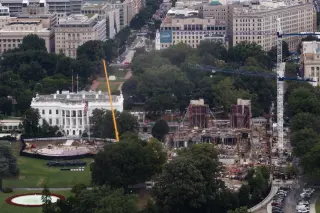
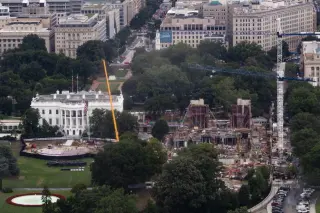
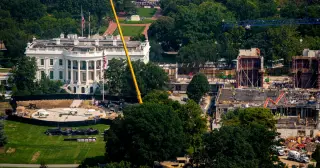
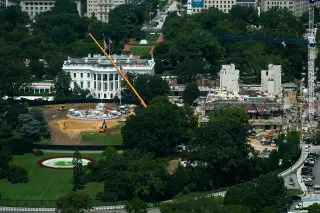
Trump is using a rapid, surprise-fast-track approach to advance major projects—like a White House ballroom, a South Lawn helipad, the Reflecting Pool refinishing, and an Arlington Cemetery arch—despite court challenges, a tactic some judges warn against as bypassing due process while others consider how to respond.
The Supreme Court allowed the White House East Wing ballroom construction to proceed while ongoing appeals shape the case, with the project privately funded and drawing mixed public opinions; supporters call it an improvement and necessity, while critics question the teardown and funding amid a heated legal fight.
The US Supreme Court, in a 5-4 ruling, let the White House continue a $400 million ballroom project while lawsuits unfold, saying the preservation group likely lacks standing and citing national security concerns; Chief Justice Roberts dissented, calling the project likely unlawful. Construction is planned to progress toward a 2028 completion, funded privately, with framework by November and facade by April as litigation continues in lower courts.
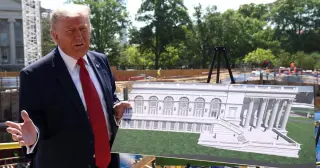
The Supreme Court ruled 5-4 to allow a $400 million East Wing ballroom project at the White House to proceed, blocking lower court orders that would have halted construction. Chief Justice Roberts dissented, saying the project likely unlawful without Congress approval; the National Trust for Historic Preservation argued unilateral authority was lacking. The 90,000-square-foot ballroom and above-ground portion are slated to be substantially finished by November and fully completed by August 2028, with the preservation group deemed to lack standing to sue. The decision sustains Trump’s plan for an expanded events space as part of broader White House modernization, including a South Lawn helipad and other cityscape changes.
The Supreme Court allowed the White House ballroom construction to proceed, ruling the National Trust for Historic Preservation likely lacks standing to challenge the project in federal court and that the stay factors favor relief, without ruling on the project’s legality. Chief Justice Roberts and other dissenters argued the construction is likely unlawful. The project is now estimated at about $600 million, with funding questions involving private donors and taxpayer dollars (including about $352 million redirected from other funds); the Trust says it will continue pursuing the case and seeks swift Supreme Court review.
White House insiders reveal a hidden, nuclear-primed bunker beneath the White House—built to shelter the president and dozens of aides for weeks—undermining Trump’s claim that finishing a lavish ballroom is necessary for national security. The revelation comes as the Supreme Court weighs the project while below-ground construction continues and the ballroom is reportedly about 65% complete, highlighting a clash between security rhetoric and legal challenges.
President Trump announced a nearly $400 million White House ballroom funded entirely by private donors and corporations, while the Supreme Court temporarily allows construction to continue amid a legal battle over presidential authority and the project’s claimed national-security justification.
Chief Justice Roberts issued a temporary order allowing construction on Trump’s $400 million White House ballroom to continue while the Supreme Court reviews the administration’s emergency appeal, delaying a lower-court halt over lack of congressional approval; the project is largely funded by private donations and is already about 65% complete, with the Court’s final ruling expected later.
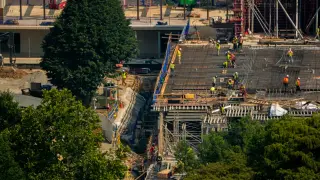
Chief Justice John Roberts has allowed continued construction of Donald Trump’s White House ballroom to proceed for now, despite ongoing litigation. About 65% of the 90,000-square-foot project is complete, with crews working around the clock and roughly $200 million in private donations spent or pledged. Earlier court orders had restricted above-ground work, with underground activity continuing, as legal challenges over Congressional authority and presidential prerogatives play out amid national security arguments and a string of Supreme Court emergency docket actions.
The Supreme Court granted a stay on the district court’s injunction, allowing ongoing White House ballroom construction to continue while it weighs the administration’s emergency appeal, with no ruling yet on legality or timeline. The project’s cost has grown to about $600 million (including underground facilities), funded in part by taxpayer dollars after redirecting funds from legislation, and questions remain about funding sources and security implications.
The Supreme Court issued a provisional stay Friday that allows the construction of a new White House ballroom to proceed while it weighs the next steps in a challenge filed by the National Trust for Historic Preservation, which argues the president lacked authority and objects to the size and aesthetics of the project. The stay blocks lower court rulings that would have halted the above-ground ballroom portion, though underground components tied to security can continue. The DC Circuit had upheld the halt, and the project is privately funded at about $400 million and roughly 65% complete, with a 250-person crew working around the clock.
Julia Stiles has joined the upcoming season of Dancing with the Stars, reuniting her with ballroom competition and joining Tatyana Ali; the cast also includes Ciara Miller and Maura Higgins, with the full lineup to be revealed Sept. 2 on Good Morning America ahead of the Sept. 15 premiere on ABC.
Trump asks the Supreme Court to allow the White House ballroom to proceed, arguing the project is part of a bomb- and missile-resistant complex needed for national security; a court filing says the structure uses nuclear-grade concrete and can’t be easily deconstructed, while opponents say the administration is rushing construction to outrun judicial review as the $400 million project faces a Friday deadline for a ruling.
The National Trust for Historic Preservation asked the Supreme Court to pause construction of the White House ballroom amid a legal challenge, warning the project could become irreversible; while lower courts want the above-ground work halted unless Congress approves, the administration argues no approval is needed and cites security concerns, allowing underground components to proceed. If construction continues, it could finish just a few months before the end of Trump's term.
The National Trust for Historic Preservation and Democrats asked the Supreme Court to halt construction of the White House ballroom while litigation plays out, arguing the administration bypassed Congress by seeking private donations instead of authorization. A divided appeals court ordered a halt by Friday unless Congress acts; the White House says the project is needed for security and is about 65% complete, with substantial progress expected by November 2026.