
Supreme Court Lifts Injunction, Allowing Trump Border Wall Construction in Texas Big Bend
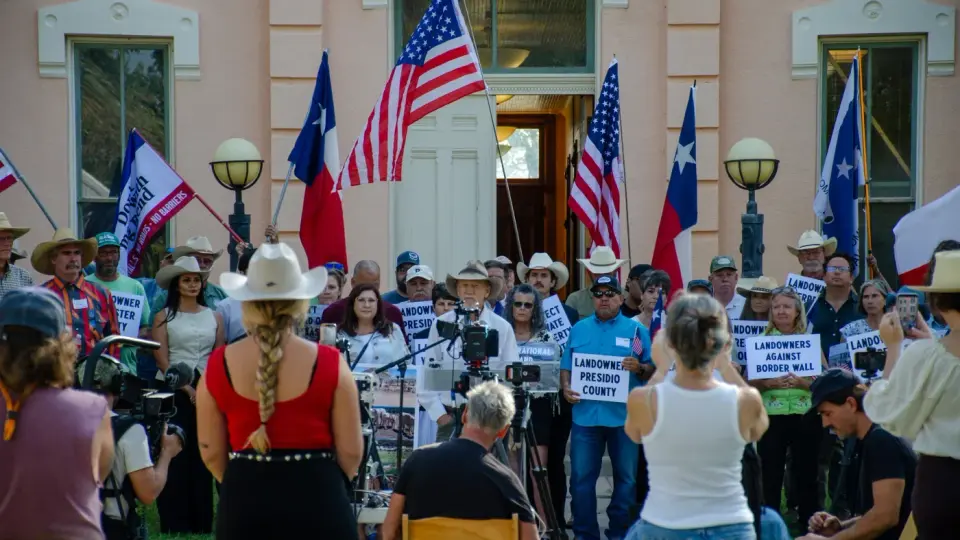
The U.S. Supreme Court has permitted the Trump administration to resume construction of border infrastructure in west Texas, including parts of Big Bend National Park. The court ruled that a federal judge lacked the authority to block the project, citing compelling national security interests. This decision allows the government to proceed with a 341-mile barrier project despite environmental and historic preservation challenges.
Key points
- The Supreme Court issued a five-page unsigned decision on Monday, allowing the Trump administration to continue border wall construction in the Big Bend region of Texas.
- The court ruled that U.S. District Judge Kathleen Cardone, who issued a preliminary injunction on October 2, 2026, lacked the authority to block the project.
- The decision cites 'compelling interests' in border security and integrity, stating that federal law allows the Department of Homeland Security to waive environmental protections for expedited construction.
- Justice Ketanji Brown Jackson was the lone dissenter in the decision.
- The project involves 341 miles of construction, including 30-foot steel barriers, patrol roads, surveillance systems, and sensors, in an area that includes Big Bend National Park.
- The lawsuit was brought by the Center for Biological Diversity, Friends of the Ruidosa Church, and landowner Danny Miller, who argued the construction would cause irreparable harm to the environment and historic sites.
Background
The dispute began when U.S. District Judge Kathleen Cardone issued a preliminary injunction on October 2, 2026, halting 'ground-disturbing activities' in Big Bend National Park and surrounding areas. The injunction blocked a $7.5 billion project involving steel bollards, vehicle barriers, and surveillance technology. The Trump administration subsequently filed an emergency application with the Supreme Court in late October, urging the justices to intervene and allow the work to begin again. The court had previously weighed the emergency appeal on October 23, 2026, before issuing its final decision on Monday.
How outlets are covering it
The Trump administration and Solicitor General John Sauer argued that the injunction was 'baseless' and 'unprecedented,' claiming that any pocket of the Big Bend without a barrier would 'become a funnel point for illegal alien crossings.' They emphasized the 'compelling interests' in border security and the broad authority granted by Congress in 1996 to build border infrastructure without bureaucratic delays. In contrast, the Center for Biological Diversity, Friends of the Ruidosa Church, and landowner Danny Miller contended that the construction would 'result in the permanent alteration of an irreplaceable landscape' and 'threaten unique historic and cultural resources.' They highlighted that the Big Bend area has the lowest apprehension rates for migrants along the border, suggesting that the security rationale for the wall is unfounded. NBC News noted that the government claims 89,000 people have been detained trying to enter the U.S. in the region in recent years, while opponents pointed to CBP data showing the fewest number of encounters in the Big Bend Sector. The Washington Post emphasized the controversy surrounding the 500-mile stretch of road, cameras, and barriers cutting through the iconic national park, noting that the administration had backed off plans for a wall inside the park itself but continued with other infrastructure.
Why it matters
The Supreme Court's decision sets a significant precedent for the balance between national security and environmental protections in border construction. By ruling that federal judges lack the authority to block border infrastructure projects when the government cites compelling security interests, the court has potentially weakened the ability of environmental groups and local residents to challenge such projects in the future. The decision also highlights the ongoing tension between the Trump administration's hard-line immigration policies and the concerns of environmental advocates and local communities. The construction of the border wall in the Big Bend region, a remote and ecologically sensitive area, raises questions about the long-term impact on the environment, historic sites, and the local tourism-based economy. Furthermore, the decision underscores the political polarization surrounding border security, with bipartisan backlash from those who argue that a wall is unnecessary in the Big Bend due to its rugged terrain and low number of illegal crossings.
What to watch
The Trump administration is expected to resume construction of the border wall and other security infrastructure in the Big Bend region immediately following the Supreme Court's decision. The Center for Biological Diversity and other plaintiffs may continue to pursue legal challenges, although the Supreme Court's ruling significantly limits their ability to block the project. The administration aims to complete a 2,000-mile installation of steel panels, vehicle barriers, and surveillance technology along the U.S.-Mexico border, with the Big Bend region being a key component. The construction is expected to face ongoing opposition from local residents, environmental groups, and some members of Congress, who have expressed concerns about the environmental and economic impact of the project. The administration will also need to navigate potential legal challenges related to the waivers issued by Homeland Security Secretary Kristi Noem and her successor Markwayne Mullin, which allowed the government to evade environmental and conservation laws.
- Supreme Court says border wall construction can continue in West Texas NPR
- Supreme Court Allows Construction of Trump’s Border Wall in Big Bend The New York Times
- Supreme Court paves way for Trump to build a section of his border wall in the Big Bend area of Texas NBC News
- Supreme Court allows major part of Trump’s border security project in Texas The Washington Post
- Supreme Court allows Trump administration to build border barrier in Big Bend National Park despite bipartisan backlash Yahoo
Want the full story? Read the original reporting
Read on NPR