
Supreme Court to rule on Trump’s border asylum ban
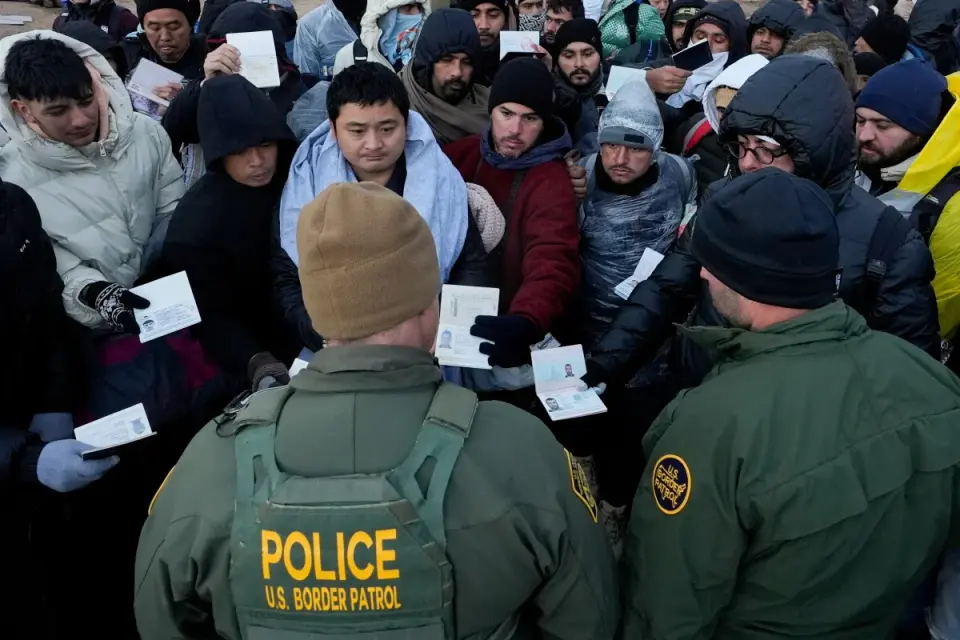
The U.S. Supreme Court agreed on November 13, 2026, to hear a case challenging President Donald Trump’s executive order that suspends asylum applications at the southern border. The administration argues the ban is a necessary tool to reduce border crossings, while opponents claim it violates federal law by preventing individuals from applying for protection. The court will decide whether the president can unilaterally override statutory asylum rights.
Key points
- The Supreme Court accepted the case Mullin v. Refugee and Immigrant Center for Education and Legal Services, which challenges the legality of Trump’s 2025 proclamation suspending asylum at the U.S.-Mexico border.
- The Trump administration argues that the executive branch has the inherent authority to categorically deny asylum applications to prevent an 'invasion' and reduce border encounters, which they claim have dropped by 93% since the order took effect.
- Opponents, including the ACLU and National Immigrant Justice Center, argue that federal law requires individual consideration for asylum claims and that the president cannot unilaterally ban the application process itself.
- Lower courts, including a federal district judge and a divided D.C. Circuit panel, previously ruled the policy illegal, finding that the administration exceeded its authority under the Immigration and Nationality Act.
- The case is part of a broader Supreme Court term focused on immigration, which also includes rulings on third-country deportations and indefinite detention of immigrants.
Background
This case follows a series of immigration-related legal battles during the current Supreme Court term. In October 2026, the court agreed to review the legality of ICE’s mandatory detention policy, and in June 2026, it ruled in favor of the administration in a separate asylum case regarding 'metering' policies. The current case stems from a January 20, 2025, proclamation by President Trump, who declared an 'invasion' at the southern border and suspended entry for noncitizens, effectively blocking asylum applications. The policy has remained in place during litigation, despite lower court rulings finding it unlawful.
How outlets are covering it
The Trump administration, represented by Solicitor General D. John Sauer, emphasizes the policy’s effectiveness in reducing border crossings to levels not seen since the 1960s, calling it the 'single most important factor' in border security. They argue that the executive branch has the discretion to deny asylum applications preemptively to avoid futile processing. In contrast, immigration rights groups and the ACLU argue that border crossings were already declining before Trump took office and that the executive order unlawfully 'eviscerates' legal protections. The D.C. Circuit split on the issue, with a 2-1 majority ruling the policy illegal, while Judge Justin Walker dissented in part, agreeing that the government cannot remove individuals to countries where they face persecution but disagreeing on the scope of the application ban.
Why it matters
The Supreme Court’s decision will determine whether the president can use executive power to override statutory asylum rights, potentially reshaping immigration enforcement and legal protections for migrants fleeing persecution. The ruling could set a precedent for the limits of executive authority in immigration policy and impact the rights of thousands of individuals seeking safety in the U.S.
What to watch
The Supreme Court is expected to hear oral arguments in the spring of 2027 and issue a decision by the end of June 2027. The court will also decide other major immigration cases, including those involving third-country deportations and indefinite detention, which could further define the boundaries of executive power in immigration enforcement.
- Supreme Court will consider Trump’s executive order suspending asylum access at the southern border AP News
- Supreme Court Set to Hear Trump’s Ban on Asylum Claims at Border The New York Times
- Supreme Court to review Trump policy blocking asylum seekers at border The Washington Post
- Supreme Court agrees to hear case on Trump administration’s suspension of asylum SCOTUSblog
- US supreme court agrees to consider Trump’s ban on asylum at US-Mexico border The Guardian
Want the full story? Read the original reporting
Read on AP News