
Trump administration ousts Guilfoyle from Greece ambassadorship amid corruption allegations
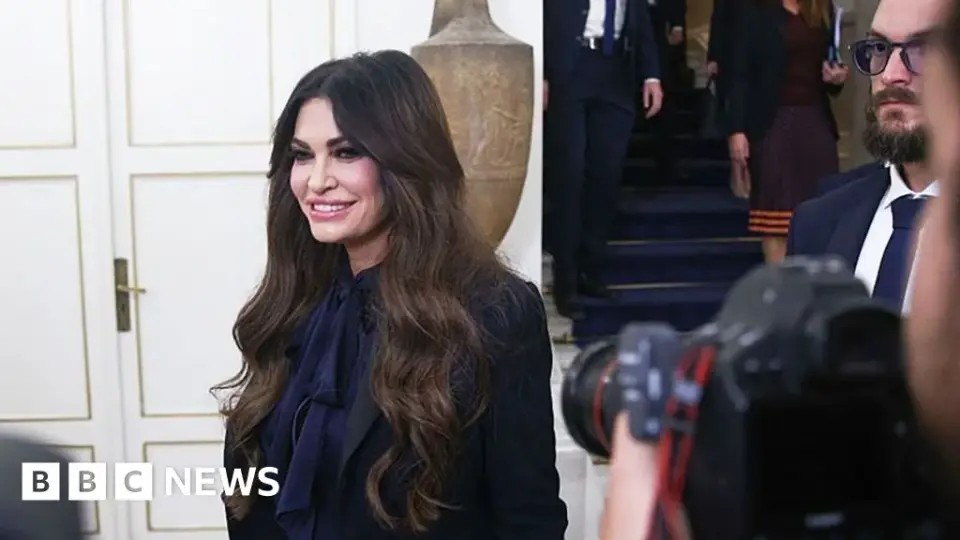
The White House asked Kimberly Guilfoyle to resign as US ambassador to Greece on October 13, 2026, following reports that she solicited $100,000 from a donor to cover credit card debt. Guilfoyle denied the claims, while President Trump confirmed her departure, stating he did not like what he read. New press secretary Katie Zacharia announced the move during her first briefing, marking the end of Guilfoyle's tenure after nearly a year in the role.
Key points
- White House press secretary Katie Zacharia announced that Guilfoyle had been asked to resign during her first media briefing on October 13, 2026.
- President Trump confirmed the decision, stating Guilfoyle was doing a good job but he did not like the reports about her conduct.
- The Wall Street Journal reported that Guilfoyle asked donor Eric Deters to pay $100,000 of her American Express bill before her Senate confirmation hearing in July 2025.
- Guilfoyle denied the allegations, calling them false and vowing to defend her reputation and integrity in a post on X.
- Trump downplayed his connection to Guilfoyle, noting she was not a family member and had dated his son Donald Trump Jr. years ago.
Background
Guilfoyle was nominated as US ambassador to Greece in December 2024, shortly before Trump returned to the White House. She had faced mounting scrutiny over the past week, with earlier reports from our archive indicating that Trump and Secretary of State Marco Rubio were weighing her dismissal. Greek officials and citizens expressed frustration over the diplomatic fallout, with some questioning the US commitment to the relationship.
How outlets are covering it
The BBC and The New York Times both reported that Guilfoyle was asked to resign after a string of damaging reports, including the solicitation of $100,000 from a donor. The New York Times emphasized the donor's claim that Guilfoyle promised to be his 'ride or die in Trump world' if he sent the money. USA Today focused on Trump's remarks dismissing his past relationship with Guilfoyle, noting his less-than-warm tone. All three outlets reported that Guilfoyle denied the allegations and vowed to defend her reputation. The BBC noted that Guilfoyle's lawyers disputed the authenticity of the text messages, claiming she was asking for money owed to her for speeches and consulting work. The New York Times reported that Guilfoyle was a highly visible ambassador in Greece, appearing on the cover of Vogue Greece and at parties around Athens.
Why it matters
The ouster of Guilfoyle highlights the administration's response to corruption allegations and the potential impact on US-Greece relations. It also raises questions about the vetting process for diplomatic appointments and the role of personal relationships in political appointments. The incident may have implications for future diplomatic appointments and the administration's approach to handling misconduct allegations.
What to watch
It is unclear whether Guilfoyle will face further legal or political consequences. The White House has not announced a replacement for the ambassadorship. Guilfoyle has vowed to defend her reputation, and the donor has indicated he plans to take legal action against her. The administration may face further scrutiny over the vetting process for diplomatic appointments.
- Trump ousts Kimberly Guilfoyle as US ambassador to Greece after corruption allegations BBC
- Kimberly Guilfoyle Resigns as Ambassador to Greece The New York Times
- Kimberly Guilfoyle has been asked to resign among corruption allegations NPR
- Trump on Kimberly Guilfoyle: 'I guess she dated my son' USA Today
- White House Press Secretary Katie Zacharia says Kimberly Guilfoyle asked to resign The Hill
Want the full story? Read the original reporting
Read on BBC