
White House Drafts Order to Place NIH Grants Under Political Veto
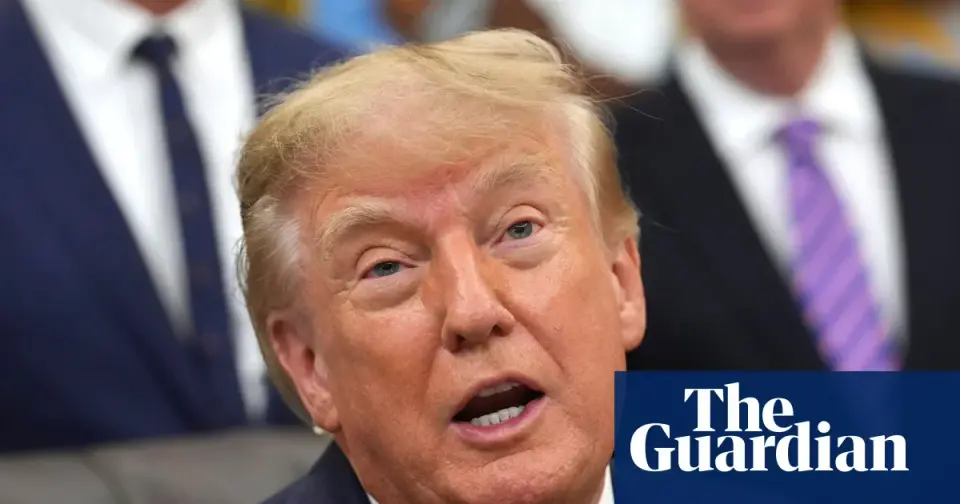
The White House is drafting an executive order to create an external board with veto power over National Institutes of Health (NIH) grant funding. The move, driven by OMB Director Russell Vought, aims to block research deemed 'woke' or misaligned with President Trump’s agenda, replacing traditional peer review with political oversight. This follows a contentious Oval Office meeting where Trump demanded cuts to Harvard funding, which NIH Director Jay Bhattacharya refused.
Key points
- A new executive order is being drafted to establish an external committee that can veto NIH grant awards, replacing the traditional scientific peer-review process.
- The proposed board would include OMB Director Russell Vought and NIH Director Jay Bhattacharya, requiring unanimous decisions on funding.
- The move follows a Friday Oval Office meeting where Trump directed Vought to draft the order after Bhattacharya refused to cut Harvard’s funding.
- Researchers have filed a class-action lawsuit alleging the administration is using funding power to censor opposing viewpoints in violation of the First Amendment.
- Congress previously blocked a similar OMB plan via a stopgap funding bill, but the new executive order seeks a different legal pathway.
Background
This development follows a series of actions by the Trump administration to influence federal institutions, including cuts to Smithsonian ties over activism claims and the takeover of the Kennedy Center. Recent archive reports also highlighted how funding disruptions have already halted critical studies, such as an Alzheimer’s risk trial in Pittsburgh, and threatened global health initiatives like polio eradication. These events illustrate a broader pattern of the administration using budgetary controls to reshape scientific and cultural priorities.
How outlets are covering it
The Washington Post and The New York Times emphasize the shift from scientific merit to political alignment, noting the tension between Vought and Bhattacharya. Politico highlights the specific trigger for the order: Trump’s demand to cut Harvard’s funding, which Bhattacharya refused, and notes that Congress had previously blocked a similar OMB plan. The Guardian frames the move as an attempt to censor 'woke' initiatives, citing a lawsuit that argues the administration is violating the First Amendment by targeting disfavored viewpoints. All outlets agree that the proposed board would give political appointees unprecedented control over the NIH’s $48 billion budget.
Why it matters
This move could fundamentally alter how biomedical research is funded in the United States, potentially prioritizing political ideology over scientific merit. If implemented, it could delay or halt critical research in areas deemed ideologically opposed by the administration, impacting public health outcomes and scientific integrity. The legal challenges and congressional pushback suggest a prolonged battle over the separation of science and politics in federal funding.
What to watch
The White House and HHS have not yet responded to requests for comment. The executive order is in the drafting phase, and its implementation depends on whether Congress extends the restrictions in the current stopgap funding bill, which expires in mid-December. Researchers and legal advocates are likely to continue challenging the order in court, arguing it violates the First Amendment and the NIH’s statutory mandate for peer review.
- Trump reportedly to form health funding board that could veto ‘woke’ initiatives The Guardian
- White House Moves to Take Control of N.I.H. Grants The New York Times
- Trump asked budget chief to draft order bringing health research funding under his control Politico
- White House budget chief pushes for scrutiny of NIH grants in Oval Office clash The Washington Post
- Trump seeks to bring health-research funding under his control, Politico reports Reuters
Want the full story? Read the original reporting
Read on The Guardian