
Xi’s State Visit: Body Language Analysts and Critics Debate the Balance of Power
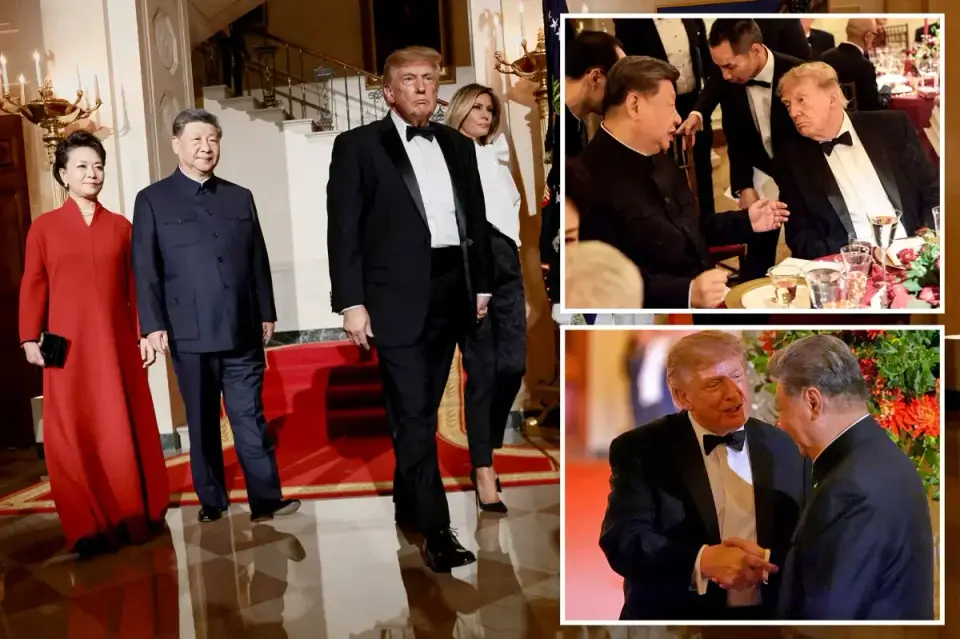
President Trump hosted Chinese leader Xi Jinping for a three-day state visit in Washington, featuring a White House dinner, military reviews, and a trade truce extension. While body language expert Sean Johns argued Trump showed unusual restraint and respect, other analysts noted the visit prioritized pageantry over substantive policy, with no major agreements on AI or global conflicts.
Key points
- Body language expert Sean Johns stated Trump avoided his typical aggressive handshake and dominance tactics, instead closing distance to connect with Xi.
- Johns noted incongruence in Trump’s toast, where verbal warmth did not match neutral body language, except when discussing the White House ballroom.
- The visit resulted in a two-month extension of the US-China trade truce until January 10, 2026, and a promise of pandas for Atlanta.
- Xi arrived with China’s custom-built Hongqi N701 armored limousine, symbolizing Beijing’s shift from relying on host nations for presidential transport.
- CNBC reported that while the visit featured extensive military pageantry, it lacked concrete agreements on AI regulation, the Iran war, or Taiwan.
Background
This visit followed Xi’s May 2026 trip to Beijing and occurred amid heightened tensions over AI regulation and trade. Previous coverage noted the White House dinner included major tech executives, while earlier body language analysis had highlighted Trump’s confrontational tactics with journalists.
How outlets are covering it
The New York Post emphasized body language expert Sean Johns’s view that Trump showed respect and avoided dominance, interpreting the lack of aggressive gestures as a sign of the visit’s importance. In contrast, CNBC and The Times of India focused on the visit’s substance, noting that while the pageantry was extensive, concrete outcomes were limited to a short trade truce extension. The Times of India highlighted the symbolic significance of Xi bringing his own armored vehicle, framing it as a display of Chinese sovereignty, while CNBC noted that Chinese state media viewed the visit as a success due to the warm reception, despite the lack of major policy breakthroughs.
Why it matters
The visit signals a shift in US-China diplomatic dynamics, with Beijing asserting greater autonomy through symbolic gestures like the Hongqi N701. The lack of substantive agreements on AI and global conflicts suggests that while surface-level relations remain cordial, underlying tensions persist, potentially impacting future trade and geopolitical stability.
What to watch
Trump and Xi are expected to meet again at the APEC summit in Shenzhen in November and the G20 in Miami in December. Analysts warn that the current calm may be temporary, with potential for renewed trade hostilities if the short-term truce does not lead to longer-term agreements.
- Trump ‘wasn’t trying to dominate’ at state dinner with Xi, as body language expert notes ‘sign of respect’ New York Post
- At Summit, Xi Sought to Tilt Trump’s Stance on America’s Place in Asia The New York Times
- Beauty and the beast: China brought its own wheels, a red flag, to Washington The Times of India
- Trump, Xi wrap state visit centered on spectacle over substance. Here are the top takeaways CNBC
- America and China’s leaders indulge in pageantry as crises mount The Economist
Want the full story? Read the original reporting
Read on New York Post