Serbia’s president Aleksandar Vucic deepens ties with China, receiving Xi Jinping’s Friendship Medal and taking part in a signing ceremony in Beijing, while domestic protests mount and put pressure on his government.
A gas explosion at the Liushenyu coal mine in Shanxi province killed at least 82 people and hospitalized more than 120, with two miners missing. It is the deadliest mining disaster in years, prompting a nationwide rescue effort and a strict investigation into operator violations. President Xi Jinping ordered thorough rescue and accountability, while officials noted safety failures and a mismatch between the mine’s blueprints and its layout as investigators probe the incident.
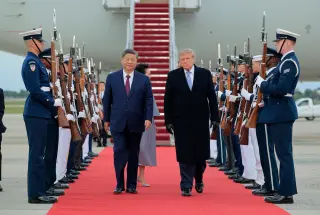
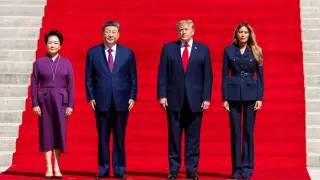
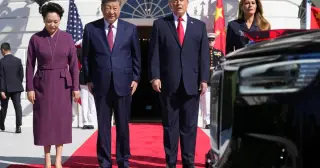
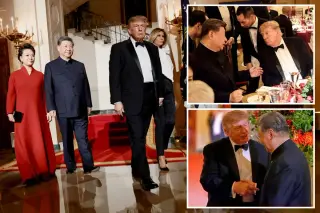
Xi’s Beijing visit with Putin showcased a deep, highly formal China–Russia alignment: a senior, energy-focused delegation, a long joint statement with numerous signed documents, and private and cultural events, signaling strategic convergence. By contrast, Trump’s visit produced few major deals, a smaller cabinet-level U.S. delegation plus a broad business contingent, and a televised banquet, underscoring a more transactional dynamic and higher political stakes for Trump given his rarer trips to Beijing. The two visits differed in host reception, agendas, and post-meeting symbolism (Putin–Xi photo exhibition and private tea vs. a Temple of Heaven visit and a televised state banquet), reflecting Beijing’s enduring Moscow partnership vs. a less consistent China–U.S. relationship during Trump’s term.
Washington has paused arms sales to Taiwan to ensure it has enough munitions for its Iran operations, with a $14 billion package awaiting presidential sign-off and future approvals to be decided by senior administration officials. Taiwan says it has heard nothing about adjustments to the deal, while Beijing opposes arms transfers as US-China tensions rise after Trump–Xi talks, and Trump has described the packages as a potential negotiating chip.
Xi Jinping hosted back-to-back summits with Trump and Putin that looked similar in ceremony but revealed two different diplomatic approaches: a transactional, leverage-based stance toward the United States and a more cooperative, strategic partnership with Russia.
Xi Jinping and Vladimir Putin sealed more than 40 bilateral deals but failed to clinch a breakthrough on the Power of Siberia 2 gas pipeline, underscoring Beijing’s growing leverage as Moscow shifts energy exports toward China; the leaders touted close ties and broad cooperation while reaffirming China’s One China stance and Russia’s position on Ukraine, with analysts seeing the pipeline setback as a sign of a rebalanced relationship toward Beijing.
Putin and Xi unveiled a joint declaration to advance a “multipolar world” and signed 20 agreements (with 20 more to come), while extending their long-standing partnership and pledging closer bilateral cooperation despite ongoing Western tensions. A firm launch date for the Power of Siberia 2 gas pipeline was not set, though the route via Mongolia and a 50 billion cubic meters per year capacity were discussed. Xi described their relationship as a model for major powers and both leaders stressed sovereign foreign policy and regional stability as they seek to broaden cooperation beyond Europe and the United States.
Xi Jinping welcomed Vladimir Putin to Beijing for a state visit framed as a stabilizing alliance amid global turbulence, signaling deeper China–Russia coordination and a challenge to U.S. influence. The leaders highlighted energy and security ties while Trumpeted a no-limits partnership, with Xi criticizing unilateral Western policies and urging restraint in Middle East conflicts as Moscow’s position weakens on several fronts.
Xi Jinping welcomes Vladimir Putin to the Great Hall of the People for a two-format summit following Donald Trump’s visit, signaling closer Sino-Russian ties as they discuss trade, energy, and regional conflicts; Putin invites Xi to Russia next year, Xi urges ceasefires in the Middle East, and Beijing confirms plans to buy 200 Boeing jets and seek an extension of the US-China trade deal.
Putin travels to Beijing for a two-day state visit to meet Xi Jinping, aiming to deepen Russia–China ties in the wake of Donald Trump’s trip to China. The live coverage highlights Russia’s growing dependence on Beijing amid Western sanctions, the potential for energy and trade deals (including a possible Power of Siberia 2 gas pipeline), and Beijing’s careful balancing act over Ukraine and Western relations as both leaders seek stability in a shifting geopolitical landscape.
Putin’s trip to Beijing highlights a shift in the Moscow-Beijing relationship: Moscow leans more on China for trade and political cover as Western sanctions bite, while Beijing presses its advantage in a growing anti-U.S. axis. Analysts say China’s leverage has grown even as Putin’s domestic support fades, signaling a realignment in Eurasian power.
Russian President Vladimir Putin arrives in Beijing for a two-day state visit with a delegation of ministers and top executives to reinforce Moscow–Beijing ties after Trump’s visit and press ahead on the Power of Siberia 2 gas pipeline, with a joint declaration planned.
Jon Stewart was briefly stunned by Trump's offhand remarks about Xi Jinping and, in response, used the moment to critique Trump and pivot the discussion into ironic career advice for recent grads.
Former CIA Director and Defense Secretary Robert Gates told CBS that China’s chances of invading Taiwan in the near term are “pretty low,” arguing Beijing would prefer a Hong Kong–style, gradual transition and wouldn’t want to destroy key chip factories; he notes Xi Jinping has purged military leadership and lacks recent combat experience, but warns China’s manufacturing power and non-military tools make it a formidable adversary. Gates also mentions potential invasion options exist, and urges continuing arms sales to Taiwan despite delivery backlogs.
George Friedman argues that the Xi–Trump summit produced more in-principle alignment than concrete deals: Xi framed a move away from Maoist ideology toward a cooperative, win-win relationship with the U.S., while reaffirming Taiwan as a core issue; Trump appeared willing to entertain compromises that could tie Taiwan’s status to economic ties. Both sides stressed ending major conflicts (Ukraine, Iran) and re-opening trade routes, signaling that the U.S.–China relationship will be managed through cooperation and mutual interests rather than open hostility, despite ongoing disagreements.